
 Cart is empty
Description
If your boat needs a long shaft and only a little power, we have the Yamaha F4LMHA for sale, new in its box and ready to ship worldwide. It is a 4 horsepower single cylinder four-stroke on a 20 inch leg, with a real reverse gear, a built-in fuel tank and a connection for an external tank. It weighs around 61 pounds.
Most of these motors end up on small sailboats, as an auxiliary on a transom bracket, or on tenders and hard dinghies with a taller transom. The long leg keeps the propeller down in the water where it belongs, and the reverse gear makes life in a crowded marina far less stressful. This page covers the specifications, which boats the Yamaha F4LMHA for sale suits, how it behaves, how to fit and look after it, and how buying from us works.
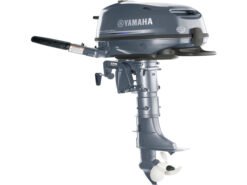
Yamaha F4LMHA Specifications
| Model | Yamaha F4LMHA |
|---|---|
| Horsepower | 4 HP at 4,500 rpm |
| Engine | Single cylinder, four-stroke, OHV |
| Displacement | 139 cc (8.5 cu in) |
| Bore x stroke | 62 x 46 mm |
| Compression ratio | 8.9:1 |
| Full throttle range | 4,000 to 5,000 rpm |
| Induction | Carburettor |
| Fuel supply | Built-in tank, external tank connection available |
| Fuel | Unleaded, 87 octane minimum, 10% ethanol maximum |
| Ignition | CDI |
| Lubrication | Wet sump |
| Starting | Manual, with decompression |
| Gears | Forward, neutral, reverse |
| Gear ratio | 2.08:1 |
| Steering | Tiller |
| Trim range | -4 to +16 degrees |
| Shaft length | 20 inch (L) |
| Weight | About 61 lb (28 kg) |
| Propeller | Included |
| Condition | New, factory boxed |
These numbers match Yamaha’s published specs for the F4, and you can check them on Yamaha’s small portables page. The Yamaha F4LMHA for sale here is simply the long shaft version of that motor.
Decoding the Name
- F: four-stroke.
- 4: 4 horsepower.
- L: long shaft, 20 inches.
- M: manual start.
- H: tiller handle.
- A: design generation.
If you have a 15 inch transom you want the short shaft Yamaha F4SMHA instead. Everything else about the two motors is the same.
Why the Long Shaft Matters
On a lot of small boats, and on almost every sailboat bracket, the motor sits higher above the water than it would on a typical dinghy. Put a 15 inch motor up there and the prop is barely under the surface. As soon as the stern lifts in a wave, it comes out of the water, the engine races, and you lose drive just when you need it most.
The Yamaha F4LMHA for sale adds five inches to the leg. That keeps the propeller buried in the water even when the boat pitches, so you keep steady thrust through chop and swell. For a sailor trying to motor home against a headwind, that is the difference between making progress and going nowhere.
How to measure
For a normal transom, measure from the top of the transom where the clamps go to the bottom of the hull. About 20 inches means a long shaft. For a bracket, lower it to its running position and measure from the top of the bracket pad down to the waterline, then add the depth you need for the prop to stay submerged. If you are anywhere near the line on a sailboat, choose the long shaft.
Sailboats: The Main Job for This Motor
A small keelboat, day sailer or trailer sailer, the typical home for the Yamaha F4LMHA for sale, needs an engine for three things: leaving and entering the marina, getting through narrow channels, and getting home when the wind drops. None of those needs much power. They do need reliability, a deep prop and, ideally, a reverse gear. The Yamaha F4LMHA for sale ticks all three boxes.
Reverse makes docking easier
The smaller F2.5 has no reverse gear, while the Yamaha F4LMHA for sale does. You have to swing the motor round 360 degrees, which is often impossible on a sailboat bracket because the backstay, the rudder or the pushpit gets in the way. With the F4 you simply shift into reverse. Backing out of a berth, stopping the boat as you come alongside and holding position while you grab a mooring line all become much easier.
Steering with the rudder
Most sailors lock the outboard pointing straight ahead and steer with the boat’s own rudder. The rudder is bigger and gives far better control at slow speed. Use the outboard tiller only for tight turns in the marina.
Lift it when you sail
A propeller dragging through the water slows a sailboat noticeably. When you shut the engine down and hoist the sails, raise the motor on its bracket so the leg is out of the water. At around 61 pounds, the Yamaha F4LMHA for sale is still manageable to lift on a good bracket.
Other Boats That Suit It
Tenders and hard dinghies with tall transoms
Some rigid dinghies, older wooden tenders and RIBs have taller transoms. If your current motor sits with its prop near the surface, a long shaft is the fix.
Small fishing boats with 20 inch transoms
A lightweight 12 foot aluminium boat with a 20 inch transom will go along nicely with the F4, especially for trolling and slow fishing.
Canoes with high mounts
If your side mount bracket sits high, the longer leg helps keep the prop in the water as the canoe rolls.
4 HP or 6 HP on a Sailboat?
This question comes up a lot. The F4 and F6 share the same 139 cc engine and the same weight. The F6 just makes more power. On a light day sailer or a small trailer sailer in sheltered water, the Yamaha F4LMHA for sale is usually enough. If your boat is heavier, or you regularly motor into wind and waves in open water, the Yamaha F6LMHA gives you more reserve for the same weight.
Check your boat’s rating and the bracket’s rating before deciding. Some brackets and small boats are rated at 4 HP, and the 4 is the right legal choice there.
How It Drives
Starting
The F4 uses a decompression device in the starter so the cord pulls smoothly. Cold, give it some choke and one to three pulls. Warm, it usually goes first time. The Yamaha F4LMHA for sale is easy for anyone to start, which matters when you are on a pitching cockpit.
Shifting
The gear lever is on the side of the motor. Bring the throttle to idle, then shift. Never slam it into gear at speed.
Running quietly
As a four-stroke with a labyrinth exhaust, the Yamaha F4LMHA for sale is quiet enough to talk over and does not smoke. When you motor into a peaceful anchorage, you will appreciate that.
External Fuel Tanks on a Sailboat
The built-in tank is fine for getting in and out of the marina. For longer motoring sections, connect an external tank. On a sailboat, put the tank somewhere secure in the cockpit or a ventilated locker, away from the companionway so fumes cannot drift below. Use a fuel line with a primer bulb and the correct connector for the motor. With an external tank, the Yamaha F4LMHA for sale can run for hours.
Close the tank vent and the fuel tap when you are sailing, especially when the boat is heeled. That stops fuel weeping out of the motor.
Speed Expectations
The Yamaha F4LMHA for sale will push a small sailboat at a few knots in calm water, which is about what most small keelboats need to get in and out of harbour. It will not plane anything heavy. On a light dinghy with one person it moves along nicely at displacement speed. If you need more, look at the 6 or the 8.
Installing the Yamaha F4LMHA for Sale
- Check the ratings of your boat and your bracket for horsepower and weight.
- Clamp the motor squarely on the transom or bracket.
- Check the depth. With the boat loaded, the anti-cavitation plate should sit at or slightly below the bottom of the hull on a transom mount. On a bracket, make sure the prop is well submerged.
- Tighten the clamps and check them again after the first run.
- Fit a safety line.
- Set the tilt pin so the leg is vertical when you are motoring.
Then check the oil, add fuel, open the vent and start in neutral. Look for the cooling water stream, and you are ready.
Break-In and First Service
Like every new Yamaha, the Yamaha F4LMHA for sale needs a gentle break-in. Vary the throttle, avoid long full-throttle runs during the break-in hours, and check the oil before each trip. Then change the engine oil. The exact procedure is in the owner’s manual, which Yamaha also makes available on its owner’s manuals page.
Maintenance
After each use
- Flush with fresh water after salt water.
- Rinse the outside, especially the bracket and clamps.
- Check the cooling tell-tale stream while running.
Each season
- Change engine oil and gear oil.
- Check or replace the spark plug.
- Grease the clamp screws, swivel and tilt pivot.
- Inspect fuel lines and the fuel filter.
- Check the anode and replace it if heavily eroded.
Every few seasons
Replace the water pump impeller.
Storage
Run the carburettor dry or drain it, change the oil, flush and store upright or on the correct side somewhere dry. Stale fuel in the carburettor is the most common reason small motors are hard to start in spring. Avoid it and the Yamaha F4LMHA for sale will start without fuss for years.
Mistakes Sailors Make With Outboards
- Short shaft on a bracket. The prop ventilates in waves. Go long.
- Leaving the motor down while sailing. It costs speed and grows weed.
- Fuel vent left open when heeled. Fuel leaks into the cockpit.
- No safety line. Brackets and clamps fail. Tie it on.
- Skipping the flush. Salt builds up inside the cooling passages.
- Old fuel. Use it fresh, and run the carburettor dry before long breaks.
Running Costs
Owning the Yamaha F4LMHA for sale is cheap. Fuel use at cruising speed is low, oil changes need well under a litre, and the parts that wear out (plug, impeller, anode) are inexpensive and easy to find. There is no battery to replace and no electronics to go wrong.
A Typical Day With the Motor on a Small Sailboat
It helps to picture how the Yamaha F4LMHA for sale actually gets used, because it is a bit different from a dinghy motor.
You arrive at the marina, take the cover off and lower the motor on its bracket. You check the oil through the window or dipstick and make sure the tank has fresh fuel, or connect the external tank. You open the vent, pull the choke, set neutral and give it a pull. It fires. You let it idle for a minute while you sort out lines and fenders.
Then you slip the lines, shift into reverse and back gently out of the berth, steering with the rudder. Shift to neutral, then forward, and motor slowly down the fairway past the other boats. The Yamaha F4LMHA for sale is quiet enough that you can talk to the crew about which sail to hoist first.
Outside the breakwater you turn into the wind, raise the main, bear away, unroll the jib and shut the motor down. Close the fuel tap and vent, tilt or raise the motor clear of the water and enjoy the sail.
Coming home, you do the same in reverse. Lower the motor, start it while you are still sailing so you know it is running before you need it, drop the sails and motor in. Reverse gear stops the boat as you come alongside. Simple, calm, no drama. That is exactly what a small auxiliary outboard should give you.
Choosing a Bracket
If your boat does not already have an outboard bracket, you will need one. A few pointers:
- Weight and power rating. Pick a bracket rated comfortably above the Yamaha F4LMHA for sale’s roughly 61 pounds and 4 HP.
- Vertical travel. Look for a bracket that lowers far enough to get the prop properly deep and lifts high enough to clear the water when sailing.
- Strong mounting. Through-bolt it with a backing plate. A bracket that tears out of the transom in a seaway is a disaster.
- Locking positions. A bracket that locks firmly in both up and down positions is safer and easier to use.
- Clearance. Make sure the motor will not hit the rudder, the backstay or the boarding ladder when it turns or tilts.
A good bracket and a long shaft motor together make a small sailboat far easier to handle under power.
Warm Water, Cold Water
In tropical climates
Heat and humidity are hard on fuel. Ethanol blends pick up water and old fuel gums up carburettors faster. Buy fuel in small amounts, keep tanks out of the sun and use fuel stabiliser if the boat will sit. Marine growth is quick in warm water, so lift the motor out of the water whenever you are not using it. With those habits, the Yamaha F4LMHA for sale copes well with tropical cruising.
In cold climates
Cold starts need a little more choke and patience. Do not over-choke or you will flood the plug. At the end of the season, make sure all water drains out of the leg and powerhead before the first frost, and change the gear oil so any water that crept in does not freeze.
Accessories Owners Add
- External fuel tank kit for longer motoring sections.
- Breathable motor cover to protect against sun and spray while the boat is moored.
- Flushing muffs or a flushing tub for quick freshwater rinses.
- Spare propeller for cruising far from a dealer.
- Lockable motor clamp to discourage theft in busy harbours.
None of these are required to use the Yamaha F4LMHA for sale, but each one helps if you keep the boat in the water or sail long distances.
What Comes in the Box
The Yamaha F4LMHA for sale arrives assembled with the standard propeller fitted. Inside the box you will also find the owner’s manual and the factory paperwork. Read the tag about engine oil before you do anything else, because some motors ship with little or no oil in the crankcase. Once the oil is right, add fuel and it is ready to go.
A Note About Us
We sell new outboard motors online and ship them to customers worldwide. Small Yamaha portables are a big part of what we do, so the Yamaha F4LMHA for sale is a regular stock item rather than a special order. Every message through our contact page is answered by a person who knows outboards. If you want to know more about who we are, see the about us page, and for general advice on choosing and caring for a motor, have a look at our blog.
Why Yamaha
- Dealers and parts almost everywhere in the world.
- A proven, simple engine design.
- Easy starting thanks to the decompression system.
- Real reverse gear and external tank option.
- Strong resale value.
Those are the reasons we keep the Yamaha F4LMHA for sale in stock year round.
Long Shaft Yamaha Portables Side by Side
| Model | Power | Weight | Reverse | External tank |
|---|---|---|---|---|
| F2.5LMHB | 2.5 HP | About 40 lb | No | No |
| F4LMHA | 4 HP | About 61 lb | Yes | Yes |
| F6LMHA | 6 HP | About 61 lb | Yes | Yes |
| F8LMHB | 8 HP | About 89 lb | Yes | Yes |
See the Yamaha F2.5LMHB if weight matters most, or the Yamaha F8LMHB if you need real power. The 4 HP Yamaha section and our complete Yamaha range have the rest.
How to Order
- Add the Yamaha F4LMHA for sale to your cart, or contact us with questions first.
- We confirm stock, your address and delivery method.
- We pack the motor in its factory box with extra protection.
- You get tracking when it ships.
- It arrives at your door as a parcel.
International buyers pay their country’s import duties and taxes on arrival. We supply all the paperwork. Our refund and return policy and terms and conditions are on the site, along with customer reviews.
FAQ: Yamaha F4LMHA for Sale
Is the motor new?
Yes. The Yamaha F4LMHA for sale is new, boxed and has never been run.
Does the Yamaha F4LMHA for sale have reverse?
Yes. Forward, neutral and reverse.
Will it fit my sailboat bracket?
Most likely, if the bracket is rated for at least 4 HP and about 61 pounds. Check the prop depth with the bracket lowered.
Can it use an external tank?
Yes. Ask us about the right fuel line and connector.
Is a propeller included?
Yes.
Is the Yamaha F4LMHA for sale suitable for salt water?
Yes. Flush the Yamaha F4LMHA for sale with fresh water after each salt water outing.
Do I mix oil with the fuel?
No. Four-stroke, plain unleaded.
Should I get the 4 or the 6?
Same weight, more power with the 6. If your boat and bracket are rated for 6 and you motor in open water, the 6 is worth it. For sheltered water and light boats, the 4 is plenty.
How quickly will it arrive?
It depends on your location. We give you an estimate when we confirm your order.
Summing Up
For a small sailboat, a tall-transom tender or any light boat that needs a 20 inch leg, the Yamaha F4LMHA for sale is a dependable, economical choice. It keeps the prop deep, it has a real reverse gear for docking, it can run from an external tank, and Yamaha dealers almost everywhere can service it.
It is also worth saying that small sailboats are often kept for decades, and the motor on the back tends to stay with them. Buying a well-supported engine matters more than saving a little up front. Parts for the Yamaha F4LMHA for sale will be available for a long time, any marine mechanic will recognise it, and if you ever sell the boat, a Yamaha on the bracket is a selling point rather than a question mark. That long view is a big part of why sailors keep choosing this motor over cheaper, less familiar brands.
Add it to your cart when you are ready, or ask us anything first. You can also browse the full shop.


Reviews
There are no reviews yet.