
 Cart is empty
Description
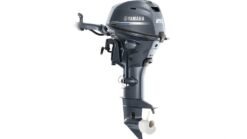
Here is a new Yamaha F90JB for sale: Yamaha’s 90 HP jet drive four-stroke, crated and ready to ship worldwide. If you run shallow rivers, rocky streams, gravel bars or shoals where a propeller would not last a day, a jet outboard is the answer. There is no prop hanging below the boat to hit rocks. A pump sucks water in through an intake on the bottom and blasts it out the back. You can run in water so shallow it seems impossible.
Below is everything you need to know: the specs, how a jet works, which boats suit it, how to set it up, and how to buy it from us. Want a price now? Send us a message for a delivered quote.

Yamaha F90JB Jet Specifications
| Model | Yamaha F90JB Jet |
|---|---|
| Powerhead rating | 90 HP |
| Output at the pump | About 65 HP |
| Engine type | Inline 4-cylinder four-stroke, SOHC, 16 valves |
| Displacement | 1,832 cc (1.8 L) |
| Fuel system | Electronic fuel injection |
| Drive | Jet pump |
| Shaft length | 25 inch class (jet) |
| Weight | 354 lb |
| Controls | Remote, mechanical |
| Starting | Electric |
| Trim and tilt | Power trim and tilt |
| Full throttle range | 5,000 to 6,000 rpm |
| Condition | New, factory crated |
Every Yamaha F90JB for sale on our site is new and matches this sheet.
What 90 HP Jet Actually Means
This catches people out, so let me be clear. The powerhead is a 90 HP engine. But a jet pump is less efficient than a propeller, so the power that actually pushes the boat is lower. Yamaha rates the F90 jet at about 65 HP at the pump. So when you compare it to a prop motor, think of it as a 65 HP prop motor in terms of push.
Why accept that loss? Because a jet lets you go places a prop motor simply cannot. In shallow, rocky rivers, a prop motor would be smashing props and gearcases constantly. A jet glides over the top. For a lot of river users, that trade is easy to make.
How a Jet Outboard Works
Instead of a gearcase and prop, the F90JB has a jet pump at the bottom of the midsection. A flat intake grate sits roughly level with the bottom of the hull. Inside the pump, an impeller spins and pulls water up through the grate. The water is pushed out through a nozzle at the back. That jet of water drives the boat forward.
To go into reverse, a reverse gate drops over the nozzle and deflects the water forward. Steering works the same way as any outboard. The whole motor turns.
Because nothing hangs much below the hull, the boat can run in very shallow water once it is on plane. That is the magic of a jet, and the reason people search for a Yamaha F90JB for sale.
Who Needs a Jet
- River anglers fishing shallow, rocky rivers for trout, steelhead or salmon
- Hunters running backwaters, marshes and shallow sloughs
- Guides and outfitters in remote river country
- Search and rescue crews on rivers and floodwaters
- Anyone who keeps losing props and gearcases to rocks
If you mostly run deep lakes or open water, a prop motor is better. It is more efficient and faster for the same powerhead. A jet only makes sense when shallow water is part of your everyday boating.
Boats That Suit a Jet
Jets work best on flat-bottom or shallow-V aluminium hulls, especially those built for jets with a tunnel. A tunnel lets you mount the motor higher, so the intake sits up in the tunnel and the boat can run even shallower. Deep-V hulls are not a great match, because water does not flow cleanly into the intake.
Check with your boat builder whether your hull is suited to a jet. Check the capacity plate too, remembering that jet ratings are based on the powerhead. If your boat is rated for 90 HP, the Yamaha F90JB for sale here is within the rating.
Mounting Height Is Everything
With a prop motor, mounting height affects speed. With a jet, it affects whether the boat works at all.
Mount it too high, and the pump sucks air. You get cavitation, the motor revs, and the boat does not go. Mount it too low, and the intake drags in the water, slows the boat and picks up more debris.
The general starting point is to have the front edge of the intake grate level with the bottom of the hull, or very slightly below. On a tunnel hull, the setup is different, so follow the boat builder’s guidance. Then test and adjust in small steps. A dealer who has set up jets before is worth their weight in gold here.
Running Shallow
Here is how to run a jet in shallow water.
Get on plane in deeper water first. A jet boat sits lower at rest and needs some depth to get going. Once you are up and running, the boat rides high and you can cross very shallow riffles and gravel bars.
Keep your speed up in the shallows. If you slow down too much over a shallow bar, the boat settles and the intake can suck up gravel or hit bottom.
Read the water. Learn where the channels are. Avoid running directly over loose sand and small gravel when you can, because the pump pulls it in and wears the impeller and the liner.
Turn gently in very shallow water. Hard turns can lift the intake out of the water and make the pump suck air.
With practice, the Yamaha F90JB for sale here will take you places that would wreck a prop motor.
Jet Maintenance
A jet needs a few extra jobs on top of normal outboard maintenance.
Grease the jet bearing. The jet drive has a bearing that needs regular greasing. Follow the manual. Many owners do it after every trip, because it is quick and protects the bearing from water.
Check the impeller clearance. Over time, sand and gravel wear the leading edges of the impeller and the pump liner, and the gap between them grows. A bigger gap means less thrust. Yamaha’s design lets you adjust the clearance with shims. Check it regularly and adjust as needed.
Inspect the intake grate. Look for bent bars and clear any sticks or weed after each trip.
Watch the impeller edges. If they become rounded or chipped, the pump loses efficiency. Rounded edges can sometimes be sharpened. Badly damaged impellers need replacing.
Plus all the usual jobs: flushing, oil, filters, anodes and the water pump impeller. Do these and the Yamaha F90JB for sale here will run strong for a long time.
The Powerhead
Up top, the F90JB uses Yamaha’s 1.8 litre four-cylinder, the same proven powerhead as the standard F90. Single overhead cam, four valves per cylinder, electronic fuel injection. It is compact and light, and it has a long track record. Yamaha says the jet version uses a long-track induction system and their YDC-30 aluminium alloy for a light, compact, powerful outboard. Easy starts, smooth running and good economy for a jet.
Rigging
The F90JB uses mechanical remote controls. You will need a Yamaha mechanical control box, cables, a harness, a key switch, a gauge, steering, a fuel line with a water-separating filter and a good battery. Jet boats often run in remote areas, so a good fuel filter and a reliable battery are especially important.
Have a dealer or mechanic with jet experience do the install. Warranty terms depend on your country, so ask your local Yamaha dealer once the motor is registered.
Break-in
Ten hours, gently, with varied rpm and no long full-throttle runs. Follow the manual. After the break-in, change the oil and filter and grease the jet bearing.
How to Order
- Message us through the contact page.
- Tell us the model, how many and where you are.
- Add any controls or spare parts you want.
- We send a delivered price.
- You confirm and pay.
- We ship with FedEx, UPS or USPS and send tracking.
See our refund and return policy and terms and conditions.
Shipping
We ship worldwide in the factory crate, with tracking. Import duties depend on your country, so check with your customs office ahead of time. Inspect the crate on arrival and take photos of any damage before signing.
Other Yamaha Motors
- Yamaha F90JB jet outboard, our other listing for this model
- Yamaha F90XB, if you need a prop motor with a 25 inch shaft
- Yamaha F90LB, the standard 20 inch 90
Browse the 90 HP Yamaha range, all Yamaha outboards and the shop. Our blog has more tips, our reviews show what buyers say, and you can learn about us here. Yamaha’s official site has more about the jet range.
A Day on a Shallow River
Let me describe a normal day with a jet, because it is different from running a prop boat. You back the trailer down a gravel ramp into a river that is knee deep and running fast. You float the boat off, start the Yamaha F90JB for sale you bought this spring, and let it idle while you climb in. The jet idles quietly and pushes gently against the current.
You turn upstream, find a deeper pool to get going, and open the throttle. The boat lifts onto plane. Ahead, the river narrows into a riffle over gravel, maybe a few inches deep. With a prop motor you would have to stop, tilt up and pole. With the jet, you keep your speed up, pick the line where the water looks a little darker, and skim right over it. You hear the gravel hiss under the hull, and then you are through.
An hour upriver, you reach a run that nobody fishes because nobody can get there. You pull up on a gravel bar, kill the motor and fish. At the end of the day you run back down, slow and careful through the rocky bits, and get back to the ramp. You flush the motor, grease the jet bearing and load up. That is the jet life, and the Yamaha F90JB for sale here makes it possible.
Jet vs Prop: The Honest Trade-Offs
I want buyers to know exactly what they are getting, so here are the trade-offs.
Thrust. A jet delivers less thrust than a prop from the same powerhead. The F90 jet is about 65 HP at the pump.
Fuel use. Jets use more fuel for the same speed, because they are less efficient.
Low-speed handling. Jets steer best with some throttle. At very low speed, steering is less precise than a prop motor. You get used to it, but it takes practice.
Reverse. Reverse works through a gate and is weaker than a prop motor’s reverse.
Wear. Sand and gravel wear the impeller and liner over time, and they need adjusting and eventually replacing.
Access. And then the big one. A jet goes where a prop cannot. Shallow, rocky rivers, gravel bars, shoals, rapids. For river users, that one benefit outweighs everything else on the list.
If shallow water is a regular part of how you use the boat, the Yamaha F90JB for sale here is worth every trade-off.
Tips From River Runners
Here are a few things experienced jet boat owners tell newcomers.
- Learn the river at higher water first, before trying it low.
- Run upstream through tricky sections where possible. Going against the current gives you more control.
- Do not stop on top of a shallow bar. Keep moving until you reach deeper water.
- Carry a pole or paddle, a throw rope and a basic tool kit.
- Check the intake grate after each run through weedy or woody water.
- Keep a spare impeller shim kit and grease on board.
- Never run alone in a remote river if you can avoid it.
Follow those, and your Yamaha F90JB for sale will give you years of safe river running.
Spare Parts for Remote Rivers
Jet boats often run far from roads, towns and dealers. Carry spares. Engine oil and a filter, grease for the jet bearing, impeller shims, spark plugs, a fuel filter element, fuses, a water pump impeller kit and anodes. If you live somewhere parts are hard to find, add them to your order for the Yamaha F90JB for sale and we will ship them together.
Who Buys Jets From Us
River fishing guides, hunting outfitters, remote lodges, river rescue teams, survey crews and private owners who live on shallow rivers. Some buy one motor. Outfitters often buy several. If you need more than one Yamaha F90JB for sale, tell us how many and we will quote them together.
Setting Up the Pump for Your River
Every river is a bit different, and the way you set up the pump makes a difference. Once the Yamaha F90JB for sale is mounted, here is how a good installer approaches it.
First, they set the height so the intake picks up solid water without dragging. They test run the boat with a normal load and watch for signs of cavitation: the motor revs up but the boat does not speed up, or there is a rough, rattling sound from the pump. If that happens, the motor usually needs to come down a little.
Next, they check the impeller clearance. A new motor should be set correctly from the factory, but it is worth confirming. The gap between the impeller and the liner should be small. As it grows with wear, thrust drops. Yamaha’s design uses shims to move the impeller closer to the liner. Owners can learn to do this themselves with the manual.
Then they check the steering and the reverse gate. Jets rely on the reverse gate for stopping and backing up, so it needs to move freely and close fully.
Finally, they look at trim. Jet boats are sensitive to trim angle. Too much trim out and the intake can lose water at speed. Most jet runners keep trim fairly neutral and adjust only a little.
A boat set up like this runs well in shallow water and holds its speed. If you are not sure how to set up the Yamaha F90JB for sale on your hull, ask your local dealer or contact us and we will point you in the right direction.
Hulls Built for Jets
If you are buying a new hull to go with the motor, look at boats designed for jets. Many aluminium builders offer jet tunnel versions of their river boats. The tunnel is a recess in the bottom of the hull at the back, where the jet intake sits. It lets you mount the motor higher, so the intake sits up out of harm’s way while still getting good water flow. That means you can run even shallower.
Jet hulls are usually flat or very shallow-V at the back, with a wide beam for stability and lift. They are often welded aluminium, which takes knocks from rocks far better than fibreglass. Put a Yamaha F90JB for sale on a hull like that and you will have a very capable river boat.
Using a Jet for Hunting
Duck hunters and big game hunters use jets to get into marshes, flooded timber and shallow river backwaters before dawn. A few tips if that is you. Carry a spotlight and run slowly in the dark. Clear weed and reeds from the intake grate often, because marsh vegetation chokes jets quickly. Grease the jet bearing after every trip, since cold water and mud are hard on it. And keep a paddle or push pole on board for the last few metres to the blind. The Yamaha F90JB for sale is quiet at low speed, which helps when you do not want to spook anything.
Rescue and Survey Work
River rescue crews and survey teams often need to reach places in floodwater or shallow channels quickly. Jets are a natural fit. No prop to injure swimmers or tangle in debris, shallow draft, and quick access to the bank. Teams who run the Yamaha F90JB for sale value its reliability and the fact that local mechanics know the powerhead. If you buy for a team, ask about multi-unit orders and spares packages.
Should You Convert a Prop Motor Instead?
Some people ask whether they can just fit a jet lower unit to a prop motor they already own. Aftermarket conversions exist for some motors, but a factory jet like the Yamaha F90JB for sale here has a few advantages. The pump is matched to the powerhead from the start. The motor comes with the right paperwork for your local dealer. And you are not relying on parts from a third party that might be hard to get later.
If you already have a good prop 90 that suits your boat for most of your boating, keep it. But if shallow rivers are your main water, a purpose-built jet is the cleaner, simpler choice. Ask us about the Yamaha F90JB for sale and we will help you decide.
Either way, a jet changes how you think about a river. Water you used to avoid becomes water you can fish, hunt or explore. For a lot of owners, that alone makes the switch worth it.
Frequently Asked Questions
Is the Yamaha F90JB new?
Yes. Every Yamaha F90JB for sale on our site is new and in the factory crate.
How much power does it make at the pump?
The Yamaha F90JB for sale here makes about 65 HP at the pump, from a 90 HP powerhead.
Does it have a propeller?
No. The Yamaha F90JB for sale here uses a jet pump instead.
What boats suit it?
The Yamaha F90JB for sale here suits flat-bottom and shallow-V aluminium boats, especially jet tunnel hulls.
Do you ship worldwide?
Yes, with FedEx, UPS and USPS.
Get Your Price
If shallow, rocky water is part of your boating, the Yamaha F90JB for sale here will open up places you could never reach with a prop. Send us your country and how many you need, and we will come back with a delivered price.


Reviews
There are no reviews yet.