
 Cart is empty
Description
Looking for big offshore power? This new Yamaha F350UCC for sale is Yamaha’s 350 horsepower V8 four stroke on a 30 inch shaft, with digital electronic controls. It is built for large center consoles, sportfishing boats, express cruisers and twin, triple or quad engine setups that run far offshore. The motor ships new in the crate, and we deliver to buyers all over the world.
When the F350 first appeared it changed what people expected from an outboard. A 5.3 litre V8 hanging off a transom sounded crazy at the time. Today it is a proven workhorse that has pushed thousands of big boats across open water. If your boat needs serious power and a 30 inch shaft, this is one of the strongest choices you can make.
Below you will find the full specs, who it suits, what the U shaft means, rigging requirements, running costs, maintenance and how to order. For anything else, contact us and a real person will reply.
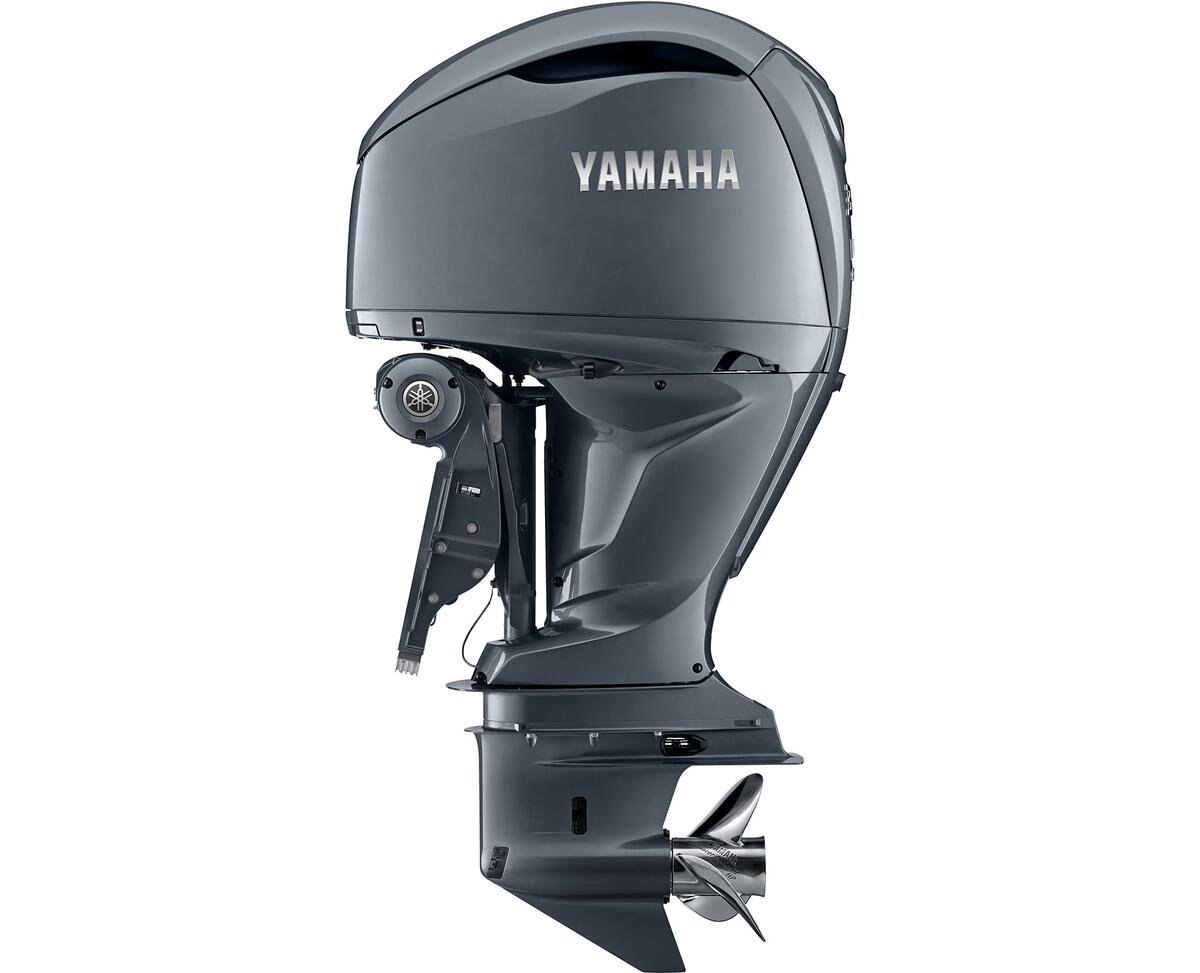
Yamaha F350UCC for Sale: The Main Points
- New Yamaha F350UCC V8 four stroke outboard
- 350 horsepower from a 5.3 litre V8
- DOHC, 32 valves
- 30 inch ultra-long shaft (the “U”)
- Digital electronic throttle and shift (the “C”)
- Electronic fuel injection, electric start
- Power trim and tilt
- Standard right-hand rotation
If your boat has a 30 inch transom and is built for 350 hp per engine, the Yamaha F350UCC for sale here is the standard rotation motor you want.
Yamaha F350UCC Specifications
These are the main figures for the Yamaha F350UCC for sale on this page.
| Model | Yamaha F350UCC |
| Horsepower | 350 hp |
| Engine type | 4 stroke V8, DOHC, 32 valves |
| Displacement | 5,330 cc (5.3 L) |
| Full throttle range | 5,000 to 6,000 rpm |
| Fuel system | Electronic fuel injection |
| Fuel | Unleaded, octane as stated in the owner’s manual (89 recommended), max 10% ethanol |
| Starting | Electric |
| Shaft length | 30 in (U) |
| Controls | Digital electronic throttle and shift |
| Gear ratio | 1.73:1 |
| Gear shift | F-N-R |
| Rotation | Standard |
| Trim and tilt | Power trim and tilt |
| Lubrication | Wet sump |
| Approx. weight | Around 770 lb |
| Condition | New, crated |
What the 30 Inch Shaft Is For
Yamaha uses letters for shaft length. L is 20 inches, X is 25 inches, U is 30 inches. A U shaft is designed for big boats with tall transoms or bracket mounts, where the prop needs to sit deeper to keep its grip in big seas.
Many large center consoles and sportfishing boats over about 32 feet use 30 inch transoms or brackets. If yours does, the Yamaha F350UCC for sale is the right length. If your boat has a 25 inch transom, look at the Yamaha F350XCC instead.
To measure, go from the top of the transom or bracket mounting surface straight down to the bottom of the hull. Keep the tape vertical. If you are unsure, send us photos and the boat details and we will help.
Who Runs the F350
The Yamaha F350 is found on:
- Offshore center consoles from about 30 to 45 feet
- Sportfishing and tournament boats
- Express cruisers and walkarounds
- Large catamarans
- Commercial, patrol and rescue boats
Most of these boats run twins, triples or quads. That is why Yamaha offers the F350 in both standard and counter rotation. On a twin setup you would pair this Yamaha F350UCC for sale with a counter-rotating Yamaha LF350UCC.
The V8 Advantage
Why a V8 outboard? Displacement. With 5.3 litres, the F350 makes huge torque without needing to rev hard. That torque is what pushes a heavy offshore boat onto plane, keeps it there in rough water and carries big loads of fuel, ice, tackle and crew without strain.
A big naturally aspirated engine also tends to be under less stress than a smaller engine working hard to make the same power. That is part of the reason the F350 earned its reputation for long life in hard commercial and sportfishing use.
Digital Controls
The F350 uses digital electronic controls. The helm lever sends a signal to the engine rather than pulling a cable. On big boats with long distances between helm and transom, that makes a huge difference. The lever is light, shifts are clean, and multi-engine setups stay synchronised.
Yamaha’s digital systems also bring detailed engine data to the helm: rpm, fuel flow, trim, temperature, oil pressure, hours and warnings. On a big boat running long distances offshore, that information is invaluable.
Performance
Performance on big boats depends heavily on hull, weight, number of engines and props. As a rough guide, twin F350s on a 32 to 35 foot center console often give top speeds in the 50 mph range and comfortable cruising speeds in the 30s, with fuel use that is reasonable for the class. Triples and quads on larger boats can do similar or better.
The F350 is smooth and quiet for its size. At cruise, conversation at the helm is easy. That is a big improvement for anyone coming from older large two strokes.
Props
With a 1.73:1 gear ratio, the F350 swings large props. Most offshore boats use 3 or 4 blade stainless props matched to the hull and load. Choose a pitch that lets the motors reach 5,000 to 6,000 rpm at full throttle with a normal load. Yamaha’s propeller range includes big-boat options.
Rigging an F350
Installing a Yamaha F350UCC for sale is a professional job. A typical setup needs:
- Yamaha digital electronic control binnacle for the number of engines
- Digital harnesses and network hubs
- Start/stop panels
- Yamaha digital gauges or compatible multifunction displays
- Hydraulic steering rated for multiple large outboards
- Tie bars for multi-engine installs
- Separate fuel feeds with water separating filters for each motor
- Cranking batteries for each engine plus house batteries
- Props for each engine
Use a rigger with Yamaha big-engine experience. Engine spacing, height, steering and digital calibration all matter.
Repowering
Many older offshore boats are repowered with F350s, either replacing large two strokes or older four strokes. You gain fuel economy, quieter running, digital controls and modern reliability. Before you buy, check transom or bracket strength and rating, boat capacity limits, steering capacity, fuel delivery, electrical capacity and helm space.
Fuel and Running Costs
Check the owner’s manual for the recommended octane, normally 89 for the F350. Use fresh fuel with no more than 10 percent ethanol. Fit good water separating filters to each motor. A V8 burns more fuel than a smaller outboard, but on boats that need this kind of power, the F350’s efficiency at cruise is respectable.
Maintenance
Every 100 hours or once a year:
- Engine oil and filter
- Gear oil
- Fuel filters and separator elements
- Spark plugs as needed
- Anodes
- Grease fittings
- Water pump impeller on schedule
- Belt and general inspection
Flush after salt water. On multi-engine boats, service all motors together so they stay in step.
Break-in
Follow the owner’s manual. Vary throttle during break-in, avoid long full-throttle runs and change oil afterwards.
The F350 Range
- Yamaha F350UCC for sale (this one): 30 inch, standard rotation
- Yamaha LF350UCC: 30 inch, counter-rotation
- Yamaha F350UCC2: 30 inch, later version
- Yamaha F350XCC: 25 inch, standard rotation
- Yamaha LF350XCC: 25 inch, counter-rotation
Browse all of them in our 350 HP Yamaha section.
Ordering
Condition
The Yamaha F350UCC for sale is new in the factory crate. Photos on request.
Shipping
Worldwide with FedEx, UPS and USPS, crated and tracked. Big motors may need freight handling at your end, so tell us your delivery location. Ask us for a delivered price.
Payment
Order through our shop or ask us for an invoice.
Delivery
Inspect the crate before signing. See our refund and return policy and terms.
Warranty
Depends on the country of registration and use. Ask before ordering the Yamaha F350UCC for sale and we will confirm in writing.
Read our reviews or learn more about us.
More From Yamaha
See Yamaha Motor Canada’s F350 page and the Yamaha Outboards website.
Multi-Engine Setups
Most boats that need a Yamaha F350UCC for sale run more than one engine. Here is how the common layouts work.
Twins. One standard rotation motor (like this F350UCC) and one counter-rotating motor (the LF350UCC). The props turn in opposite directions to cancel out side forces, so the boat tracks straight.
Triples. Usually two standard and one counter-rotating, or the reverse, depending on the builder. The centre motor is often standard rotation. Your builder will specify the right combination.
Quads. Two standard and two counter-rotating, arranged symmetrically.
Whatever the layout, all motors should match in shaft length, control type and generation. Props must match in size and pitch, with the correct rotation for each motor. If you are replacing one or two motors from an existing set, send us the model codes and serial numbers of the ones you are keeping and we will check compatibility.
Handling Big Multi-Engine Boats
Multiple F350s give you superb control at low speed. With digital controls you can shift each motor independently to pivot the boat, push the stern toward the dock or hold position in current. Many Yamaha digital binnacles offer synchronisation, so at cruise the engines run at matched rpm without constant adjustment. Some setups also offer joystick docking systems that make handling very large boats remarkably easy.
If you are new to multi-engine boats, practise low speed handling in open water before trying tight marinas. Every boat behaves a little differently.
Fuel System for Big Engines
Each F350 needs its own fuel supply line and its own water separating filter. Big offshore boats often have large tanks with multiple pickups or separate tanks with crossover valves. Independent filtration matters: if one filter clogs with water or dirt, only one motor is affected. Check that fuel lines, fittings and vents are sized correctly for the flow of several large V8s at cruise. Carry spare filter elements for every motor on long trips.
Electrical Planning on Big Boats
Large offshore boats carry a lot of electrical equipment: multiple displays, radar, autopilot, VHF, lights, pumps, fridges and more. The engines’ charging systems keep up while running, but the electrical layout must be well designed.
- Give each F350 its own cranking battery
- Install a separate house battery bank for accessories
- Use switches or charging relays so cranking batteries are always protected
- Size cables correctly and keep connections clean and tight
- Use dielectric grease on digital connectors
- Keep accessories off the engine harnesses
Digital controls depend on steady voltage. Most odd electrical behaviour on big boats comes from weak batteries or poor connections, not from the engines.
Offshore Planning
Boats with F350s often run long distances. Good planning keeps trips safe:
- Use the rule of thirds for fuel: a third out, a third back, a third reserve
- Watch fuel flow on the digital display to track real consumption
- Carry spare filters, prop hardware and basic tools
- Carry reliable communication and safety gear
- Check the weather and file a float plan
Salt Water Care
- Flush every motor with fresh water after each trip
- Rinse cowlings, brackets, trim rams, steering and tie bars
- Check anodes regularly, especially in warm water
- Spray powerheads with corrosion protectant
- Wax cowlings twice a year
Big motors represent a big investment. A few minutes of care after every trip protects the Yamaha F350UCC for sale for years to come.
A Day Offshore With Twin F350s
Here is what a long offshore day looks like on a 34 foot center console running a Yamaha F350UCC for sale and its counter-rotating partner.
You leave the dock before sunrise. Both V8s start with a press of the buttons and settle into a low, steady idle. You use the digital levers to walk the boat out of the slip, the shifts clean and immediate. Once clear of the harbour you push the throttles forward, and the boat climbs onto plane without fuss, even loaded with full tanks, ice, tackle and five anglers.
With the engines synchronised, you set a cruise in the low 30s mph. The display shows fuel flow for both motors and your remaining range. The sea is lumpy, but the 30 inch shafts keep the props deep and gripping, and the torque of the V8s holds speed through the swells.
Sixty miles out you slow to trolling speed. The big motors idle smoothly, and you fish for hours with the electronics running. In the afternoon you head home into a building breeze, trim the bow down and settle at a comfortable speed. Back at the dock you pivot the boat into its berth using the throttles, flush the engines and wash down. It has been a long day, and the engines have not missed a beat.
Why Choose a V8 Over Smaller Multiples?
Some big boats can run either several smaller outboards or fewer large ones. Twin F350s instead of triple 250s, for example. Fewer, bigger motors mean fewer engines to service, fewer props to buy and less clutter on the transom. The big displacement also means each engine is working less hard at cruise. On the other hand, more smaller engines can spread the load and give extra redundancy. Your boat builder’s recommendations are the best starting point.
Bracket and Transom Considerations
A Yamaha F350UCC for sale weighs around 770 pounds. Two of them on a transom is over 1,500 pounds of motor alone, before fuel and gear. That weight needs a strong, well-built transom or engine bracket.
- Check that the transom or bracket is rated for the total engine weight and horsepower
- Inspect for cracks, soft spots or water intrusion before installation
- Use the correct mounting hardware with backing plates as specified
- Seal all holes properly to keep water out of the core
- Re-check mounting bolts after the first few trips and at every service
On repowers, have the transom checked by a professional if there is any doubt about its condition. Fixing a weak transom before fitting new motors is far cheaper than fixing it after.
Engine Height and Trim on Big Boats
Engine height affects speed, fuel economy and handling. Start with the motors at the builder’s recommended height. During sea trials, adjust height and check that the props grip in hard turns and rough water. Use trim to lift the bow at cruise until speed stops rising. In head seas, keep the bow down for a softer ride.
Common Mistakes With Big Outboards
- Ordering the wrong shaft length
- Mixing rotations incorrectly on multi-engine setups
- Undersized steering or fuel lines
- Weak batteries or poor wiring on digital systems
- Skipping break-in on new engines
- Not flushing after salt water
- Running mismatched props on twin or triple setups
Avoid these and your Yamaha F350UCC for sale will give years of reliable service.
Storage and Seasonal Care
Big offshore boats often stay in the water year-round, but if yours comes out for winter, follow this routine for each F350:
- Stabilize the fuel and run each motor so treated fuel reaches the injectors
- Change oil and filters
- Change gear oil and check for water
- Grease all fittings and tie bars
- Trim the motors down to drain the lower units
- Maintain or disconnect all batteries
- Spray powerheads with corrosion protectant
- Cover the motors
If the boat stays in the water, run the engines regularly, keep anodes fresh and consider antifouling the lower units as recommended by your dealer.
Keeping Records
Keep a log for every engine with hours, services and parts. On a multi-engine boat, matching records help you keep the motors in step and add value when you sell the boat.
What Comes in the Crate
The Yamaha F350UCC for sale arrives with the outboard and factory paperwork. Controls, harnesses, gauges, steering and props are separate. Note the serial number and keep it safe off the boat.
Questions to Ask Before You Order
- Is my transom or bracket 30 inches?
- Do I need standard or counter-rotation for this position?
- Do my other engines match in model and generation?
- Is my boat rated for the total horsepower and weight?
- What is the delivered price to my location?
- What warranty applies in my country?
If any of these are uncertain, send us a message before ordering the Yamaha F350UCC for sale. We will help you get it right.
Gauges and Engine Data
The digital controls on the Yamaha F350UCC for sale connect to Yamaha’s digital gauges and compatible multifunction displays. You can see rpm, trim angle, fuel flow, fuel used, engine hours, battery voltage, oil pressure, temperature and warning alerts for every engine. On a big offshore boat, that information helps you spot problems early, plan fuel accurately and run the engines at their most efficient speed.
Many owners set up a dedicated engine page on their chartplotter so all of this is visible at a glance. Ask your rigger which display options work with your boat’s electronics network.
Choosing Props for an F350
Big boats need big props. Most F350 installs run 3 or 4 blade stainless props, often around 15 to 16 inches in diameter, with pitch chosen to suit the hull and load. Four blade props usually give better grip in rough water and better low speed planing. Three blades can give a little more top speed. On multi-engine boats, every prop must match in size and pitch, with the correct rotation for each motor. Carry spare props or at least spare prop hardware on long trips.
Frequently Asked Questions
Can the Yamaha F350UCC for sale be used as a single engine?
Yes, on boats designed for one large outboard. Most boats this size run two or more, though. Tell us about your boat and we will confirm whether a single Yamaha F350UCC for sale suits it.
How long will it last?
With regular servicing and good care, big Yamaha four strokes commonly run thousands of hours. Many owners of a Yamaha F350UCC for sale use it for years of hard offshore work.
Is the Yamaha F350UCC for sale new?
Yes, new in the factory crate.
What does UCC mean?
U is a 30 inch shaft. CC relates to the digital electronic control version.
Do you ship the Yamaha F350UCC for sale worldwide?
Yes. Ask us for a quote to your location.
Is a prop included?
No. Props depend on your boat. We can help you choose.
Order Yours
If the Yamaha F350UCC for sale is right for your boat, add it to your cart or contact us for a delivered price. Browse all our Yamaha outboards, see the 200 HP range, or read our blog.


Reviews
There are no reviews yet.