
 Cart is empty
Description
This listing is a new Yamaha T9.9LPHB outboard, Yamaha’s 9.9 horsepower high thrust kicker with a 20 inch shaft, tiller handle, electric start and power tilt, and we ship it worldwide. It uses the 212 cc twin cylinder engine with a low 2.92:1 gear ratio and a big Dual Thrust prop, so it pushes heavy fishing boats at trolling speed with much more control than a standard 9.9.
We have a separate page for this model that covers the full product details. This page is written as a kicker buyer’s guide. If you are trying to work out whether you need a kicker, which kicker to buy, how to set it up and how to get the most out of it, read on. If you already know the Yamaha T9.9LPHB outboard is what you want, the specifications and ordering information are here too.
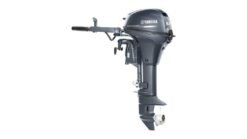
Specifications
| Model | Yamaha T9.9LPHB |
|---|---|
| Type | High thrust four-stroke kicker |
| Horsepower | 9.9 HP |
| Engine | 2 cylinder SOHC, 212 cc |
| Full throttle | 5,000 to 6,000 rpm |
| Starting | Electric |
| Gear ratio | 2.92:1 |
| Propeller | Dual Thrust, included |
| Steering | Tiller |
| Tilt | Power tilt |
| Shaft | 20 inch |
| Weight | About 112 lb |
| Condition | New |
Yamaha publishes the T9.9 range on its High Thrust page, and every Yamaha T9.9LPHB outboard we ship matches those figures.
Do You Actually Need a Kicker?
Not every boat needs one. If you mostly run from place to place, fish at anchor or cast from a drifting boat, your main engine and perhaps a bow-mount electric motor may be all you need. A kicker earns its place when you spend real time trolling, when you fish big water where a breakdown far from the ramp would be serious, or when your main engine is large and expensive enough that you would rather not put trolling hours on it.
Here is a quick way to decide. If you troll for more than a few hours a month, fish water where you could be miles from help, or run a main engine of 90 HP or more, a kicker like the Yamaha T9.9LPHB outboard is worth serious thought. If none of those apply, you can probably do without.
Why a Kicker Beats Trolling on the Main Engine
Big outboards are designed to run fast. At very low speeds, many of them idle too high to troll slowly enough, run unevenly and respond to small throttle changes with big jumps in speed. Running them for hours at those speeds also adds hours to an expensive engine and uses more fuel than you might expect.
A kicker solves all of that. The Yamaha T9.9LPHB outboard idles smoothly at very low speeds, lets you adjust trolling speed in small steps, burns very little fuel and keeps hours off your main engine. And if the main engine ever lets you down, the kicker gets you home.
Why High Thrust for a Kicker
You could use a standard 9.9 as a kicker, and on a light boat it works fine. But most boats that carry a kicker are not light. Multi-species boats, walleye and salmon rigs, deep-V aluminium boats and bass boats with full gear are heavy, and a standard 9.9 can feel weak pushing them, especially into wind or when you need to stop with reverse.
The Yamaha T9.9LPHB outboard is built for exactly that load. Its lower gear ratio and larger Dual Thrust prop give much more push at low speed. Yamaha says high thrust models deliver up to about 60 percent more forward thrust and up to about 70 percent more reverse thrust than standard outboards of the same horsepower. On a heavy boat, that is the difference between holding your line in a breeze and being blown off it.
20 Inch or 25 Inch?
Kicker shaft length depends on your transom and bracket. Measure from the top of the kicker mounting surface to the bottom of the hull. Around 20 inches suits the Yamaha T9.9LPHB outboard. Around 25 inches, which is common on bigger multi-species boats and tall-sided deep-V boats, calls for the 25 inch Yamaha T9.9XPHB. On big water with swells, a little extra depth is better than too little, because a prop near the surface will draw air as the stern lifts.
Tiller or Remote?
The Yamaha T9.9LPHB outboard has a tiller, which means you can steer and throttle it directly from the stern when you want to. Most owners also fit a link arm to the main engine so they can steer from the helm while trolling, adjusting speed with the kicker’s tiller grip or a separate throttle. If you want to run everything from the console, including throttle and gear, look at the remote Yamaha T9.9LPB instead.
Manual Tilt or Power Tilt?
Kickers go up and down several times a day. If yours is easy to reach and you only move spots a few times, manual tilt is fine and keeps the cost down. If the kicker is mounted where reaching it is awkward, or you move spots often, power tilt makes life much easier. The Yamaha T9.9LPHB outboard has power tilt: one press of a switch raises it clear of the water before you run on the main engine, and another lowers it for trolling.
Setting Up the Yamaha T9.9LPHB Outboard
The bracket
Most kickers mount on a bracket beside the main engine. Choose one rated comfortably above the Yamaha T9.9LPHB outboard’s 9.9 HP and roughly 112 pounds. It should lower far enough to get the prop well below the hull and raise high enough to keep it out of the water at speed. Through-bolt it with a backing plate. Before drilling, check that the kicker will clear the main engine, swim ladder and transom fittings through its full range of steering and tilt.
The link arm
A link arm connects the kicker to the main engine so both turn together when you turn the wheel. It lets you troll on the kicker while steering from the console. Fit it carefully and test full lock in both directions to make sure the motors never touch. Disconnect it when you want to steer the kicker with its own tiller.
Electrical
Electric start and power tilt need a 12 volt battery. Use proper marine cables and a fuse, and connect to a battery that is charged by your main engine or a charger. Some owners add a second tilt switch at the helm so they can raise and lower the kicker without walking to the stern.
Fuel
Give the kicker its own portable tank if you can. That way, if the main fuel system has a problem, the Yamaha T9.9LPHB outboard can still get you home. If you plumb it into the main tank, use proper fittings and a water-separating filter, and have the work done by someone who knows marine fuel systems.
Testing
Before your first trip, test everything at the dock: start, tilt up and down, forward, reverse, steering with and without the link arm, and the cooling water stream. It takes ten minutes and avoids surprises on the water.
Trolling Tips
Getting the most from a kicker is partly about the motor and partly about technique. Here is what experienced trolling anglers do with a Yamaha T9.9LPHB outboard.
- Set the throttle friction so the grip stays exactly where you leave it.
- Use GPS speed, not rpm, to set trolling speed. Wind and current change your speed over the bottom more than you might think.
- Troll into the wind or current when you can, so the high thrust prop has something to push against and you get finer control.
- Use reverse to hold position or back up on a snag. The T9.9’s reverse thrust is strong, so small bursts are enough.
- Trim the main engine down into the water when trolling on the kicker. It acts like a rudder and helps the boat track straight.
Break-In and First Season
Every new Yamaha needs a gentle break-in. For the Yamaha T9.9LPHB outboard, vary the throttle at low and medium settings for the first hours, with short bursts higher later on. Do not spend the whole break-in at trolling speed; variety is what matters. Check the oil often and change it at the end of the break-in. Yamaha’s manual has the details and is available on Yamaha’s owner’s manual page.
Keeping a Kicker Ready
The biggest threat to a kicker is not hard use but no use. Kickers sit idle for weeks, fuel goes stale in the carburettor, the impeller takes a set and connections corrode. A few habits keep the Yamaha T9.9LPHB outboard ready:
- Run it for a few minutes at the start of every trip, even if you do not plan to troll.
- Keep its fuel fresh and use stabiliser.
- Flush it after salt water use.
- Check the anode and prop whenever you check the main engine’s.
- Service it every season: engine oil, gear oil, plugs, grease, fuel filter.
- Replace the impeller every few seasons.
- Check tilt fluid and electrical connections.
Before winter, run the carburettor dry, change the oil, flush and store it properly.
Troubleshooting
If the Yamaha T9.9LPHB outboard will not crank, check the battery, fuse, connections and that it is in neutral. If it cranks but will not start, check the fuel vent, hose, primer bulb and fuel freshness, plus the kill switch. If the tilt will not move, check the battery and switch wiring. If the cooling stream is weak, clear the tell-tale outlet and check the intake and impeller.
Which Boats Carry This Kicker
Walleye and multi-species boats
These are the classic home of a high thrust kicker. Anglers troll crankbaits and spinner rigs at very precise speeds, often for hours, and they fish big lakes where the wind can come up quickly. The Yamaha T9.9LPHB outboard gives them fine control at low speed and a strong push into wind, plus a backup motor for the run home.
Salmon and trout boats
Trolling for salmon and trout on big water means long days at slow speeds, often in swells. A high thrust kicker holds speed steadily and keeps the main engine for running. On boats with a 20 inch kicker mount, this is a natural fit; on taller transoms, look at the 25 inch version.
Bass and flats boats
Yamaha itself describes the 212 cc high thrust 9.9 as a perfect kicker for bass, flats and multi-species boats. On flats boats, power tilt also lets you run slowly through shallow water with the motor partly raised.
Deep-V aluminium fishing boats
Big aluminium deep-V boats are popular on northern lakes and coastal bays. They are heavy, they fish in rough water and many of them run large main engines. A Yamaha T9.9LPHB outboard on a 20 inch kicker mount is a common and sensible pairing.
A Typical Trolling Day
You launch at first light and run to the first spot on the main engine with the kicker tilted up. On arrival, you shut the main engine down and trim it into the water to act as a rudder. A press of the tilt switch lowers the Yamaha T9.9LPHB outboard, and a press of the start button brings it to life. With the link arm connected, you steer from the helm and set the kicker to the trolling speed the fish want, checking your GPS speed rather than the rpm.
The wind builds through the morning, but the high thrust prop keeps you on the contour line. A fish hits and runs under the boat, so you knock the kicker into reverse and back up while your partner fights it. Later you move twice, raising and lowering the kicker with the switch each time. By the afternoon, the main engine has done ten minutes of running and the kicker has done six hours of trolling on a small amount of fuel. That is the whole point.
Mistakes to Avoid
Most problems with kickers come from setup, not the motor. Mounting the kicker too high leaves the prop near the surface, where it draws air. A link arm fitted without checking clearance can let the motors collide at full lock. Thin or unfused battery cables cause electrical faults. A kicker sharing fuel with the main engine without a filter can pick up water. And a kicker left idle for months with old fuel in the carburettor will not start when you need it. Set up the Yamaha T9.9LPHB outboard carefully and run it regularly, and it will be ready every time.
Hot and Cold Climates
In warm climates, use stabiliser, keep fuel fresh and raise the kicker clear of the water when the boat is moored. In cold climates, keep the battery fully charged for starting and tilting, drain all water before frost and change the gear oil before winter. Check electrical connections a couple of times a season in salty or damp air.
What Comes in the Crate
The Yamaha T9.9LPHB outboard arrives assembled with the Dual Thrust prop fitted, the owner’s manual and the factory paperwork. Battery, fuel tank, link arm and bracket are usually separate. Check the oil tag and level before the first start.
Warranty Notes
Yamaha’s factory warranty terms vary by country and by type of use. Ask your local Yamaha marine dealer what applies, and keep your invoice and serial number safe.
Kicker vs Bow-Mount Electric Motor
Some anglers wonder whether a bow-mount electric trolling motor can do the same job as a kicker. They are different tools. A bow-mount electric is silent and great for precise boat positioning, casting along a shoreline or holding on a spot with GPS anchoring. But it runs on batteries, so its range and power over a long day are limited, and on a heavy boat in wind it can struggle to troll at higher speeds for hours.
The Yamaha T9.9LPHB outboard runs all day on a small fuel tank, pushes a heavy boat at any trolling speed you need, works well in wind and waves and doubles as an emergency get-home motor. Many serious anglers run both: a bow-mount electric for close work and a kicker for long trolling runs. If you have to choose one for open-water trolling on a heavy boat, the kicker is usually the better choice.
Getting the Speed Right
Trolling speed is often what separates a good day from a slow one. Fish can be very particular, and a change of a few tenths of a knot can make a difference. With the Yamaha T9.9LPHB outboard, you can make tiny throttle changes and see the effect on your GPS speed. Many anglers keep a log of speeds that work for different lures and seasons. Because the kicker idles smoothly and responds finely, you can repeat those speeds reliably from one trip to the next.
What It Costs to Run
At trolling speed, the Yamaha T9.9LPHB outboard uses very little fuel. Oil changes need under a litre and wear parts are cheap. Factor in the hours and fuel it saves on your main engine, and a kicker often pays for a meaningful part of its own price over a few seasons of serious trolling.
Why Yamaha for a Kicker
Yamaha is one of the most common kicker brands on fishing boats, and for good reason. Dealers and parts are available almost everywhere. The T9.9 is a proven, smooth, quiet engine with a long record on the water. And a Yamaha kicker is easy to sell later if you change boats. That is why we stock the Yamaha T9.9LPHB outboard.
Related Motors
- Yamaha T9.9LPHB: our main product page for this model.
- Yamaha T9.9LWHB: manual tilt with a pull-start backup.
- Yamaha T9.9XPHB: 25 inch shaft with power tilt.
- Yamaha T9.9LPB: remote control version.
See also our 9.9 HP Yamaha section and the full Yamaha range.
Ordering
Add the Yamaha T9.9LPHB outboard to your cart and check out, or contact us with your boat details first. We confirm stock and delivery, pack the motor in its crate with extra protection and send tracking once it ships worldwide. International buyers pay their own import duty and taxes; we provide the paperwork customs needs. See our refund and return policy, terms and conditions, reviews and about us page.
FAQ
Is the Yamaha T9.9LPHB outboard new?
Yes, new and crated.
Does the Yamaha T9.9LPHB outboard have power tilt?
Yes.
Can I steer the Yamaha T9.9LPHB outboard from the helm?
Yes, with a link arm to the main engine.
What shaft length?
20 inches. For 25 inches, see the T9.9XPHB.
Is it electric start?
Yes.
How heavy is the Yamaha T9.9LPHB outboard?
About 112 pounds.
Is the prop included?
Yes.
Final Word
Before you order, send us three things: your boat’s make and length, the height of your kicker mount, and the size of your main engine. With that, we can confirm that the Yamaha T9.9LPHB outboard is the right kicker, tell you which bracket and link arm will suit your setup, and make sure everything you need arrives together. Most kicker problems we hear about started with a guess at the shaft length or a bracket that did not quite fit, and both are easy to avoid with a quick check before buying.
A good kicker makes trolling easier, saves fuel and hours on your main engine and gives you a way home if something goes wrong. The Yamaha T9.9LPHB outboard does all of that with high thrust push, push-button tilt and electric start. Add it to your cart, or send us your boat details and we will help you set it up right. Everything else is in the shop.


Reviews
There are no reviews yet.