
 Cart is empty

Electric vs gas outboard used to be an easy call. Electric meant a slow trolling motor, and anything serious ran on gas. That has changed. Modern electric outboards like the Torqeedo range are quiet, clean, simple to own and strong enough to push tenders, sailboats and small fishing boats. Gas outboards still win on range, refuelling time and raw power. The right choice depends on how far you go, how fast, and where you boat.
We sell both from Fresno, California, and ship worldwide: Torqeedo electric outboards and gas four strokes from Yamaha, Suzuki, Honda, Mercury, Tohatsu and Nissan. This electric vs gas outboard guide uses real prices from our stock and compares cost, range, power, weight, maintenance, noise, rules and resale.
Want help choosing? Call or WhatsApp +1 209 690 5983, or tell us about your boat on our contact page.
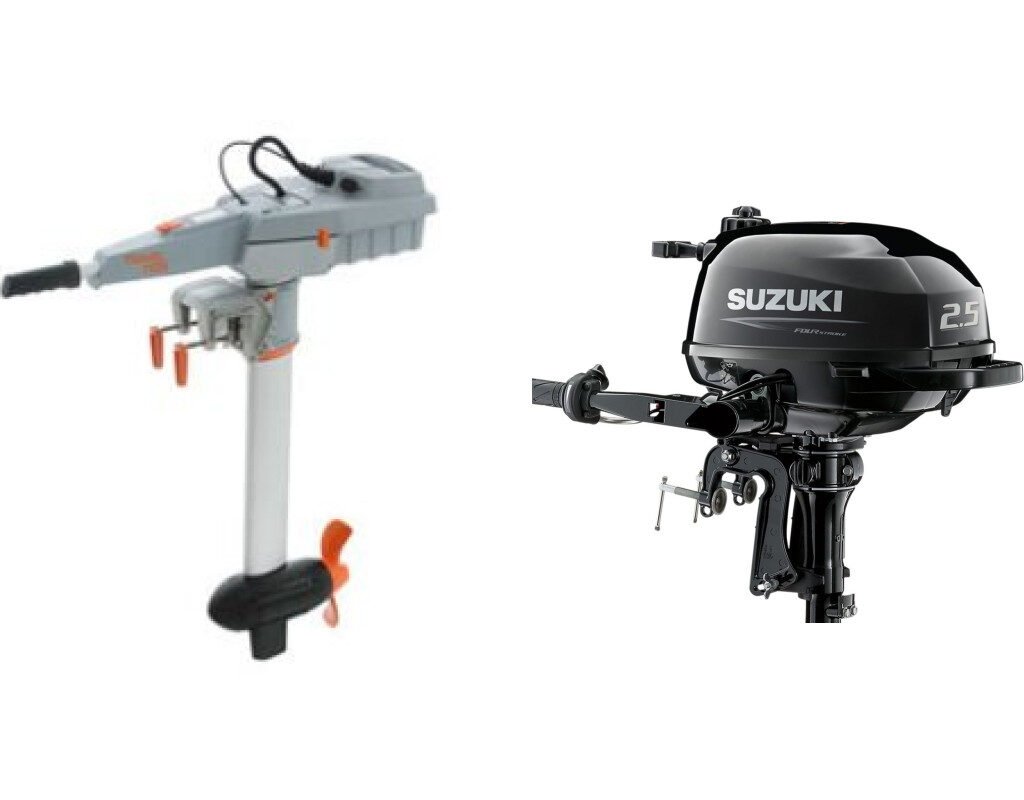
Electric vs Gas Outboard: The Quick Answer
Here’s the short version of the electric vs gas outboard decision:
- Choose electric if your trips are short, your speeds are low, you value silence and no fumes, you boat on a lake that bans gas motors, or you want almost no maintenance.
- Choose gas if you need range, speed, more than about 10 to 15 HP of push, quick refuelling, or the lowest purchase price.
For tenders, canoes, kayaks, small sailboats and slow trolling, electric is now a genuinely good choice. For anything that needs to plane, cover long distances or run all day at speed, gas still makes more sense.
How Each Type Works
To understand the electric vs gas outboard choice, it helps to know how each works. A gas outboard burns fuel in an engine, usually a four stroke today, and turns a propeller through a gearcase. It carries its fuel in a built-in or external tank and can be refilled in minutes.
An electric outboard uses a motor powered by a battery. Small models like the Torqeedo Ultralight and Travel have the battery built into or clipped onto the motor. Larger models like the Torqeedo Cruise run from separate batteries on board. You recharge from shore power, a generator or solar panels. You can read more about the technology on the official Torqeedo site.
Electric vs Gas Outboard Prices Side by Side
Torqeedo compares most of its motors to a gas outboard of similar push, and we list that figure on each product page. Here’s how the prices line up in our stock:
| Torqeedo electric | Roughly comparable to | Electric from | Gas from |
|---|---|---|---|
| Ultralight 403 | About 1 HP | $1,999 | $390 (2.5 HP) |
| Travel 1103 | About 3 HP | $2,948 | $690 (2.5 HP) |
| Cruise 3.0 | About 6 HP | $4,298 | $568 (6 HP) |
| Cruise 6.0 | About 9.9 HP | $4,898 | $1,272 (9.9 HP) |
| Cruise 12.0 FP | 12 kW input (about 16 HP of input power) | $9,999 | $1,683 (15 HP) |
On purchase price, gas wins clearly. An electric outboard costs two to five times as much as a gas motor of similar push, and the Cruise models also need batteries, which can cost as much as the motor again. That’s the biggest hurdle in any electric vs gas outboard decision. Browse all our Torqeedo electric outboards for live prices.
Difference 1: Range and Run Time
This is where gas pulls ahead. A gas outboard runs as long as you have fuel, and you can carry a spare tank. Refuelling takes minutes.
An electric outboard’s run time depends on battery size and how hard you push. Simple math helps here. A battery’s capacity in watt hours divided by the power you’re using gives you hours. The Torqeedo Travel 1103 has a 915 Wh battery and a motor of about 1,100 watts, so at full power you’ll get a bit under an hour. Slow down to around 300 watts and you’ll get roughly three hours, often at a speed that’s only a little slower. The rule with electric is that speed costs range fast.
For a tender going to and from a mooring, or a canoe on a lake, that’s plenty. For a long day of exploring, it may not be. Range is the first thing to think about in any electric vs gas outboard choice.
Difference 2: Power and Speed
On power, the electric vs gas outboard gap is wide. Gas outboards go from 2.5 HP to over 400 HP. Electric outboards in our stock top out with the Cruise 12.0, a fixed pod motor with 12 kW of input power, roughly 16 HP of input. That’s enough to push a small sailboat or a light boat at displacement speed, but not enough to plane a heavy fishing boat for long.
Electric motors do have one advantage: strong torque right from zero revs, so they push well at low speed and have good thrust in reverse. For slow, steady work they feel stronger than the horsepower comparison suggests.
Difference 3: Weight and Handling
Weight is a mixed electric vs gas outboard story. Small electric outboards are easy to handle because you can take the battery off and carry the motor and battery separately. That makes the Torqeedo Ultralight and Travel popular with people who carry a motor down a dock or onto a dinghy. There’s no fuel to spill in the car either.
The Cruise models are a different story, because their batteries are heavy and stay in the boat. Overall weight for an electric setup with a big lithium battery can be similar to or more than a gas motor plus a full tank. When you compare electric vs gas outboard weight, count the whole system, not just the motor leg.
Difference 4: Maintenance
Maintenance is the most one-sided part of the electric vs gas outboard comparison. An electric outboard has no oil to change, no spark plugs, no fuel filter, no carburetor to gum up and no water pump impeller on most models. Basic care is rinsing it after salt water, checking the prop and keeping the battery charged correctly.
A gas outboard needs regular oil and gear oil changes, a new impeller every few seasons, plugs, filters, anodes and careful winter storage with stabilized fuel. Old fuel is the number one reason small gas motors won’t start. If you hate maintenance, the electric vs gas outboard choice leans strongly toward electric. Our how long do outboard motors last guide covers gas motor care.
Difference 5: Running Costs
Per hour on the water, the electric vs gas outboard maths favors electric. Charging an electric outboard costs very little. A 915 Wh battery is a little under one kilowatt hour, which costs cents to a few tens of cents in most places. Gas costs more per hour, though small four strokes are thrifty.
The catch is battery life. Lithium batteries last many hundreds of charge cycles, but they will eventually need replacing, and that’s a big cost. Over the long run, an electric outboard saves on fuel and servicing, while a gas outboard saves on purchase price and battery replacement. For light use, the electric vs gas outboard running cost difference is smaller than people expect.
Difference 6: Noise, Fumes and Comfort
Noise is where the electric vs gas outboard difference is easiest to feel. Electric is almost silent. You can talk normally, hear the birds and creep up on fish. There are no exhaust fumes and no smell of fuel on your hands or in the car. For many owners this is the main reason to choose electric.
Modern four stroke gas outboards are much quieter than old two strokes, but they still make noise and exhaust. On a peaceful lake or a quiet anchorage, electric is simply more pleasant.
Difference 7: Rules and Where You Can Boat
Many lakes, reservoirs and nature areas only allow electric motors, or ban gas motors entirely. In some places there are also horsepower limits. If you boat on one of these waters, the electric vs gas outboard question is answered for you. Always check local rules before you buy. Discover Boating has a good overview of boating basics and rules in different areas.
Difference 8: Charging and Refuelling
Charging time is a real electric vs gas outboard difference. Refuelling a gas outboard takes a few minutes at any fuel dock or with a can. Charging an electric outboard takes hours. The small Torqeedo batteries charge from a standard outlet, and many owners add a solar panel to top up on longer trips. Cruise systems with big batteries need a proper charger and shore power or a generator.
Plan where and when you’ll charge. If you keep your boat on a mooring with no power, a portable battery you take home works well. If you cruise for days, solar or a generator becomes part of the plan.
Difference 9: Resale and Long-Term Value
Gas outboards from well known brands hold value well and sell easily. Electric outboards also sell, but buyers will ask about battery health and age, because the battery is a big part of the value. Keep charging records if you can and store batteries the way the maker recommends. In the electric vs gas outboard resale comparison, gas is more predictable today.
Electric vs Gas Outboard Scorecard
| Category | Winner |
|---|---|
| Purchase price | Gas |
| Range and run time | Gas |
| Top power and speed | Gas |
| Low speed torque | Electric |
| Maintenance | Electric |
| Running cost per hour | Electric |
| Noise and fumes | Electric |
| Refuelling speed | Gas |
| Electric-only lakes | Electric |
| Resale | Gas, slightly |
Voltage and System Size
Small electric outboards are simple: the Ultralight and Travel come with their own lithium battery, and you just charge it and go. The Cruise range is a proper electrical system. The Cruise 3.0 runs on 24 volts and the Cruise 6.0 and 12.0 run on 48 volts. They can use Torqeedo’s own lithium batteries or a suitable bank of AGM or gel batteries wired to the right voltage.
That means installing a Cruise is closer to fitting a small inboard than clamping on a portable. You’ll need the right cables, a main switch and fuse, a charger and somewhere safe to mount the batteries. A gas outboard of the same push only needs a fuel tank and a hose. Factor that installation into your electric vs gas outboard plans, especially on an older boat.
Reliability
Electric motors have very few moving parts, so there’s less to wear out. No pistons, valves, belts or fuel system. The weak points are electronics and connections, which need to stay dry and clean, and the battery, which slowly loses capacity with age and use.
Modern gas four strokes are also very reliable, but they have more parts that need care, and they’re sensitive to stale fuel and missed services. In practice, both types are dependable when they’re looked after. In an electric vs gas outboard comparison of how much attention each one needs, electric asks for much less.
Electric vs Gas Outboard: Five-Year Cost Example
Let’s compare a Torqeedo Travel 1103 with a 2.5 HP gas outboard on a tender used for short trips. These are rough figures to show the shape of the costs, not exact numbers for your situation.
- Purchase: the Travel 1103 starts at $2,948 in our stock, with its battery included. A 2.5 HP gas motor starts at $390 to $1,000 depending on brand.
- Energy: charging a 915 Wh battery costs very little per charge. A small gas motor burns modest amounts of fuel, but you’ll also buy stabilizer and replace stale fuel.
- Servicing: almost none for the electric. The gas motor needs oil, gear oil, a plug and an impeller over five years, either done yourself or by a shop.
- Battery: a well looked-after lithium battery can last many seasons of light use, but budget for a replacement eventually.
For light use, the gas motor is usually cheaper over five years. For frequent use, or if you pay a shop for servicing, the gap narrows. Many owners choose electric anyway for the quiet, clean, no-fuss experience. That’s the honest electric vs gas outboard trade-off.
Environmental Impact
An electric outboard has no exhaust on the water and no risk of fuel spills. That’s a big plus on small lakes, rivers and protected areas. The battery has an environmental cost to make, and the electricity has to come from somewhere, but on the water itself electric is clearly cleaner. Modern four stroke gas outboards are far cleaner than the old two strokes, and they meet strict emissions rules. If keeping the water clean is high on your list, it will push your electric vs gas outboard decision toward electric.
Electric vs Gas Outboard by Boat Type
Kayaks and canoes
Electric is a great fit. The Torqeedo Ultralight is made for kayaks and canoes, and it’s light, quiet and simple. A small gas motor like a 2.5 HP also works on a square-stern canoe. Our outboard motor for canoe guide covers both.
Dinghies and tenders
Electric has become very popular here. The Torqeedo Travel is a favorite for running to and from a mooring, with no fuel to store on the yacht. A 2.5 to 6 HP gas motor is cheaper and goes further. See our portable outboard motors.
Small sailboats
Electric works well for getting in and out of the marina, where you only motor for short spells. The Cruise 3.0 and 6.0 are common choices. For longer motoring in wind and waves, a long shaft gas motor gives more range. See our sailboat outboard motors.
Small fishing boats and jon boats
For slow trolling and quiet approaches, electric is excellent. For running across a big lake at speed, gas is better. Many anglers use both: a gas motor for travel and an electric for fishing. Our kicker motor for trolling guide has more.
Pontoons, runabouts and bigger boats
Gas, for now. These boats need more power and range than today’s portable electric systems give. Browse our Yamaha, Suzuki, Honda and Mercury outboards.
Electric vs Gas Outboard: The Torqeedo Range Explained
Since Torqeedo is the electric brand we stock, here’s how its range fits together:
- Ultralight 403: for kayaks and canoes. Available with a 320 Wh battery or the larger 915 Wh battery.
- Travel 1103: for dinghies, tenders and small boats, with a 915 Wh battery that clips onto the motor. Short and long shaft versions.
- Cruise 3.0: for small sailboats and day boats, running from separate batteries. Tiller and remote versions.
- Cruise 6.0: more power for bigger sailboats and launches, also with tiller and remote versions.
- Cruise 12.0 FP: a fixed pod motor for boats built around an electric drive.
Our guides to the best electric outboard motor and Torqeedo Cruise electric outboards go deeper.
Batteries: The Part That Matters Most
With electric, the battery decides how far you go, how much you spend and how long the system lasts. A few tips from what we see:
- Size the battery for your real trips, with some margin for wind, current and a heavier load.
- Lithium batteries are lighter and last more cycles than lead acid, but cost more up front.
- Store batteries part charged in a cool, dry place over winter, as the maker recommends, and don’t leave them flat for months.
- Use the right charger. The wrong charger can shorten battery life.
Gas has its own version of this: fuel quality. Stale fuel causes most small gas motor problems. In both cases, a little care before storage saves a lot of trouble, whatever side of the electric vs gas outboard question you choose.
Can You Run Both?
Yes, and many boaters do. A common setup on fishing boats is a gas main motor for travel and an electric for quiet trolling. On cruising yachts, some owners carry an electric outboard for the tender and keep a small gas motor as a backup for long runs ashore. Running both gives you the strengths of each, and it can be the best answer to the electric vs gas outboard debate.
Who Should Buy Which
Buy electric if you make short trips at low speed, want silence and no fumes, boat on an electric-only lake, carry the motor often, or want to skip almost all maintenance.
Buy gas if you need range, speed, more than about 10 to 15 HP, quick refuelling, or the lowest purchase price.
Be honest about how you really use your boat. Most regret in the electric vs gas outboard choice comes from buying for the trip you imagine rather than the trips you actually take.
Mistakes to Avoid
- Buying an electric outboard with a battery too small for your normal trip.
- Forgetting the cost of batteries and a charger when pricing a Cruise system.
- Choosing gas for a lake where gas motors are banned.
- Leaving old fuel in a small gas motor over winter.
- Getting the shaft length wrong on either type. Use our shaft length guide.
Delivery and What Arrives
We ship electric and gas outboards worldwide, with tracking on every order. Lithium batteries have special shipping rules, so tell us your country and we’ll confirm the best way to send them. Read how we ship outboard motors overseas.
How to Order
- Pick a motor from our Torqeedo electric outboards or browse our gas motors in the shop.
- Send us your boat type, normal trip length and speed if you’d like advice.
- We confirm the motor, battery and delivery to your address.
- You place the order and we send tracking.
More Guides
- 2 stroke vs 4 stroke outboard
- Jet outboard vs prop
- Honda vs Mercury outboard
- What size outboard for my boat?
Electric vs Gas Outboard FAQ
Is an electric outboard as powerful as a gas one?
For small boats, yes. Torqeedo rates the Cruise 6.0 as comparable to a 9.9 HP gas motor, and electric motors have strong low speed torque. For bigger boats that need to plane, gas is the practical choice today.
How long does an electric outboard run?
Divide the battery’s watt hours by the power you use. A 915 Wh battery runs a little under an hour at about 1,100 W and roughly three hours at about 300 W.
Is an electric outboard cheaper to run?
Per hour, yes. Charging costs very little and there’s almost no servicing. Batteries do need replacing eventually.
Can I use an electric outboard in salt water?
Yes, Torqeedo motors are built for salt water. Rinse after use and follow the care guide.
Are gas outboards being banned?
Not generally, but many lakes and reservoirs only allow electric motors. Check local rules.
Do you ship electric outboards worldwide?
Yes. Lithium batteries have special shipping rules, so we’ll confirm the method for your country.
Final Word on Electric vs Gas Outboard
The electric vs gas outboard choice comes down to how you use your boat. Electric is quiet, clean and almost maintenance free, and it’s perfect for short trips, tenders, canoes, small sailboats and slow fishing. Gas is cheaper to buy, goes further and faster, and refuels in minutes. Think about your real trips, check the rules where you boat, and pick the one that fits.
Need help? Call or WhatsApp +1 209 690 5983 and we’ll help you choose the right electric or gas motor from our stock.