
 Cart is empty

The jet outboard vs prop choice comes down to one question: how shallow is your water? If you run rivers with gravel bars, rocks and a few inches of water, a jet will take you places a prop never could. If you run lakes, bays or open water, a prop is faster, cheaper to run and easier to live with. We sell both at our shop in Fresno, California, with jets starting at $2,816, and we ship worldwide.
Below we’ll go through how each one works, the real pros and cons, the specs, and which motors we’d pick. We’ve talked a lot of river guys and lake guys through the jet outboard vs prop decision, so this is what we tell them, not a sales pitch.
Jet Outboard vs Prop: The Short Answer
| Jet outboard | Prop outboard | |
|---|---|---|
| Shallow water | Excellent, runs in inches once on plane | Needs enough depth for the lower unit |
| Top speed | Lower | Higher |
| Power delivered | Roughly 70 percent of the powerhead | Close to full rated power |
| Fuel use | Higher for the same speed | Lower |
| Low speed steering | Weaker, needs throttle to steer | Good |
| Reverse | Weaker | Strong |
| Rocks and logs | Much more forgiving | Damages prop and gearcase |
| Weeds and debris | Can clog the intake | Can foul the prop |
| Maintenance | Frequent greasing, impeller wear in sand | Normal gearcase service |
| Price for the same output | Usually higher | Usually lower |
If you only remember one thing about jet outboard vs prop, make it this: buy a jet for shallow, rocky rivers, and a prop for everything else.
How a Jet Outboard Works
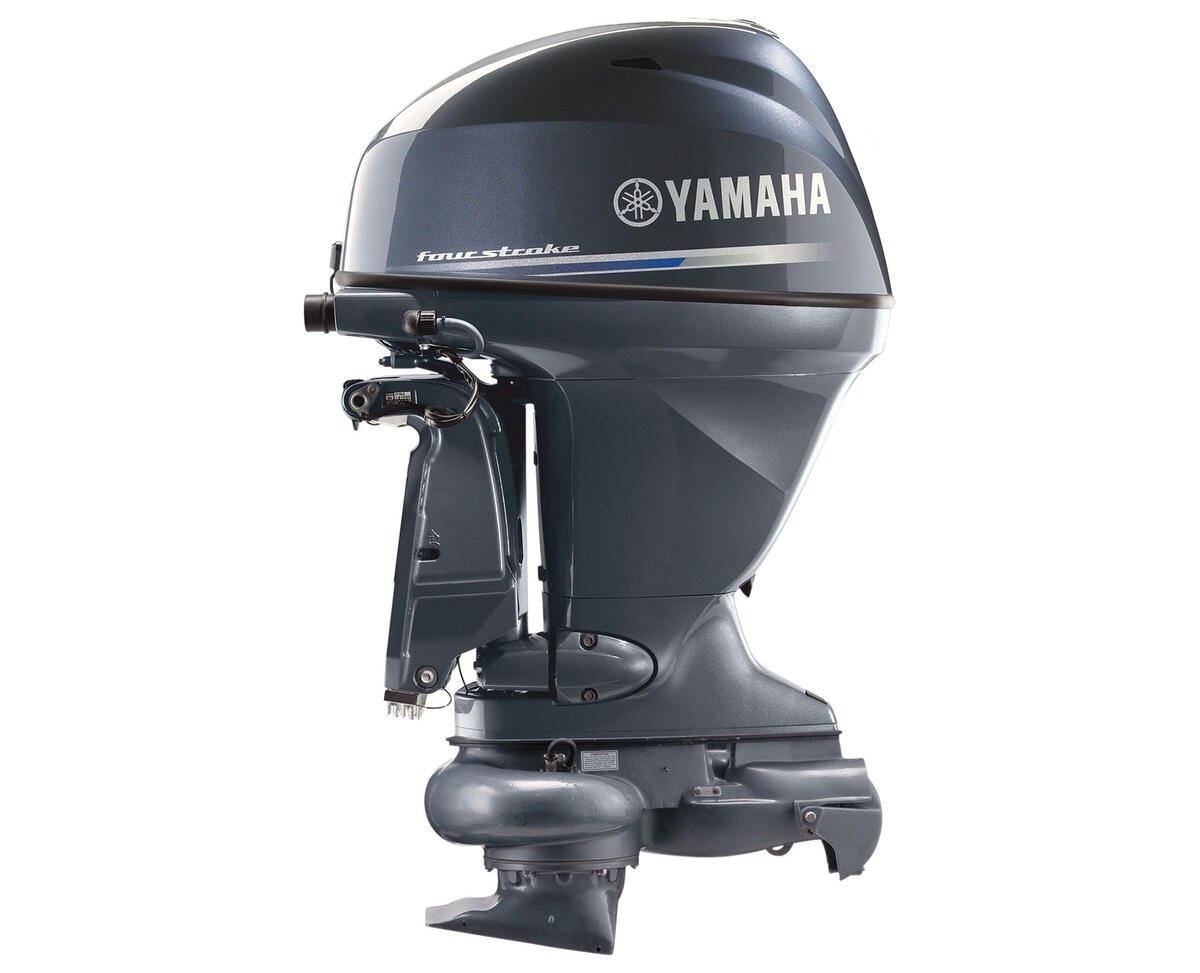
A jet outboard uses the same powerhead as a normal outboard. The difference is below the waterline. Instead of a gearcase and propeller, there’s a jet pump. Water is drawn up through an intake grate on the bottom, an impeller spins inside a housing and throws the water out the back through a nozzle at high speed. That stream pushes the boat forward.
To steer, the whole motor turns and points the stream. To go into reverse, a gate or bucket drops over the nozzle and sends the water forward. There’s no exposed prop and nothing hanging below the bottom of the boat.
Because the pump sits higher than a normal lower unit, the boat’s draft is set by the hull, not the motor. That’s the whole reason anyone looks at jet outboard vs prop in the first place.
How a Prop Outboard Works
A prop outboard drives a propeller through a gearcase that sits well below the hull. The prop bites into solid water and turns nearly all of the motor’s power into thrust. Gear ratio and prop pitch can be tuned for speed, load or hole shot. It’s simple, efficient and the way almost every boat in the world is powered.
The catch is that gearcase. On most motors it hangs a foot or more below the bottom of the boat, so you need enough water under you to keep it from hitting the bottom.
Jet Outboard vs Prop: The 8 Real Differences
1. Shallow water
This is the jet’s big win. Once a planing boat with a jet is up and running, it can cross water just a few inches deeper than the hull itself. River guides and hunters run gravel bars, riffles and flooded timber that would destroy a prop. If that’s your water, the jet outboard vs prop question is already answered.
One catch: a jet only does this on plane. At idle the boat sits lower, and the intake can suck up gravel and rocks. Learn to come off plane in deeper water.
2. Power loss
A jet pump is less efficient than a prop. A common rule of thumb is that a jet delivers about 70 percent of the powerhead’s rated power. So a jet built on a 60 HP powerhead performs roughly like a 40 HP prop motor. Makers name jets in different ways, some by powerhead and some by output, so always ask which one a listing means.
3. Top speed and hole shot
Because of that power loss, a jet is slower than a prop motor on the same powerhead, and it’s slower out of the hole. On a light aluminum river boat that’s often fine. On a heavy boat it can be a deal breaker.
4. Fuel use
Fuel is one of the clearest jet outboard vs prop differences. More fuel for the same speed. If you run long distances, that adds up over a season.
5. Steering and handling
A jet only steers when water is coming out of the nozzle. Back off the throttle in a turn and the boat keeps sliding straight. You learn to keep a bit of throttle on. Docking takes practice, and reverse is weaker than a prop.
6. Rocks, logs and debris
Hit a rock with a prop and you can lose the prop, the skeg or the whole gearcase. Brush a rock with a jet and you’ll probably just scuff the intake. But jets have their own issue. Weeds, leaves and plastic bags clog the intake grate and kill thrust. Most jet owners carry a little rake or tilt up to clear it.
7. Maintenance
Jet units need their driveshaft bearing greased often, in many cases after every day of use. Sand and gravel wear the impeller edges, which opens up the gap between impeller and housing and costs you thrust. You adjust that clearance with shims, and many owners keep it at about 1/32 inch. It’s not hard, but it’s more regular work than a prop motor.
8. Price
For the same delivered power, a jet usually costs more, because you need a bigger powerhead to get the same thrust. That’s another reason the jet outboard vs prop choice should be about your water, not about which sounds cooler.
Which Boats Suit a Jet Outboard?
The hull matters in jet outboard vs prop just as much as the water. A jet works best on a planing hull with a flat or shallow V bottom at the back, ideally aluminum. Many river boats are built for jets, with a flat pad and a tunnel that feeds water to the intake. Deep V fiberglass boats and pontoons aren’t a great match. The intake needs clean, solid water, and on a deep V it can suck air in turns.
Mounting height matters a lot. The leading edge of the intake should sit level with, or very slightly below, the bottom of the hull. Because the jet foot is shorter than a normal gearcase, a jet built from a 20 inch prop motor usually goes on a lower transom than you’d expect. Always check the maker’s mounting chart, or send us your transom height and we’ll tell you which model fits.
Jet Outboard vs Prop by Type of Water
- Deep lakes and reservoirs: prop, every time.
- Bays, estuaries and coastal water: prop. Salt water and sand are also hard on jet impellers.
- Slow, deep rivers: prop, unless you often go up shallow side channels.
- Fast, shallow, rocky rivers: jet.
- Marshes, creeks and flooded timber: jet, or a mud motor.
- Weedy ponds: usually prop. Weeds clog jet intakes quickly.
Find your water on that list and you have your jet outboard vs prop answer. If your water is a mix, think about where you spend most of your hours, and buy for that. A jet outboard vs prop decision made for the one trip a year to a shallow spot usually ends in regret.
Who Should Buy a Jet Outboard
- River anglers and guides running shallow, rocky rivers
- Duck and moose hunters getting into marshes and creeks
- People who live on rivers with sandbars and changing channels
- Anyone who keeps losing props and gearcases to rocks
- Boaters in areas where swimmers or wildlife make an open prop a worry
Who Should Buy a Prop Outboard
- Lake, bay and coastal boaters with enough depth
- Anyone who cares about top speed and fuel use
- People towing skiers or tubes
- Pontoon, bass boat and center console owners
- Anyone on a budget
Most people reading about jet outboard vs prop end up in the prop group, and that’s fine. A jet is a specialist tool.
Jet Outboards We Sell
| Jet motor | Type | Our price |
|---|---|---|
| Mercury 25MLHGA Jet | Tiller, pull start | $2,816 |
| Mercury 25ELHGA Jet | Tiller, electric start | $2,993 |
| Mercury 40ELPT Jet | Remote, power trim | $3,093 |
| Mercury 35ELPT Jet | Remote, power trim | $3,802 |
| Yamaha Jet Drive 30HP | Jet | $5,130 |
| Yamaha Jet Drive 40HP | Jet | $5,210 |
| Mercury 25 HP Jet EFI | EFI, three cylinder | $6,155 |
| Yamaha F90JB | Remote jet | $6,300 |
| Tohatsu MFS25AJETETL | Jet | $7,699 |
| Yamaha F40JEA Jet | Remote jet | $8,090 |
| Yamaha F60 Jet, extra long tiller | Tiller jet | $8,799 |
Want more detail on the Yamaha range? Read our Yamaha jet outboard for sale guide. For bigger river boats, see the Evinrude 105 HP jet page.
Prop Outboards to Compare
Here are prop motors of similar size, so you can see the jet outboard vs prop price gap for yourself:
| Prop motor | HP | Our price |
|---|---|---|
| Mercury 25ELHPT EFI | 25 | $2,865 |
| Mercury 40ELPT | 40 | $3,619 |
| Yamaha F40LA | 40 | $4,365 |
| Yamaha F60LB | 60 | $4,780 |
| Yamaha F90LB | 90 | $5,835 |
You can also browse all Mercury, Yamaha and Tohatsu outboards.
Jet Outboard vs Prop Specs Example
Here’s a typical comparison using a 60 HP class powerhead, so you can see what the power loss means in practice. Figures are approximate.
| Spec | 60 HP prop | Jet on the same powerhead |
|---|---|---|
| Power at the water | About 60 HP | About 40 HP equivalent |
| Depth needed when running | Lower unit depth plus a margin | A few inches below the hull on plane |
| Weight | Base motor | Usually a bit more |
| Fuel at cruise | Lower | Higher |
| Reverse | Strong | Weaker |
Put simply, in the jet outboard vs prop trade you give up about a third of your power to gain the ability to run very skinny water.
Real Jet Outboard vs Prop Stories From Our Customers
The river guide who kept buying props
A fishing guide on a shallow, rocky river told us he went through three props and a lower unit in one season with a 60 HP prop motor. He wasn’t careless. The river just changes every year after floods. He switched to a jet on a 60 class powerhead. His boat is slower now, and he burns more fuel, but he hasn’t lost a day of guiding to a broken gearcase since. For him the jet outboard vs prop debate was over after the second prop.
The lake owner who almost bought a jet
Another buyer called us asking for a jet because he liked the idea of no prop under the boat. When we asked about his water, it turned out he boats on a deep reservoir with a sandy beach at one end. We talked him into a 40 HP prop motor instead. He saved money, got a faster boat and uses less fuel. The only place a jet would have helped was the last few metres to the beach, and a tilt and a short wade handle that fine.
The hunter in flooded timber
A duck hunter runs his 16 foot flat bottom through flooded fields and creeks before daylight. He hits stumps he can’t see. A jet lets him bump over most of it, and when something does clog the intake, he tilts up and clears it with a stick. He says he’d never go back to a prop for that kind of water.
Is There a Middle Ground?
Sort of. Some boaters with prop motors use a jack plate to raise the motor in shallow water, and a few use surface drive mud motors. Those are a different category. For outboard buyers, though, the jet outboard vs prop choice is the main one. If you mostly run deep water with the odd shallow spot, a prop motor with good trim and careful driving covers it. If shallow water is where you spend most of your time, a jet is worth every bit of the trade off.
Can You Convert a Prop Outboard to a Jet?
On many motors, yes, and it’s a cheap way to try the jet side of jet outboard vs prop. Jet conversion kits replace the lower unit with a jet pump. They’re popular with river boaters who already own a good prop motor. You still lose that roughly 30 percent of thrust, and you need to mount the motor at the right height. It’s a good option if you have a solid motor and want to try jet boating. If you’re buying new, a factory jet model is usually simpler, with the right parts and mount height worked out already.
Sizing a Jet: Quick Guide
Because of the power loss, sizing works differently on the jet side of jet outboard vs prop. Start with the prop horsepower your boat would need, then go up roughly one size class for the jet. Here’s a rough guide for light aluminum river boats:
| Boat | Prop HP you’d use | Jet to look at |
|---|---|---|
| 12 to 14 ft flat bottom | 15 to 20 | 25 HP class jet |
| 14 to 16 ft river boat | 25 to 40 | 35 to 40 HP class jet, built on a bigger powerhead |
| 16 to 18 ft river boat | 40 to 60 | 60 to 90 class jet |
| 18 to 20 ft river boat | 75 to 115 | 90 to 150 class jet |
Check your capacity plate first. Our guide on what size outboard for my boat explains how to read it, and our Mercury 25 HP, Mercury 40 HP, Yamaha 60 HP and Yamaha 90 HP pages list the jet and prop models side by side.
Running Costs Over a Season
Let’s be honest about money, because it’s a big part of jet outboard vs prop. A jet burns more fuel for every mile. It needs grease often, and in sandy rivers the impeller and wear ring need attention every season or two. A prop motor in deep water needs routine service and that’s about it.
But a prop motor in a rocky river can be the expensive one. A new stainless prop isn’t cheap, and a cracked gearcase can cost a big chunk of what you paid for the motor. If you hit bottom a few times a season, the jet often ends up cheaper over the life of the boat. So when you weigh jet outboard vs prop costs, count the repairs you’re likely to need, not just the fuel.
Four Stroke Jets and Older Two Stroke Jets
Most jet outboards sold new today are four strokes, like the Yamaha and Mercury jets on this page. They’re quieter, cleaner and use less fuel than the old two stroke jets. Many river boaters still run older two stroke jets because they’re light and punchy. If you’re looking at a used one, the same rules apply as for any used motor, plus a close look at the jet unit itself.
Buying a Used Jet Outboard
A used jet can be a good deal, but check the jet foot carefully. Look at the impeller edges for rounding and chips, check the clearance, look inside the intake for gouges, and pull a little grease from the bearing to see if it’s milky. Then do the usual compression, cooling and shifting checks. Our full guide on how to check a used outboard before buying covers those. We also list tested motors in our used outboard engines section, and you’ll find older jet friendly motors in our Evinrude E-TEC range.
Jet Outboard Tips From Owners
- Grease the jet bearing as often as the maker says, and check the old grease. If it’s milky, water is getting in.
- Carry a small rake or stick to clear the intake grate.
- Keep an eye on impeller clearance. Worn impellers lose a lot of thrust.
- Come off plane in deep water, not over the shallows.
- Keep some throttle on in turns so the boat steers.
- Practice docking before you need to do it in a current.
Common Jet Outboard vs Prop Mistakes
- Buying a jet for a deep lake. You pay more and get a slower, thirstier boat for no benefit.
- Buying a prop for a rocky river. You’ll spend the savings on props and gearcases.
- Undersizing the jet. Remember the power loss. If you’d want 40 HP with a prop, look at a jet built on a 60.
- Mounting the jet at the wrong height. Too high and it sucks air. Too low and you lose the shallow water benefit.
- Putting a jet on the wrong hull. Deep V hulls and pontoons rarely work well.
How to Order From Us
- Tell us your boat, your transom height and the water you run.
- We’ll confirm whether jet outboard vs prop makes more sense for you, and which model fits.
- Order on the product page, or call or WhatsApp +1 209 690 5983.
- We confirm stock and shipping to your country.
- Your motor ships crated, with tracking.
New to buying online? Read how to buy outboard motor online, see our free shipping page, and check what size outboard for my boat if you’re not sure of the horsepower. The makers’ own sites, Yamaha Outboards and Mercury Marine, have mounting charts and owner manuals for their jet models.
Jet Outboard vs Prop: FAQ
Is a jet outboard faster than a prop?
No. On the same powerhead, a prop is faster. A jet’s advantage is shallow water.
How shallow can a jet outboard run?
On plane, many jet boats cross water just a few inches deeper than the hull. At idle they need more depth.
Do jet outboards use more fuel?
Yes, for the same speed, because the pump is less efficient than a prop.
Is a jet outboard safer around swimmers?
There’s no exposed prop, which is a plus, but the intake still has strong suction. Keep people well clear of any running motor.
Which is cheaper to maintain in the jet outboard vs prop debate?
A prop motor in deep water. A jet in rocky rivers, because you won’t keep replacing props and gearcases.
Do you ship jet outboards worldwide?
Yes. Tell us your country and we’ll confirm cost and timing before you pay.
Final Word on Jet Outboard vs Prop
If your water is shallow and rocky, get a jet. If it isn’t, get a prop. That’s really all there is to jet outboard vs prop. Just remember the jet power loss when you choose a size, mount it at the right height, and keep it greased. Every motor on this page links to its listing with our current price. Call or WhatsApp +1 209 690 5983, use our contact page, browse the shop, read our customer reviews, or learn more about us.