
 Cart is empty
Description
Here is a new Yamaha LF200XB for sale, the counter-rotating 200 horsepower in-line four on a 25 inch shaft, with mechanical controls. It is the motor you put alongside a standard rotation F200XB when you run twin 200s on a boat with a 25 inch transom. The motor ships crated, and we send outboards to customers all over the world.
The leading “L” in LF200XB is the important bit. It tells you the propeller spins the opposite way to a standard motor. On twin engine boats that is essential. It cancels out the sideways push each prop makes, so the boat runs straight, turns evenly and backs up the way you expect.
Mechanical controls make this a good choice for owners who want simple, proven cable rigging, or who already have a compatible Yamaha mechanical twin control in good shape. Below you will find full specs, matching advice, rigging notes, care tips and ordering details. Questions? Get in touch.
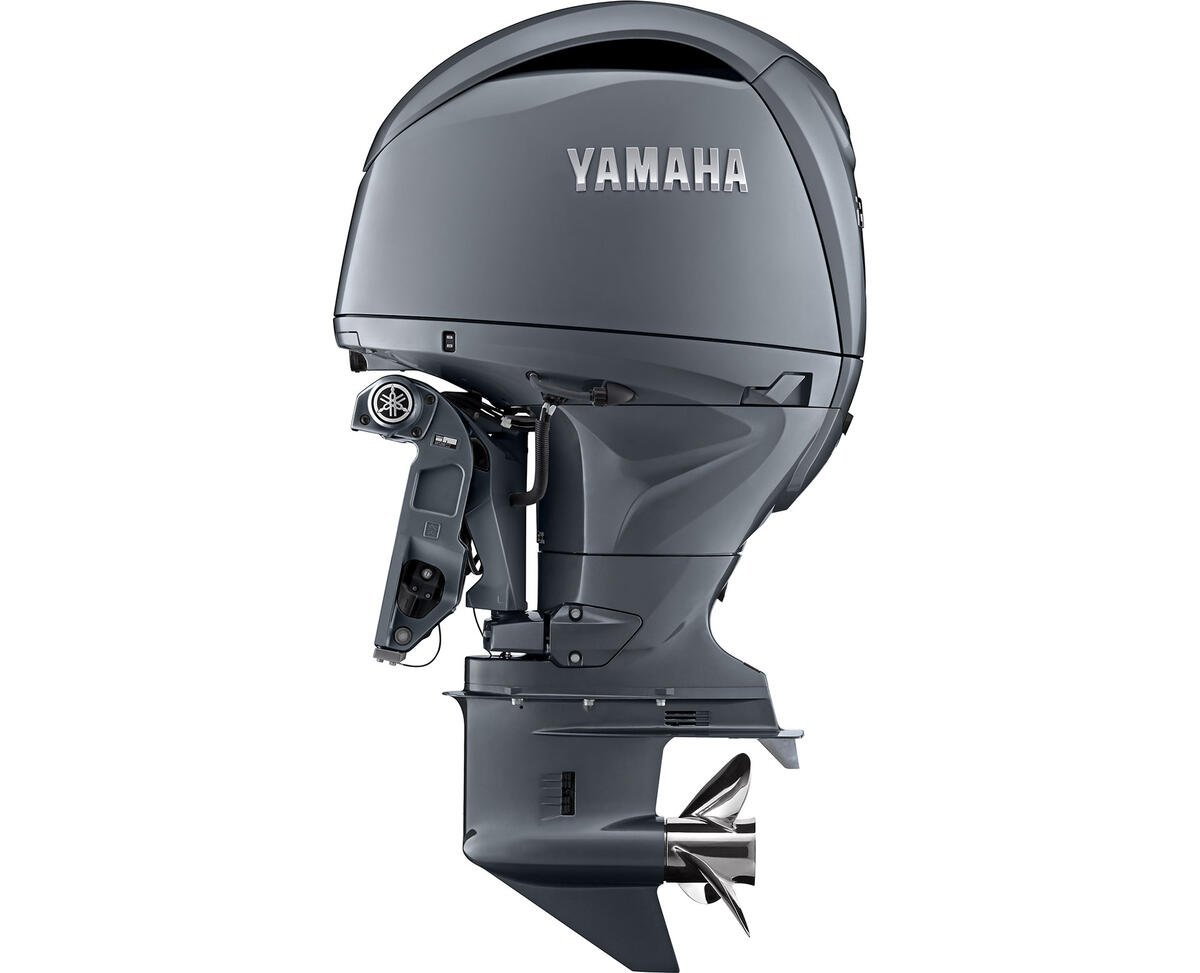
Yamaha LF200XB for Sale: Summary
- New Yamaha LF200XB outboard
- 200 hp, 2.8 litre in-line four, DOHC, 16 valves
- Variable Camshaft Timing
- Counter-rotation for twin engine setups
- 25 inch extra-long shaft
- Mechanical throttle and shift
- EFI, electric start, power trim and tilt
- 50 amp alternator
Twin 200s, 25 inch transom, cable controls? Then the Yamaha LF200XB for sale here is your second motor.
Specifications
Details for the Yamaha LF200XB for sale on this page:
| Model | Yamaha LF200XB |
| Horsepower | 200 hp |
| Engine | 4 stroke in-line 4, DOHC, 16 valves |
| Displacement | 2,785 cc (2.8 L) |
| Valve timing | Variable Camshaft Timing |
| Full throttle range | 5,000 to 6,000 rpm |
| Fuel system | Electronic fuel injection |
| Fuel | 89 octane unleaded, max 10% ethanol |
| Starting | Electric |
| Shaft | 25 in |
| Rotation | Counter (left hand) |
| Controls | Mechanical |
| Gear shift | F-N-R |
| Trim and tilt | Power trim and tilt |
| Alternator | 50 amp |
| Lubrication | Wet sump |
| Trolling | Variable Trolling RPM, 650 to 900 rpm |
| Mounting centers | 26 in |
| Approx. weight | Around 500 lb |
| Condition | New, crated |
What Counter-Rotation Does
A propeller does more than push forward. It also nudges the stern sideways in the direction it spins. With one motor you hardly notice. With two motors spinning the same way, the effect doubles and the boat pulls hard to one side. Steering feels heavy and reversing gets awkward.
Pair a standard rotation motor with a counter-rotating one and the sideways forces cancel out. The boat runs true, turns equally well in both directions and backs up straight. That is exactly what the Yamaha LF200XB for sale is built to do alongside the standard Yamaha F200XB.
Port or starboard?
Most twin outboard boats put the standard motor on the starboard side and the counter-rotating motor on the port side, so the tops of the props turn outward. Some builders choose differently for a particular hull. Check with your builder or rigger.
Props
The counter-rotating motor needs a left-hand prop. Buy props as a matched pair for twins: same size and pitch, opposite rotation. Yamaha offers propellers in both rotations for its in-line four models.
Is the LF200XB the Right Motor?
Choose the Yamaha LF200XB for sale if:
- You are rigging or repowering a twin 200 setup
- Your transom is about 25 inches
- You want mechanical controls, matched to an F200XB
- You are replacing the counter-rotating motor from an existing mechanical pair
For a 20 inch transom, look at the counter-rotating Yamaha LF200LCA. For digital controls on a 25 inch transom, look at the Yamaha LF200XCA.
Matching Twin Motors
- Same horsepower: both 200
- Same shaft length: both 25 inch
- Same control type: both mechanical
- Same generation where possible
- Matched props, opposite rotation
If you are replacing one motor of an older pair, send us the model code and serial number of the motor you are keeping. We will help make sure the Yamaha LF200XB for sale will work properly with it.
Boats That Run Twin 200s on 25 Inch Transoms
- Offshore center consoles from 24 to 27 feet
- Walkaround and express fishing boats
- Power catamarans with 25 inch transoms
- Dive, charter and patrol boats
Twins give you a get-home option offshore, much better low speed control and more total power without the weight of a large single engine.
Performance
Twin F200s on a 24 to 26 foot offshore boat typically give strong acceleration, a top end somewhere in the high 40s mph and a comfortable cruise in the low to mid 30s, depending on hull, load and props. Combined fuel use is roughly double a single motor, but the efficient in-line fours keep it reasonable for the size of boat.
Handling is the big benefit. With counter-rotation the boat tracks straight, and at low speed you can steer using the throttles. Docking and close quarters work become much easier.
Rigging Twin Mechanical Motors
For a twin mechanical setup with the Yamaha LF200XB for sale and an F200XB, you will need:
- A Yamaha twin mechanical control box
- Throttle and shift cables for both engines
- Harnesses and key switches for both
- Gauges for both engines
- Hydraulic steering sized for twin 200s, with a tie bar
- Separate fuel feeds with their own water separating filters
- A cranking battery for each engine, plus house battery if needed
- A matched pair of props
Cable runs on twin mechanical setups need to be routed carefully so both throttles feel even and both shifts engage cleanly. An experienced rigger will make sure they are adjusted to match.
Running Costs
Twin F200s use 89 octane unleaded. Use fresh fuel with no more than 10 percent ethanol and give each motor its own water separating filter. The light, efficient 2.8 litre in-line fours keep twin running costs lower than heavier alternatives.
Maintenance
Service both motors together every 100 hours or once a year:
- Engine oil and filters
- Gear oil
- Fuel filters and separator elements
- Spark plugs as needed
- Anodes
- Grease fittings, including the tie bar
- Water pump impellers every few years
- Timing belt checks
- Cable adjustment checks on mechanical controls
Break-in
Break in both motors together following the owner’s manual. Vary throttle, avoid long full-throttle runs, and change oil after break-in.
The 200 Range
- Yamaha LF200XB for sale (this one): 25 inch, mechanical, counter-rotation
- Yamaha F200XB: matching standard rotation partner
- Yamaha LF200XCA: 25 inch, digital, counter-rotation
- Yamaha LF200LCA: 20 inch, digital, counter-rotation
- Yamaha F200XCA: 25 inch, digital, standard
See them all in our 200 HP Yamaha section.
Ordering
Condition
New in the factory crate. Photos available on request.
Shipping
Worldwide with FedEx, UPS and USPS, crated and tracked. We can ship pairs together. Ask for a delivered price.
Payment
Order through the shop or ask us for an invoice.
Delivery
Inspect the crate before signing. See our refund and return policy and terms.
Warranty
Depends on the country of registration and use. Ask before ordering the Yamaha LF200XB for sale and we will confirm in writing.
Read our reviews or find out more about us.
More From Yamaha
See Yamaha Motor Canada’s F200 page and the Yamaha Outboards site.
Handling a Twin Engine Boat
Twin outboards change the way you drive. With the Yamaha LF200XB for sale and its partner on the transom, here are the skills to practise.
Turning on the spot. At idle, put one engine in forward and the other in reverse. The boat pivots in its own length. Swap them to turn the other way. Once you get the hang of this, docking becomes much easier.
Walking the stern. Combining throttle and a little steering lets you push the stern toward a dock. Practise in open water with fenders out before trying it in a tight marina.
Matching rpm. With mechanical controls you match the two motors by eye on the tachs. At cruise, nudge one lever until both read the same rpm. Matched motors run more efficiently and the boat tracks straighter.
Trimming together. Keep both motors trimmed evenly unless you are correcting a list from wind or uneven weight.
Getting home on one. If one motor stops, tilt it up to reduce drag and run home slowly on the other. Practise on a calm day so you know how your boat behaves. Many boats will not plane on one 200, so expect a slow ride and plan fuel accordingly.
Fuel System for Twins
Give each motor its own fuel line, primer bulb and water separating filter. One tank with two pickups works, as does two tanks with a crossover valve. Independent filtration is the key. If one filter clogs, only one motor is affected. Check tank vents, because two 200s at cruise draw a lot of fuel. Carry a spare filter element for each motor offshore.
Steering and Tie Bar
Twin 200s need hydraulic steering sized for the combined power. A tie bar links the two motors so they turn together. It must be set so both motors point exactly the same way. Misalignment causes drag, uneven wear and a boat that wanders. Check tie bar bolts at each service.
Offshore With Twin 200s
Many buyers of a Yamaha LF200XB for sale run offshore. Twins add a margin of safety, but good habits still matter.
- Plan fuel with the rule of thirds: a third out, a third back, a third reserve
- Remember that running on one engine off plane can use more fuel per mile
- Carry spare fuel filter elements for both motors
- Keep a basic tool kit, spare prop nut, washer and cotter pin
- Carry a VHF, a way to call for help, flares and life jackets
- Check the weather before leaving and keep watching it
- File a float plan with someone ashore
Salt Water Care for Twin Motors
Salt is tough on outboards. With two motors, the work doubles, but so does the payoff.
- Flush both motors with fresh water after every trip
- Rinse cowlings, brackets, trim rams, tie bar and steering
- Check both sets of anodes monthly in summer
- Spray powerheads with corrosion protectant every few weeks
- Keep electrical connections clean and greased
- Wax both cowlings twice a year
Replacing One Motor From a Pair
If one of your twin 200s has reached the end of its life, you might only need a Yamaha LF200XB for sale to replace it. If the other motor is in good shape, the same generation and also mechanical, replacing just one is often fine. If the other motor has very high hours or is from a different generation, replacing both may make more sense in the long run. Send us the model codes and serial numbers and we will give you an honest opinion.
Keeping Records
Keep a log for each motor with dates, hours, services and parts. Matching service records help your mechanic spot issues early and add value when you sell the boat. Buyers pay more for twin motors with clear, matching histories.
Electrical Setup for Twins
Give each motor its own cranking battery and add a house battery for electronics. Use switches or automatic charging relays so the cranking batteries are always saved for starting. The 50 amp alternators on the Yamaha LF200XB for sale and its partner keep everything charged while you run. Keep cables short and well sized, connections clean and tight, and accessories on their own fused panel. A neat, labelled electrical system is easier to fix and far more reliable.
Yamaha’s Command Link gauges work with mechanical motors too. They show rpm, trim, hours, voltage and warnings for each engine. A fuel flow sensor on each motor shows real-time consumption, which is very handy on longer trips.
Common Mistakes When Buying Twins
- Ordering two standard rotation motors
- Mixing mechanical and digital motors
- Mixing shaft lengths
- Forgetting the left-hand prop
- Not budgeting for a twin control and tie bar
- Exceeding the boat’s total horsepower rating
- Sharing one fuel filter between both motors
Check each of these before you buy the Yamaha LF200XB for sale and its partner, and your twin rig will go together smoothly.
Storage Routine
- Stabilize fuel and run both motors so treated fuel reaches the injectors
- Change oil and filters on both
- Change gear oil on both
- Grease all fittings, including the tie bar
- Trim both motors down
- Maintain or disconnect batteries
- Spray powerheads with corrosion protectant
- Cover both motors
Why Choose Mechanical Controls on Twins?
Digital controls get a lot of attention these days, so why would anyone choose a mechanical pair like the Yamaha LF200XB for sale and the F200XB? There are good reasons.
Lower rigging cost. A twin mechanical control box and cables cost less than a twin digital system with harnesses and hubs.
Reuse what you have. If your boat already has a good Yamaha twin mechanical control, you can often keep it, which saves money and time.
Simplicity. Cables are easy to understand and easy to fix. Almost any marine mechanic in almost any port can adjust or replace them.
Remote locations. If you boat far from big service centres, simple mechanical systems can be easier to keep running with basic tools and parts.
The trade-off is feel. Cables are heavier than digital controls, especially on long runs, and they need adjusting from time to time. Shifts are not quite as smooth. For many owners, especially those repowering an existing mechanical boat, those trade-offs are well worth the savings.
Cable Care
If you go mechanical, look after your cables. Check them every season for stiffness, kinks, cracked jackets or corrosion at the ends. Lubricate the ends as your mechanic recommends. Make sure both throttles and both shifts are adjusted to match, so the motors respond the same way to the same lever position. Replace cables as a pair if one starts to feel stiff, because uneven feel makes it harder to keep twin motors in sync.
Questions to Answer Before Ordering
Do I need counter-rotation? Only for the second motor on a twin rig.
Is my transom 25 inches? Measure from the top of the transom straight down to the bottom of the hull.
Is my partner motor mechanical? The Yamaha LF200XB for sale is mechanical, so it pairs with the F200XB.
Is my boat rated for twin 200s? Check the capacity plate for total horsepower and weight.
What is the delivered price? Ask us for a quote to your door or port.
Which warranty applies? Ask us before ordering and we will confirm in writing.
If you are unsure about any of these, message us. We would rather spend a few minutes getting it right than have you order the wrong Yamaha LF200XB for sale.
What Comes in the Crate
The Yamaha LF200XB for sale ships with the outboard and its factory paperwork. Controls, cables, gauges, steering and props are separate because they depend on your boat. Record the serial number and keep it somewhere safe off the boat. Take a few photos of the motor out of the crate for your insurance records.
A Day Offshore on Twin 200s
To show what owning a twin rig with the Yamaha LF200XB for sale is like, here is a typical offshore day.
You start both motors at the dock. They fire straight away and settle into a quiet idle. You back out of the slip using the throttles to steer the stern, then idle through the harbour. Once you clear the breakwater, you push both levers forward together. The boat lifts onto plane quickly and you settle both motors at the same cruise rpm by watching the two tachs.
The ride out is steady. The 25 inch legs keep the props gripping in the swell, and with counter-rotation the boat tracks straight without constant steering correction. At the fishing grounds you slow to trolling speed and use the variable trolling feature on each motor to get the lures swimming just right.
Later the wind picks up. You trim the bows down slightly, ease off the throttles and head home at a comfortable pace. Back in the marina, you slip into the berth by playing one motor against the other. Then you flush both engines, rinse the boat and head home. Two reliable motors, one straight-running boat, no drama.
Choosing Props for Twins
For twin 200s offshore, many owners choose 4 blade stainless props in a matched right and left-hand pair. Four blades grip better in waves and help the boat stay on plane at lower speeds when the sea forces you to slow down. Three blade props can give a touch more top speed on calm days. Whatever you choose, both props must be the same size and pitch, and the motors should both reach 5,000 to 6,000 rpm at full throttle with a normal load. If one motor runs noticeably higher or lower than the other, check for a damaged prop or uneven setup before anything else. Carry a spare pair of props, or at least one of each rotation, on longer trips.
Frequently Asked Questions
Can I order the pair from you?
Yes. We list the standard rotation F200XB as well as the Yamaha LF200XB for sale here. Contact us and we can quote both motors together, shipped in one consignment where possible.
How long will twin Yamaha 200s last?
With regular servicing, clean fuel and good care, Yamaha four strokes in this class commonly run past 2,000 hours, and many go further. Keep both motors serviced together and protected from salt, and a Yamaha LF200XB for sale paired with an F200XB should give you many years of service.
Can one motor be digital and the other mechanical?
It is not recommended. Twin motors should use the same type of controls so they behave the same and can be rigged with one control box.
Is the Yamaha LF200XB for sale new?
Yes, new in the factory crate.
What does LF200XB mean?
L is counter-rotation, F is four stroke, 200 is horsepower, X is a 25 inch shaft and B is the model version with mechanical controls.
What should I pair it with?
The standard rotation Yamaha F200XB, which has the same 25 inch shaft and mechanical controls.
Does it need a special prop?
Yes, a left-hand prop.
Do you ship the Yamaha LF200XB for sale worldwide?
Yes. Ask for a quote.
Complete Your Twin Setup
If the Yamaha LF200XB for sale suits your boat, add it to the cart or contact us about a matched pair. Browse all our Yamaha outboards, see the 175 HP range, or read our blog.


Reviews
There are no reviews yet.