
 Cart is empty
Description
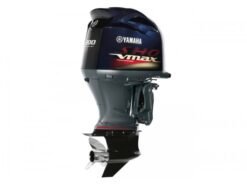
We have a brand new Yamaha F200LB for sale, crated and ready to ship worldwide. The F200LB is Yamaha’s 200 horsepower in-line four on a 20 inch shaft with plain mechanical controls. It uses the same 2.8 litre block as the F175 but adds variable camshaft timing and more output, so it pulls harder from low rpm and has more in reserve when the boat is loaded.
It is one of the most popular 200s in the world for a simple reason. It gives you V6-like performance in a lighter, simpler and more economical package. Bay boats, center consoles, pontoons, aluminum fishing boats and family runabouts all wear it well.
Below you will find the specs, how it compares to the 175, which boats it suits, how to rig it, what it costs to keep and how buying from us works. Any questions, just ask us.

Yamaha F200LB for Sale: The Main Facts
- New Yamaha F200LB four stroke outboard
- 200 hp from a 2.8 litre in-line four
- DOHC, 16 valves, Variable Camshaft Timing
- 20 inch shaft
- Mechanical throttle and shift
- Electronic fuel injection, electric start
- Power trim and tilt
- 50 amp alternator
- Standard right-hand rotation
If your boat is rated for 200 hp, the transom is about 20 inches, and you want cable controls you can rig easily, the Yamaha F200LB for sale here is a great match.
Yamaha F200LB Specifications
These are the details for the Yamaha F200LB for sale on this page.
| Model | Yamaha F200LB |
| Horsepower | 200 hp |
| Engine type | 4 stroke in-line 4, DOHC, 16 valves |
| Displacement | 2,785 cc (2.8 L) |
| Valve timing | Variable Camshaft Timing (VCT) |
| Full throttle range | 5,000 to 6,000 rpm |
| Fuel system | Electronic fuel injection |
| Recommended fuel | 89 octane unleaded, max 10% ethanol |
| Starting | Electric |
| Shaft length | 20 in |
| Controls | Mechanical |
| Gear shift | F-N-R |
| Rotation | Standard |
| Trim and tilt | Power trim and tilt |
| Alternator | 50 amp |
| Lubrication | Wet sump |
| Trolling | Variable Trolling RPM, 650 to 900 rpm |
| Mounting centers | 26 in |
| Approx. weight | Around 490 lb |
| Condition | New, crated |
F200 vs F175: Is the Extra 25 hp Worth It?
Both motors use the same 2.8 litre block and weigh almost the same. The F200 adds variable camshaft timing and more output. In practice that means:
- A stronger hole shot, especially with a heavy load
- More mid-range punch for pulling skiers or tubes
- A few more miles per hour at the top end
- Better performance when the boat is loaded with people, fuel and gear
The trade-off is fuel. The F200 calls for 89 octane, while the F175 runs on regular 87. If your boat is rated for 200 and you often carry a full load, the Yamaha F200LB for sale is usually worth it. If you run light and mostly cruise, the Yamaha F175LA may be all you need.
Boats That Suit a Yamaha F200LB for Sale
- Bay boats from 20 to 23 feet
- Center consoles with 20 inch transoms
- Dual consoles and bowriders
- Tritoon pontoons rated for 200
- Big aluminum walleye and multispecies boats
- Ski and wakeboard boats with outboard power
For a 25 inch transom, look at the Yamaha F200XB, which is the same motor with a longer leg.
How It Runs
On a 21 foot bay boat or pontoon with a normal load, an F200 typically gives a top end in the mid to high 40s mph and a cruise in the low to mid 30s. Heavier tritoons might top out lower, light bay boats a little higher. These are general figures, and your boat, prop and load will change them.
The motor is smooth thanks to twin counterbalance shafts, and quiet at cruise. The variable camshaft timing makes the throttle feel lively, especially when you punch it out of a turn or from a stop.
Trolling
With a compatible Yamaha gauge you can adjust idle from 650 to 900 rpm in 50 rpm steps. Very handy for trolling or holding a slow, steady speed.
Props
Most boats in this class run a 3 or 4 blade stainless prop. Pitch depends on the hull and load. The aim is to reach 5,000 to 6,000 rpm at full throttle with a normal load. Yamaha’s propeller range covers the in-line fours.
Mechanical Controls
The “B” version of the F200 uses cable throttle and shift. That keeps rigging simple and cheaper, and it means you may be able to reuse a compatible Yamaha mechanical control box. If you prefer the light, precise feel of electronic controls, choose the Yamaha F200LCA instead.
Rigging the Yamaha F200LB
The Yamaha F200LB for sale comes as the outboard. To install it you will typically need:
- Yamaha mechanical control box
- Throttle and shift cables
- Main harness and key switch
- Gauges, ideally Yamaha Command Link compatible
- Steering for 200 hp, hydraulic recommended
- Fuel line, primer bulb and a 10 micron water separating filter
- Battery and cables
- A suitable propeller
Have the rigger set engine height correctly. Start with the anti-ventilation plate level with the hull bottom and adjust from there.
Repowering
The F200 is one of the most common repower motors around. Boats that came with older 200 hp V6 two strokes or early four strokes gain a lighter, cleaner, more economical motor. The 26 inch mounting centers line up with many older motors.
Before you buy the Yamaha F200LB for sale, check:
- Capacity plate limits
- Transom condition
- Steering suitability
- Fuel system condition
- Control box compatibility
Fuel and Running Costs
The F200 needs 89 octane unleaded. That costs a little more per fill than regular, but the motor’s efficiency at cruise and its simple service needs keep total running costs reasonable. Use fresh fuel, no more than 10 percent ethanol, and a water separating filter.
Maintenance
Every 100 hours or once a year:
- Engine oil and filter
- Gear oil
- Fuel filter and separator element
- Spark plugs as needed
- Anodes
- Grease fittings
- Water pump impeller every two to three years
- Timing belt inspection
Flush after salt water. Use stabilizer for storage. Keep the battery healthy.
Break-in
Follow the owner’s manual. Vary throttle during the first 10 hours, avoid long full throttle runs, check oil often, and change oil after break-in.
The 200 Range
- Yamaha F200LB for sale (this one): 20 inch, mechanical
- Yamaha F200XB: 25 inch, mechanical
- Yamaha F200LCA: 20 inch, digital
- Yamaha F200XCA: 25 inch, digital
- Yamaha LF200LCA: counter-rotation, 20 inch, digital
- Yamaha VF200LA V MAX SHO: V6 performance
Browse all of them in our 200 HP Yamaha section.
Buying From Us
Condition
The Yamaha F200LB for sale is new in the factory crate. Photos of the crate and serial plate are available on request.
Shipping
We ship worldwide with FedEx, UPS and USPS, crated and tracked. Ask us for a delivered price.
Payment
Check out in our shop, or contact us for an invoice.
Delivery
Inspect the crate before you sign. Note and photograph any damage. See our refund and return policy and terms.
Warranty
Warranty depends on where the motor is registered and used. Ask before ordering the Yamaha F200LB for sale and we will confirm in writing.
Read our customer reviews or learn more about us.
Why the Yamaha F200 Is So Popular
The 2.8 litre F200 is light, efficient and reliable. Parts and mechanics are easy to find in most countries. It is a motor that suits a huge range of boats, which is why so many builders fit it at the factory.
See Yamaha Motor Canada’s F200 page or the Yamaha Outboards site for more factory details.
Living With a Yamaha F200 Every Weekend
People ask what it is really like to own a Yamaha F200LB for sale like this one, beyond the spec sheet. So here is the plain version from the point of view of someone who uses their boat most weekends.
Saturday morning you hitch up the boat and head to the ramp. The motor has sat all week, but it starts first time with a turn of the key. No choke, no pumping, no smoke. You idle away from the dock and the only sound is a low, steady hum.
Once you are clear of the no-wake zone, you push the throttle forward. With the variable cam timing, the F200 gets busy straight away. The boat lifts onto plane without the long, nose-high moment that older or smaller motors give you. With the family aboard and the cooler full, that extra punch is where the 200 earns its keep over the 175.
At cruise you settle around 4,000 rpm. You can chat with the people next to you. The fuel gauge drops slowly. If you have a fuel flow sensor, you will see the motor burning noticeably less than older V6 motors of similar power did.
In the afternoon you might pull the kids on a tube. The mid-range torque means the boat gets them up quickly and holds speed through turns without bogging. Later you troll a few lines on the way home, using the variable trolling rpm to set the speed just right.
Back at the ramp you flush the motor, rinse it down and put the cover on. That is it for the week. Every 100 hours or once a year you book a service. In between, there is very little to do.
Fuel Economy Tips for the F200
A Yamaha F200LB for sale is already efficient, but you can stretch your fuel even further:
- Find your sweet spot. Most boats are most efficient somewhere between 3,800 and 4,500 rpm. A fuel flow display makes this easy to find.
- Trim properly. Trim the bow up until speed stops increasing. A boat trimmed too far down pushes water and wastes fuel.
- Clean the hull. Growth and dirt on the bottom cost speed and fuel.
- Match the prop. The wrong pitch makes the motor work harder than it needs to.
- Lighten up. Carry what you need, not everything you own.
- Plan your route. Running with the wind and current where possible saves fuel.
Choosing Between the F200 and a V6
Some boats rated for 200 hp could take a V6 instead of the in-line four. The V6 has more displacement and torque but weighs more and uses more fuel. For most bay boats, pontoons and center consoles up to about 23 feet, the in-line four Yamaha F200LB for sale is the better all-round choice: lighter, more economical and easier to service. A V6 makes more sense on heavier boats or for long offshore runs with big loads.
If you are not sure which way to go, tell us about your boat and how you use it. We will give you an honest recommendation.
The Yamaha F200LB on a Pontoon
Pontoons have changed a lot in recent years. Many modern tritoons are rated for 200 hp or more, and owners use them for everything from cruising and swimming to pulling skiers. A Yamaha F200LB for sale is one of the most popular choices for these boats, and it is easy to see why.
Pontoons carry a lot of weight, often a dozen people plus coolers and gear. They also present a big, flat front to the water and the wind. That combination asks a lot of a motor at low and mid rpm. The variable camshaft timing on the F200 helps here, giving strong torque to push a heavy tritoon up to speed without the motor sounding strained.
Some tips for pontoon owners:
- Many tritoons run best on a 4 blade prop, which grips better and gives a smoother ride with a heavy load.
- Engine height matters on pontoons too. Too low and you drag water, too high and the prop ventilates when you turn.
- Use the trim to lift the bow slightly at cruise. Most tritoons run cleaner and faster with a little trim up.
- If you pull skiers, check that your pontoon has a lifting strake package or is built for watersports.
- A good fuel flow display helps you plan longer cruises on big lakes.
For pontoon owners who want a 25 inch shaft, the F200XB is the matching model. Check your motor bracket height before ordering.
Aluminum Fishing Boats and the F200
Large aluminum walleye and multispecies boats are another natural home for the Yamaha F200LB for sale. These boats often run big lakes where the wind kicks up quickly, and they carry heavy loads of fuel, batteries and gear. The F200’s torque and light weight are a good match.
Many anglers on these boats also run a small kicker motor for trolling, such as a Yamaha 9.9 high thrust. With the F200’s variable trolling rpm, though, you can often troll on the main motor at a nice steady speed. That saves weight and simplifies the setup.
The 50 amp alternator keeps your electronics and cranking battery charged. If you also run a big bow-mount trolling motor, use a separate charger for those batteries and keep the cranking battery dedicated to the outboard.
Storing Your Motor Between Seasons
If you live somewhere with a winter, a little care before storage keeps the Yamaha F200LB for sale running sweetly for years.
- Fill the tank and add a quality fuel stabilizer, then run the motor long enough for the treated fuel to reach the injectors.
- Change the engine oil and filter before storage so old oil does not sit in the motor all winter.
- Change the gear oil and check the old oil for water or metal flakes.
- Grease all fittings.
- Trim the motor down so water drains from the lower unit.
- Remove the battery or connect a smart maintainer.
- Spray the powerhead with a corrosion protectant if you boat in salt.
- Cover the motor to keep out dust and moisture.
In spring, reconnect the battery, check the oil level, squeeze the primer bulb and start the motor in the water or on muffs. Let it warm up while you watch for a strong tell-tale stream and check the gauges. Then you are ready for another season.
What Not to Do
A few things that shorten the life of any outboard, including a new Yamaha F200LB for sale:
- Running it out of the water without muffs or a flushing attachment
- Using fuel with more than 10 percent ethanol
- Ignoring a weak tell-tale stream
- Running a prop that lets the motor over-rev
- Skipping services to save money
- Leaving a battery flat all winter
Avoid these, follow the service schedule, and your motor should give many years of reliable use.
Electrical Setup for the F200
The 50 amp alternator on the Yamaha F200LB for sale is strong enough to run a modern helm full of electronics. To get the most from it, set up the electrical side properly from the start.
Use a good marine cranking battery rated for a 200 hp motor. If you run a lot of accessories, add a second house battery with a battery switch or automatic charging relay. That way the engine battery is always saved for starting, no matter how long the stereo or fishfinder has been on.
Keep battery cables short and sized correctly. Make sure every connection is tight, clean and covered. Corroded terminals cause voltage drops that show up as slow starts and odd gauge readings. Run accessories through their own fuse panel rather than tapping into the engine harness.
A tidy electrical system is easier to troubleshoot and far more reliable. Spend the time to get it right when you rig the motor, and you will avoid most of the small annoyances that plague badly wired boats.
Gauges Worth Having
Yamaha’s Command Link gauges work with the F200LB and show rpm, trim, hours, voltage and warnings. Adding a fuel flow sensor lets you see consumption in real time. Many owners say fuel flow is the most useful number on the dash, because it helps you find your best cruise speed and plan your range. Some modern chartplotters can show engine data too, through a network gateway. Ask your rigger what works with your setup when you install the Yamaha F200LB for sale.
Water Sports
If you pull skiers, wakeboarders or tubes, the F200’s mid-range torque is a big help. It gets riders up quickly and holds a steady speed through turns. A 4 blade prop often gives the best hole shot for watersports. Keep a spotter on board, follow local rules and stay well clear of swimmers.
Checklist Before You Order
Before you buy the Yamaha F200LB for sale here, or any other outboard, run through this list:
- Your boat’s capacity plate allows 200 hp and the motor’s weight
- Your transom measures about 20 inches
- You are happy with mechanical controls, or you have chosen the digital LCA instead
- You have budgeted for rigging parts and a prop
- You have a delivered price to your country in writing
- You know what warranty applies where you live
Tick those off and you can order the Yamaha F200LB for sale with confidence. If any of them are uncertain, send us a message and we will help you work it out before you spend a cent.
One last thing. Keep the paperwork that comes in the crate, including the owner’s manual and any key tags. Write down the serial number and keep it somewhere safe away from the boat. If the motor is ever stolen or you need parts, having that number makes life a lot easier. It takes two minutes on delivery day and can save you weeks of hassle later.
Frequently Asked Questions
Is the Yamaha F200LB for sale new?
Yes. It is new, in the factory crate.
What octane does it need?
89 octane unleaded with no more than 10 percent ethanol.
What is the difference between F200LB and F200XB?
Shaft length. LB is 20 inches, XB is 25 inches.
Can I reuse my control box?
If it is a compatible Yamaha mechanical box in good condition, often yes.
Do you ship the Yamaha F200LB for sale worldwide?
Yes. Tell us your country for a quote.
Is a prop included?
No. We can help you choose the right one.
Order Today
If the Yamaha F200LB for sale fits your boat, add it to your cart or contact us for a shipping quote. Browse all our Yamaha outboards, see the 175 HP range, or read our blog.



Reviews
There are no reviews yet.