
 Cart is empty
Description
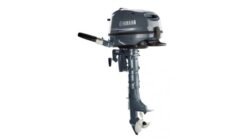
This listing is a new Yamaha F6SMHA 6 HP outboard, Yamaha’s 6 horsepower four-stroke with a 15 inch shaft, and we sell and ship it to boat owners worldwide. It has a 139 cc single cylinder engine, a pull start with decompression, a proper reverse gear, a built-in fuel tank and a connection for an external tank, all at about 60 pounds.
Most people who buy this motor own an inflatable or a small RIB, so this page is written mainly for them. I want to answer the questions we get asked most: is 6 HP enough, will it plane my boat, how do I get the best out of it, and what do I need to do to keep it running? If you already know you want the Yamaha F6SMHA 6 HP outboard, the specs and ordering details are all here too.
Specifications
| Model | Yamaha F6SMHA |
|---|---|
| Horsepower | 6 HP at 5,000 rpm |
| Engine | 1 cylinder four-stroke, OHV |
| Displacement | 139 cc |
| Bore x stroke | 62 x 46 mm |
| Full throttle | 4,500 to 5,500 rpm |
| Induction | Carburettor |
| Fuel | Built-in tank, external tank compatible |
| Starting | Manual, decompression assisted |
| Gears | Forward, neutral, reverse |
| Gear ratio | 2.08:1 |
| Shaft | 15 inch |
| Weight | About 60 lb (27 kg) |
| Ignition | CDI |
| Propeller | Included |
| Condition | New |
Yamaha’s full spec sheet for the F6 sits on its portable outboards page. The Yamaha F6SMHA 6 HP outboard we ship is the standard short shaft tiller model from that range.
Is 6 HP Enough for My Inflatable?
Start with your boat’s capacity plate, usually a sticker on the transom or inside the hull. It lists the maximum horsepower and often the maximum engine weight. If it says 6 HP or more, a 6 is a good fit. If it says 4 HP, stay at 4. Going over the rating is unsafe, can void insurance, and in some countries is illegal.
Assuming your boat is rated for it, 6 HP is a very good size for inflatables from roughly 9 to 11 feet. It carries two adults and gear comfortably, gives you enough power to push into a chop or against a tide, and leaves a bit in reserve. For a family tender that carries three or four people regularly, the twin cylinder 8 or 9.9 HP is worth considering if the boat is rated for it, but they weigh around 30 pounds more.
The Yamaha F6SMHA 6 HP outboard is the most popular choice for boats in this range because it gives the most power you can get at around 60 pounds. Lifting it onto a dinghy or a yacht’s stern rail is still a one-person job.
Will It Plane?
This is the question we get most often, so here is a straight answer. On a light inflatable or RIB with one light person aboard, the Yamaha F6SMHA 6 HP outboard can sometimes get the boat up onto the plane. It depends heavily on the boat’s weight, the hull shape, how the weight is placed and the water conditions. With two adults and gear, most boats will stay at displacement speed.
If planing with two people is important to you, you really want 8 HP or more on a boat rated for it. But be honest about how you use the boat. For most tender and dinghy use, a fast displacement speed with good control is all you actually need, and the 6 gives you that while staying light.
Getting the Best Performance
A few simple things make a surprising difference to how well a small outboard performs on an inflatable.
Weight placement
Where people sit matters more than almost anything else. If the bow points at the sky, move weight forward. A crew member sitting forward on the side tube can transform how the boat rides. Get the boat running level and the Yamaha F6SMHA 6 HP outboard will feel noticeably livelier.
Tilt angle
The tilt pin sets the angle of the motor. If the bow rides high, move the pin in one hole. If the bow digs in and the boat feels sluggish, move it out one hole. Small changes, tested on the water, find the sweet spot.
Motor height
The anti-cavitation plate should be at or just below the bottom of the hull. Too high and the prop sucks air. Too low and it creates drag and spray. On most inflatables the correct shaft length takes care of this.
Throttle
Full throttle is not always fastest in a small boat, especially in a chop. Easing back slightly often gives a smoother ride and saves fuel with very little speed lost.
Clean hull and prop
Weed, slime and barnacles on the hull or prop slow you down. Keep both clean.
How It Starts and Drives
The decompression starter on the Yamaha F6SMHA 6 HP outboard makes the pull light and smooth. Cold, it needs a little choke and usually fires in one to three pulls. Warm, it normally starts first time. Shifting is through a lever on the side of the motor, and you should always idle down first. Reverse gear makes coming alongside a yacht or backing off a beach simple, which is a big step up from the smaller 2.5 that has to be spun round.
At cruising speed, the Yamaha F6SMHA 6 HP outboard is quiet and smooth thanks to its four-stroke design and labyrinth exhaust. You can talk to your passengers without shouting, and there is no smoke or smell of two-stroke oil.
The Model Code
F means four-stroke. 6 is the horsepower. S is the 15 inch short shaft. M means manual start. H means tiller handle. A is the design generation. Put together, the Yamaha F6SMHA 6 HP outboard is the short shaft, pull start, tiller version of Yamaha’s 6 HP portable. For a 20 inch transom or a sailboat bracket, the long shaft Yamaha F6LMHA is the one to look at.
Fitting It to an Inflatable or RIB
Inflatables and RIBs have a few quirks that are worth knowing about before you hang the Yamaha F6SMHA 6 HP outboard on one. The transom is usually a plywood or composite board bonded into the tubes, and it is rated for a maximum weight and horsepower. Check that rating first. Then clamp the Yamaha F6SMHA 6 HP outboard dead centre and tighten the clamp screws firmly. Inflatable transoms can be a little softer than a rigid boat, so check the clamps again after the first run and every so often after that.
Put a safety line on. Inflatables bounce and flex more than rigid boats, and clamps can work loose. A short length of rope from the motor’s handle to a D-ring on the boat costs almost nothing and saves motors.
Some people add a transom pad or a thin plate where the clamps bite, to spread the load and protect the wood. It is a good idea if your boat’s transom is getting a bit worn.
Set the tilt pin so the motor’s leg is roughly vertical with the boat loaded the way you normally run it. Then check the oil, fill the tank, open the vent, start in neutral and look for the cooling water stream. That is it.
Fuel Range and the External Tank
The tank on the motor is small but perfectly fine for short tender runs. If you use the boat for longer trips, fishing days or exploring a coastline, connect an external tank. You will need a portable marine tank, a fuel hose with a primer bulb and the right connector for the motor. With an external tank lying on the floor of the RIB, the Yamaha F6SMHA 6 HP outboard can run for many hours.
Always use fresh unleaded with no more than 10 percent ethanol, and close the vent when the motor is not running or is being carried.
Breaking It In
For the first hours with the Yamaha F6SMHA 6 HP outboard, keep the throttle varied and mostly at low to medium settings. Avoid long full-throttle runs. Check the oil before every trip. After the break-in hours listed in the manual, change the engine oil. Yamaha’s manual covers the details, and Yamaha keeps free copies on its owner’s manual page. A careful break-in sets the Yamaha F6SMHA 6 HP outboard up for a long, healthy life.
A Simple Maintenance Routine
After every outing in salt or brackish water, flush the cooling system with fresh water. A flushing attachment or a tub of water deep enough to cover the water intake both work. Run the motor at idle for a few minutes, then rinse the outside, especially the clamps and the lower unit.
Once a season, change the engine oil and the gear oil, look at the spark plug, grease the clamp screws, swivel and tilt pivot, check the propeller for damage, check the anode and look over the fuel line and filter. Every few seasons, replace the water pump impeller, or sooner if the cooling stream gets weak or you run in sandy water.
Before winter storage, run the carburettor dry, change the oil, flush and store the motor upright or on its marked side in a dry place. Stale fuel in the carburettor is the single biggest cause of starting problems in spring, so this step alone saves most owners a trip to the dealer.
Troubleshooting
Small outboards like the Yamaha F6SMHA 6 HP outboard rarely have complicated faults. If the Yamaha F6SMHA 6 HP outboard will not start or keeps stalling, work through the simple causes first. Is the fuel tap set to the right tank? Is the vent open? On an external tank, is the primer bulb firm? Is the fuel fresh? Has the engine been flooded with too much choke? Is the spark plug clean? If the motor has a kill cord, is the clip in place?
If the motor runs but the cooling stream is weak, poke a thin piece of wire into the tell-tale outlet to clear it. If it is still weak, the water intake may be blocked with weed or the impeller may be worn. If the motor races without pushing the boat, it may be mounted too high, or the prop may be damaged.
Almost every problem falls into one of those categories, and almost all of them take minutes to fix.
Running Costs
The Yamaha F6SMHA 6 HP outboard is one of the cheapest motors to own. Fuel use is low at a sensible cruise, an oil change needs well under a litre, and the parts that wear out are cheap and widely stocked. No battery, no electronics, no remote controls. The Yamaha F6SMHA 6 HP outboard is the sort of motor that quietly does its job for years without costing you much.
Life With a Tender at Anchor
Many inflatables and RIBs spend their lives as tenders to larger boats, and the Yamaha F6SMHA 6 HP outboard is a favourite for that job. A few habits make tender life smoother. When you leave the dinghy in the water overnight, tilt the motor up so weed and barnacles do not grow on the lower unit. In busy harbours, lock the motor to the transom with a cable lock, because small outboards are easy to steal. When you land on a beach, tilt up before the water gets shallow and walk the last few metres, so sand does not get sucked into the water pump.
Transferring the motor between the yacht and the dinghy is the riskiest moment. Always clip a line to the motor first. Pass it down with the leg pointing down and the fuel vent closed. At around 60 pounds, the Yamaha F6SMHA 6 HP outboard is manageable for one person, but two is easier and safer in a swell. Many cruisers rig a small lifting tackle from the boom or the stern arch to make this easier.
Keep a small tender kit in the dinghy: a spare spark plug and spanner, a spare kill cord clip, a small can of fresh fuel and a pair of oars. A simple problem should never turn into a long row home in the dark.
Using It for Fishing and Exploring
Not every RIB is a tender. Plenty of people use a small RIB or inflatable for fishing, diving or just exploring a coastline. For that kind of use, the external tank option is what makes the Yamaha F6SMHA 6 HP outboard really useful. With a few litres in a portable tank on the floor, you can cover a lot of ground at an economical cruise and still get home.
At the slow end, the single cylinder idles smoothly, so trolling for fish along a reef edge or a drop-off works well. Reverse helps you hold position over a spot or back away from rocks. And because it is a four-stroke, it is quiet enough that you are not scaring everything away as you creep along.
Hot Weather and Cold Weather Use
We ship the Yamaha F6SMHA 6 HP outboard to buyers in tropical islands, Mediterranean harbours, northern lakes and everywhere in between. In hot climates, the main enemies are stale fuel and marine growth. Buy fuel in small amounts, keep it in the shade, add stabiliser if it will sit, and tilt the motor out of the water when the dinghy is moored. A cover protects the cowling from strong sun.
In cold climates, give the motor a little more choke on cold mornings but do not overdo it. At the end of the season, let all the water drain out by standing the Yamaha F6SMHA 6 HP outboard upright for a while, and change the gear oil before storage so no water is left in the gearcase to freeze.
Accessories Worth Buying
The motor works fine as it comes, but a few extras make life easier. An external tank kit is the most useful by far. A breathable cover keeps sun and salt off. A flushing attachment makes salt water care quick. A cable lock deters theft in busy anchorages. And a spare propeller is cheap insurance if you run in rocky water. None of these are needed to use the Yamaha F6SMHA 6 HP outboard on day one, but most owners end up buying at least two or three.
What Comes in the Box
The motor arrives assembled with the standard propeller fitted, plus the owner’s manual and factory paperwork. Read the oil tag first, because some motors ship with little or no oil. Check the level, top up if needed, add fuel and the Yamaha F6SMHA 6 HP outboard is ready to run.
Choosing Between Two 6 HP Listings
You may notice we have more than one listing for the F6SMHA on the site. They are the same model. We sometimes list stock from different shipments separately, which can mean slightly different prices or availability. If you are not sure which to choose, just ask and we will tell you which Yamaha F6SMHA 6 HP outboard can ship to you fastest.
Warranty
Yamaha’s factory warranty terms depend on the country where the motor is registered and on how it is used. Check with your local Yamaha marine dealer before buying, and keep your invoice and serial number safe. If you need help with paperwork, we are happy to assist.
Why We Sell Yamaha
We stock a lot of Yamaha because it is a brand we can recommend without hesitation. Yamaha has marine dealers in almost every country, so parts and service are easy to find wherever you take the boat. The 139 cc engine in the Yamaha F6SMHA 6 HP outboard is proven and simple. It starts easily, runs quietly and holds its value. For an inflatable or RIB owner, that combination is hard to beat.
Similar Motors
- Yamaha F6SMHA: our other listing of the same model.
- Yamaha F4SMHA: same engine and weight, 4 HP.
- Yamaha F8SMHB: twin cylinder, more power, heavier.
- Yamaha F9.9SMHB: the 9.9 HP twin for bigger RIBs.
You can browse the 6 HP Yamaha category or the full Yamaha outboard range.
Ordering
We sell new outboards online and ship worldwide. Put the Yamaha F6SMHA 6 HP outboard in your cart and check out, or contact us first if you have any questions. We confirm stock and delivery, pack the motor in its factory box with extra protection, and send tracking once it ships. It arrives as a normal parcel.
International buyers pay their own country’s import duty and taxes on arrival. We provide the documents customs needs. Please read our refund and return policy and terms and conditions, and have a look at customer reviews and our about us page.
FAQ
Is the Yamaha F6SMHA 6 HP outboard new?
Yes, new in the box, never run.
How heavy is the Yamaha F6SMHA 6 HP outboard?
About 60 pounds.
Does the Yamaha F6SMHA 6 HP outboard have reverse?
Yes, forward, neutral and reverse.
Can I use an external tank?
Yes, with a marine fuel hose and the right connector.
Will it plane my RIB?
Possibly with one light person on a light boat. With two or more, usually not.
Is the Yamaha F6SMHA 6 HP outboard suitable for salt water?
Yes, with a freshwater flush after each use.
Is a propeller included?
Yes.
Do I mix oil with the fuel?
No, it is a four-stroke.
To Sum Up
It is worth remembering that the motor on a tender gets more abuse than almost any other piece of gear on a boat. It is lifted, dropped, splashed, left in the sun and run in short bursts. A motor that keeps starting and running through all of that is worth paying a little more for, and that is the reputation Yamaha’s portables have earned over many years. Owners routinely tell us their old Yamaha ran for a decade or more before they replaced it, usually only because they wanted a newer model.
For inflatable and RIB owners whose boats are rated for 6 HP, the Yamaha F6SMHA 6 HP outboard is the natural choice. It is the most power you can get at around 60 pounds, it has a real reverse gear and an external tank option, and it is backed by Yamaha’s worldwide dealer network. Add it to your cart when you are ready, or ask us anything first. The whole shop is there if you want to compare.


Reviews
There are no reviews yet.