
 Cart is empty
Description
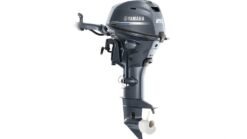
If you are after a Yamaha F40JEHA jet outboard, we have it new in the factory crate, ready to ship worldwide. The F40JEHA pairs Yamaha’s 747 cc three-cylinder four-stroke with a jet pump, a tiller handle and electric start. It is rated 40 HP at the powerhead and gives about 30 HP at the pump. On a light flat-bottom boat, it will carry you over gravel riffles, rocky shoals and weedy flats where a propeller would be wrecked.
This page is an owner’s guide as much as a product page. I will cover the specs, then spend most of the time on what it is like to run and maintain a tiller jet, including a plain-language troubleshooting section. For a delivered price, message us.

Specifications
- Model: Yamaha F40JEHA
- Drive: Jet pump with intake grate and reverse gate
- Powerhead: 40 HP
- Power at the pump: about 30 HP
- Engine: 3-cylinder inline four-stroke, SOHC
- Displacement: 747 cc
- Bore x stroke: 65 x 75 mm
- Fuel: Electronic fuel injection
- Steering: Tiller handle
- Starting: Electric
- Weight: 227 lb
- Full throttle range: 5,000 to 6,000 rpm
- Condition: New, factory crated
Every Yamaha F40JEHA jet outboard we ship is new, never run, with the manual and paperwork in the crate.
Why This Motor Exists
Prop motors are great in deep water. In shallow, rocky water, they are a constant expense. Bent props, broken skegs, chewed gearcases, sheared pins. Anyone who has run a prop on a shallow river knows the sound of aluminium hitting rock and the bill that follows.
A jet removes all of that. Nothing hangs below the hull except a flat intake grate. The boat can run in a few inches of water once it is on plane. The Yamaha F40JEHA jet outboard exists for people whose water simply does not suit a prop.
Getting to Know the Controls
The tiller handle carries the throttle grip and the shift lever. Forward, neutral and reverse work through the reverse gate at the back of the pump. In forward, the gate is up and water shoots straight back. In reverse, it drops down and sends the water forward. Neutral puts the gate partway, so the forces balance and the boat sits still.
The electric start button and kill switch are on or near the tiller. Always clip the lanyard to your life jacket or wrist. On a tiller boat, if you go overboard, the motor stops.
Steering friction can be adjusted so the motor holds its heading when you let go briefly. Set it so the tiller is easy to move but does not swing on its own.
Running It Well
Here are the habits that make a jet boat work.
Start in deep water. Get on plane in a pool. A jet boat at rest sits a bit lower and needs depth to get going.
Keep your speed up over shallow water. On plane, the boat rides high. If you slow down over a shallow bar, the boat settles, the intake can suck gravel or hit bottom, and you may get stuck.
Use throttle to steer. At idle, the jet stream is weak and the boat does not turn much. A little throttle brings the steering to life.
Turn smoothly. Sharp turns in shallow water can lift the intake out of solid water.
Read the water. Darker water is deeper. A smooth V pointing downstream marks the channel. Boils and bumps often hide rocks.
With those habits, the Yamaha F40JEHA jet outboard is a joy to run.
The Engine
The powerhead is the same 747 cc three-cylinder Yamaha uses in the F30 and F40 midrange motors. Single overhead cam, electronic fuel injection, long-track induction and a single throttle valve. It starts easily, idles smoothly and responds crisply. Three cylinders give a smoother feel through the tiller than a twin would.
Corrosion protection includes Yamaha’s YDC-30 alloy and a five-layer paint system. Combined with regular flushing and anode checks, the Yamaha F40JEHA jet outboard holds up well even in tidal and brackish water.
Mounting the Motor
The intake grate’s leading edge should start level with the bottom of the hull, or very slightly below. On a tunnel hull, follow the builder’s guidance, since the motor usually sits higher. Through-bolt the motor to the transom with proper backing plates. Test with your normal load and adjust height a little at a time.
Signs it is too high: the engine revs but the boat does not accelerate, and you hear rattling from the pump. Signs it is too low: lots of spray, slower speed, and more gravel being picked up.
Pump Maintenance, Step by Step
The jet pump is where a jet differs most from a prop motor. Here is what to do and how often. Always follow the owner’s manual for exact procedures and specifications.
After every trip: grease the bearing. The jet drive has a grease fitting for its bearing. Pump in fresh grease until a little old grease is pushed out. That forces out water and keeps the bearing healthy. It takes a minute.
After every trip: check the grate. Pull off any weed, sticks or leaves. Look for bent bars. A bent bar disrupts water flow and can cost thrust.
Regularly: check impeller clearance. With the motor off and the key removed, look up through the intake and check the gap between the impeller blades and the liner. The manual gives the target clearance. As sand wears the edges, the gap grows and the boat loses push. Yamaha’s design uses shims on the drive shaft: you move shims from one side of the impeller to the other, which moves the impeller closer to the liner. Once you have done it once, it is a quick job.
Regularly: inspect the impeller edges. Rounded or chipped leading edges cost thrust. Lightly worn edges can sometimes be dressed with a file. Badly damaged impellers need replacing.
Each season: inspect the liner. Deep scoring or wear in the liner may mean it needs replacing.
Do these things and the Yamaha F40JEHA jet outboard keeps its push season after season.
Engine Maintenance
- Flush with fresh water after every trip.
- Check the tell-tale stream every time you start.
- Change engine oil and filter at the hours in the manual, or once a season.
- Replace the cooling water pump impeller on schedule. In sandy or muddy water, do it more often.
- Check anodes and replace them when worn.
- Change the fuel filter and use fresh fuel. Add stabiliser if the boat sits.
- Grease the tiller pivot, swivel bracket and tilt tube.
Troubleshooting in Plain Words
Here are the most common problems with small jets, and what to check first.
Engine revs but the boat is slow. Usually the intake is sucking air or is blocked. Check the grate for weed. Check that the motor is not mounted too high. Check that the boat is not stern-heavy, which lifts the intake. If it has been getting slowly worse over weeks, the impeller clearance has probably opened up. Shim it.
Rattling or grinding from the pump. Could be gravel in the pump, cavitation from air, or a worn bearing. Stop and inspect. Remove debris. Grease the bearing. If the noise continues, have it checked.
Weak tell-tale stream. Shut down. Check the tell-tale outlet for a blockage and clear it with a thin wire. Check the cooling intake for weed or mud. If it is still weak, the water pump impeller may be worn. Do not keep running a motor that is not pumping water.
Will not crank. Check the kill switch lanyard is in place, the shift is in neutral, the battery is charged and the connections are tight.
Cranks but will not start. Check the fuel valve is open, the tank vent is open and there is fuel. Squeeze the primer bulb until firm. Look in the filter bowl for water.
Boat will not steer at low speed. Normal for a jet. Give it a little throttle.
Keep the manual on the boat. Its troubleshooting section is good, and it has the exact specifications for the Yamaha F40JEHA jet outboard.
Break-in
Ten hours of easy running. Start at low speed, vary the rpm and avoid long full-throttle runs. After the break-in, change the oil and filter, grease the jet bearing and check the impeller clearance.
Load Limits
With about 30 HP at the pump, keep the boat light. A jet must get on plane to run shallow. Overloaded, it ploughs and pulls in mud and gravel. Put heavy items in the middle of the boat. For one or two people on a 14 to 16 foot boat, the F40JEHA is a good match. For more weight, step up to the Jet Drive 40HP.
Spares to Carry
Grease and a grease gun, an impeller shim kit, a spare fuel filter element, spark plugs, fuses and basic tools. A hooked stick for clearing the grate. We can add these to your Yamaha F40JEHA jet outboard order so they ship together.
Cold Weather Use
Many owners run their jets in the cold, for late-season fishing or waterfowl hunting. A few habits protect the motor.
After each trip, leave the motor in the down position so water drains from the cooling passages and the pump. Water left inside can freeze and crack parts. Grease the jet bearing every time, because cold water gets in more easily. Keep the battery charged. Cold weather cuts battery power, and the electric start needs a healthy battery. Let the engine warm up for a minute before running hard. Avoid running through skim ice, which can damage the grate and the hull.
Fuel injection helps a lot in the cold. The Yamaha F40JEHA jet outboard starts easily even on frosty mornings, where an old carbureted motor would need choking and coaxing.
Fuel and Range
Jets use more fuel for the same speed than prop motors, and running upstream uses more again. Keep a simple log of hours and fuel for the first few trips so you know your range. Always carry a reserve for the run home. Use a water-separating filter with a clear bowl, drain any water you see, and carry a spare element. Add stabiliser if the boat sits between trips. Clean fuel keeps the Yamaha F40JEHA jet outboard running smoothly.
Off-Season Storage
- Stabilise the fuel and run the motor to circulate treated fuel.
- Change the oil and filter.
- Grease the jet bearing thoroughly.
- Flush and let the motor drain fully in the down position.
- Fog the engine as the manual explains.
- Check the impeller, liner and grate, and order parts before spring.
- Grease the tiller pivot and fittings.
- Put the battery on a maintainer.
Store it this way and the Yamaha F40JEHA jet outboard will be ready to go when the season starts again.
Who It Suits
River anglers fishing shallow trout, steelhead and smallmouth water. Duck hunters running marshes and flooded timber. Landowners with shallow river frontage. Small outfitters and guides. Wetland research and survey crews. If you need several Yamaha F40JEHA jet outboard units, ask for a quote on all of them together.
Choosing the Right Hull
A jet works best on the right boat. For the Yamaha F40JEHA jet outboard, choose a welded aluminium hull about 14 to 16 feet long with a flat or very shallow-V bottom at the stern. Water needs to flow cleanly into the intake, and deep-V hulls tend to push it away.
A jet tunnel is a real advantage. It is a recess in the bottom at the stern where the intake sits, so you can mount the motor higher and run shallower while keeping the pump protected. Many aluminium builders offer tunnel versions of their river boats.
Welded hulls take knocks from rocks and stumps far better than riveted or fibreglass ones. A wide beam adds stability for casting and loading gear. And keep the boat light. With about 30 HP at the pump, every pound saved helps it get on plane and ride high.
Tiller Comfort
You will spend a lot of hours at the tiller, so make it comfortable. Set the seat height so you can hold the tiller without twisting or reaching. A tiller extension lets you sit further forward, which also helps balance the boat. Adjust the steering friction so the motor holds its line when you let go briefly. Small things like this make long days on the river far more enjoyable with a Yamaha F40JEHA jet outboard.
Jet vs Prop on Your River
If you are still deciding, here is the honest comparison. A prop motor gives more push and better fuel economy for the same engine, and it steers more precisely at low speed. A jet gives you access to shallow, rocky water without breaking props or gearcases. It burns more fuel and needs a little pump maintenance.
If you mostly run deep water with the occasional shallow stretch, a prop motor may suit you better. If shallow riffles and gravel bars are part of every trip, the Yamaha F40JEHA jet outboard will save you money on repairs and open up water you could never reach. Most owners who switch to a jet for shallow rivers never go back.
New vs Used Jets
A used jet may have been run through sand for years, with a worn impeller, a dry bearing or scored liner. Those are not always obvious from the outside. A new Yamaha F40JEHA jet outboard from us starts with a fresh pump, zero hours and full paperwork. For a motor you depend on far from the ramp, that is worth a lot.
If you have questions about whether the Yamaha F40JEHA jet outboard suits your boat and river, send us the details. We will give you a straight answer before you buy.
A First Trip Checklist
Before your first real trip, run through this list. It catches most of the small problems new owners run into.
- Engine oil at the right level on the dipstick.
- Battery charged, connections tight, battery box secured.
- Fuel tank filled with fresh fuel, vent open, primer bulb firm.
- Water-separating fuel filter fitted, bowl clear.
- Mounting bolts tight, motor at the correct height.
- Intake grate clear and straight.
- Jet bearing greased.
- Kill switch lanyard attached and working.
- Life jackets, paddle or push pole, throw rope and first aid kit on board.
- Someone at home knows your route and return time.
Start the motor in water and watch for a strong tell-tale stream. Shift through forward, neutral and reverse at idle to check the reverse gate. Then take a gentle run in a calm, deep stretch to get the feel of the boat before heading into shallow water.
Remember the break-in period: ten hours of varied, moderate running. Plan your first few trips around easy water you know well. By the end of the break-in you will be comfortable with how the Yamaha F40JEHA jet outboard steers, stops and handles shallow riffles, and you can start exploring further upriver.
Safety Habits for Jet Boaters
Shallow rivers are beautiful, but they demand respect. Current is stronger than it looks. Water is often cold even in summer. Logs, rocks and gravel bars shift after every flood. Wear a life jacket every time. Clip the kill switch lanyard on before you start the motor. Carry a paddle, a throw rope, a first aid kit and a way to call for help. Run slower in water you do not know and in poor light. Anchor only from the bow or stern in current, never the side.
These habits keep you and your passengers safe, and they protect the boat and the pump. Most jet damage happens when a driver runs slowly over shallow gravel or hits an unseen rock at speed. Learn the river step by step, and the Yamaha F40JEHA jet outboard will reward you with years of safe trips into water few people ever see.
How to Order
- Send us a message through the contact page.
- Tell us the model, how many and where you are.
- Add any spares.
- We send a delivered price.
- You confirm and pay.
- We ship with FedEx, UPS or USPS and send tracking.
Read our refund and return policy and terms and conditions before you order.
Shipping Worldwide
We ship across the Americas, Europe, Africa, the Middle East, Asia and Australia. The motor goes in its factory crate with tracking. Import duties depend on your country, so check with your customs office before the Yamaha F40JEHA jet outboard arrives. Inspect the crate on delivery and take photos of any damage before signing. Keep the paperwork for your local Yamaha dealer. Warranty terms depend on your country.
Related Motors
- Yamaha F40JEHA, our main listing for this jet
- Yamaha F40JEA, the remote version
- Yamaha Jet Drive 40HP, for heavier loads
- Yamaha F90JB, the big 90 jet
Browse the 40 HP Yamaha range, all Yamaha outboards, the shop, reviews, about us and the blog. Yamaha’s official site has more on its jet range.
Frequently Asked Questions
Is this Yamaha F40JEHA jet outboard new?
Yes, new in the factory crate.
How much push does it have?
The Yamaha F40JEHA jet outboard gives about 30 HP at the pump from a 40 HP powerhead.
How often do I grease the jet bearing?
After every trip is a good habit. Follow the manual for the exact interval.
What is impeller shimming?
Moving shims to bring the worn impeller closer to the liner so the pump keeps its thrust.
Does it have electric start?
Yes.
Do you ship worldwide?
Yes, with FedEx, UPS and USPS.
Get Your Price
If you want a simple, light tiller jet that will get you into water nobody else can reach, the Yamaha F40JEHA jet outboard is a great choice. Send us your country and boat details, and we will reply with a delivered price.
Ready to order the Yamaha F40JEHA jet outboard? Add it to your cart above, or send us your location for a delivered quote. We ship worldwide with FedEx, UPS and USPS, crated and tracked, and we are always happy to help with rigging questions before and after the motor arrives at your door.


Reviews
There are no reviews yet.