
 Cart is empty
Description
This listing is for a Yamaha F90LB outboard motor from our special stock: new, never run, in its original factory crate, with the 20 inch shaft. We sell it to boat owners, dealers and fleets around the world. On this page I am going to focus on the practical side of things, the part most product pages skip. How to fit it, how to rig it, how to set it up for your kind of boating, and how to get it delivered to you. If you already know what you want, contact us and ask for a delivered price.
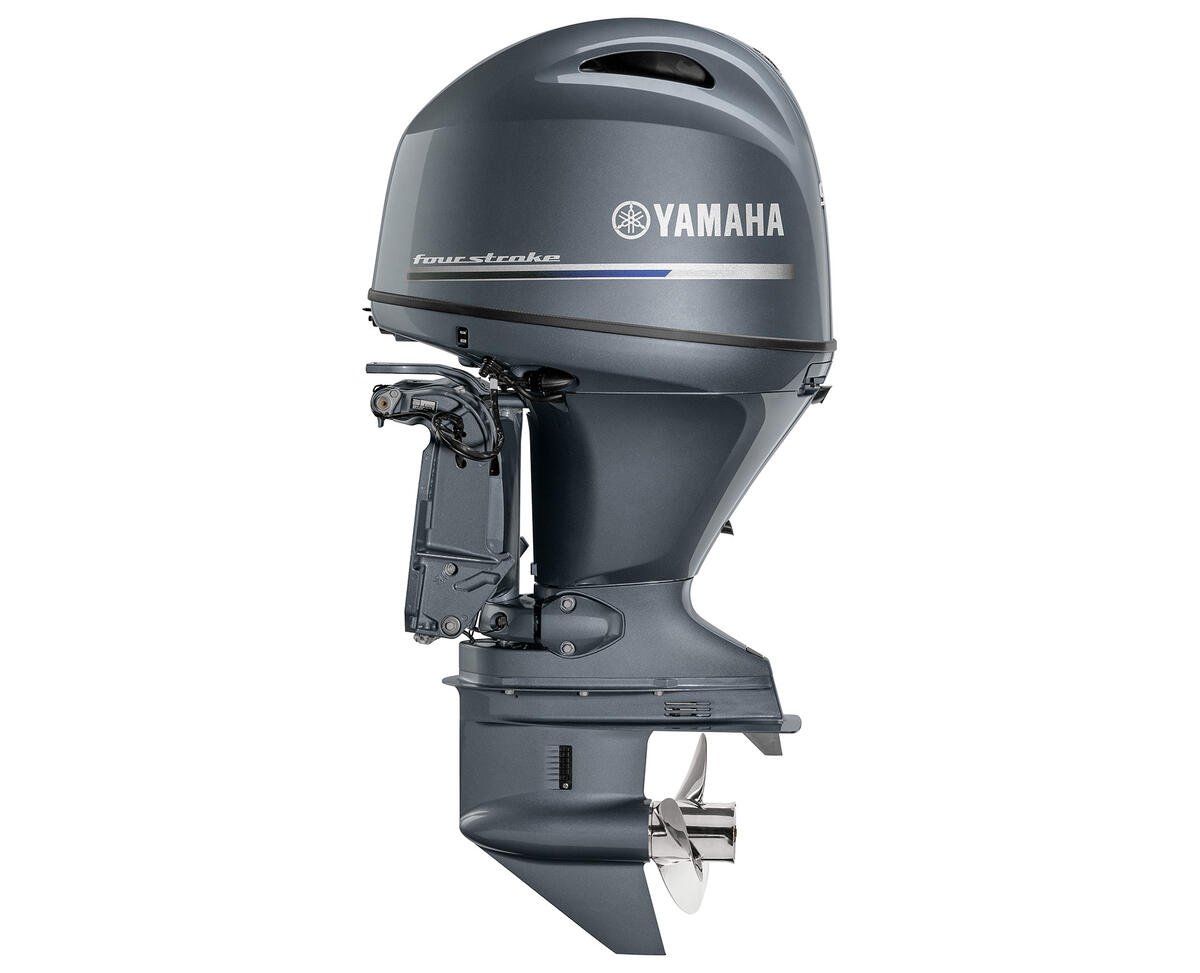
The Specs
| Model | Yamaha F90LB |
|---|---|
| Stock note | Special stock unit |
| Horsepower | 90 HP |
| Engine | Inline 4, four-stroke, SOHC, 16 valves |
| Displacement | 1,832 cc |
| Bore x stroke | 81 x 88.9 mm |
| Fuel | Electronic fuel injection, regular unleaded |
| Shaft | 20 inch (L) |
| Weight | 353 lb (160 kg) |
| Throttle and shift | Remote mechanical |
| Starting | Electric |
| Trim and tilt | Power trim and tilt |
| Rotation | Standard |
| Alternator | 35 amp |
| Full throttle range | 5,000 to 6,000 rpm |
Those numbers tell you this is a light, strong 90 with a big block and simple mechanical controls. Now let us talk about getting the Yamaha F90LB outboard motor onto your boat and running the way it should.
Step One: Make Sure It Fits
Before anything else, check three things on your boat.
The capacity plate. Every boat has a plate near the helm or transom that tells you the maximum horsepower and weight it can safely carry. If it says 90 HP or more, you are fine. Never go over the rating. It is unsafe, and in many places it is illegal and will void your insurance.
Transom height. Measure from the top of the transom where the motor clamps down to the bottom of the hull at the centre line. If you get about 20 inches, the L shaft on this Yamaha F90LB outboard motor is correct. If you get about 25 inches, you need the X shaft. Ask us about the Yamaha F90XB in that case.
Transom condition. Push and tap around the transom, especially near the old bolt holes. Look for soft spots, cracks or water weeping out. A new motor on a weak transom is asking for trouble. Get it checked and repaired first if you have any doubts.
Step Two: Plan the Rigging
The F90LB is a mechanical-control motor. That keeps the rigging simple and affordable. Here is what a full install usually needs:
- A Yamaha mechanical control box, either side mount or top mount
- Throttle and shift cables, measured to the right length for your boat
- A main wiring harness from the motor to the helm
- A key switch panel, which may be built into the control box
- A gauge, either an analogue tach or a Yamaha digital display
- Steering, usually hydraulic for a motor this size, or mechanical on smaller boats
- A fuel hose, primer bulb and water-separating fuel filter
- A marine starting battery and battery cables
- A prop and prop hardware
If your old motor was a Yamaha with mechanical controls, some of this may carry over. If you are coming from another brand, plan on new controls, cables and a harness. Tell us what you have and we can quote the parts you need with the Yamaha F90LB outboard motor so it all arrives together.
Step Three: Mounting Height
Mounting height is how high the motor sits on the transom. It makes a real difference to how the boat runs. Too low, and the gearcase drags through the water and slows you down. Too high, and the prop loses its grip and ventilates in turns.
A good starting point is to have the anti-ventilation plate, the flat plate just above the prop, roughly level with the bottom of the hull. From there, a mechanic can raise the motor a hole at a time while testing, until the boat runs fast and holds in turns. On many boats, one or two holes up from the bottom works well. This is the kind of fine tuning a dealer does when they install a Yamaha F90LB outboard motor, and it is one reason we recommend a professional install.
Step Four: Choosing the Prop
The prop is the other big setting. Your goal is to have the motor reach between 5,000 and 6,000 rpm at full throttle with a normal load on board. If it is short, drop pitch. If it over-revs, go up in pitch. Roughly, every inch of pitch changes full throttle rpm by around 150 to 200 rpm, so small changes go a long way.
Aluminium props are cheap and fine for pontoons, workboats and rocky water. Stainless props hold their shape, grip better and often give a few more miles per hour on faster boats. Four-blade props help heavy boats and pontoons get out of the hole and hold better in rough water.
Yamaha has a good propeller selection guide that is worth a look. Or tell us your boat and we will suggest a starting prop for your Yamaha F90LB outboard motor.
Step Five: First Start
Once the motor is mounted and rigged, the mechanic will fill the engine oil (check the manual and the dipstick, as crated motors may need oil added), check the gear lube, connect the fuel and battery and start it in the water or on a flush device. Never run an outboard without water to the pump, not even for a few seconds. The impeller will be damaged and the motor can overheat.
Watch the tell-tale for a strong stream of water. Check for fuel leaks. Shift into forward and reverse at idle to make sure the cables are set right. Check the steering from lock to lock. Then it is time for a test run.
Step Six: Break-in
A new Yamaha F90LB outboard motor needs ten hours of break-in. The manual in the crate lays it out step by step. In short: start at low speed, gradually use more throttle, vary the rpm, and avoid long runs at full throttle until the ten hours are done.
After the break-in, do the first service. Change the oil and filter and the gear lube. That first oil change removes fine particles from parts wearing in. It is cheap and it matters.
Setting It Up for Your Kind of Boating
The same motor can be set up differently depending on what you do with your boat. Here is how I would think about it.
Fishing
If you fish, quiet running and slow-speed control matter. The F90 idles smoothly and quietly. Add a Yamaha digital gauge with variable trolling rpm and you can set your trolling speed in small steps without touching the throttle. A four-blade stainless prop can help hold the stern in rough water and give better low-speed control. Keep the electronics on a second battery so your starting battery stays charged while you sit on a spot for hours.
Family cruising and watersports
For tubing and casual cruising, you want strong hole shot and a comfortable cruise. A prop with a bit less pitch helps the boat get up quickly with a full load of people. Power trim lets you keep the ride smooth. The Yamaha F90LB outboard motor has plenty of torque for pulling a tube or a beginner on skis.
Pontoons
On a two-tube pontoon, the F90 gives you a relaxed cruise and low fuel burn. Pontoons are heavy and have lots of wetted surface, so prop choice matters. A four-blade aluminium or stainless prop with moderate pitch usually works well. If your pontoon is a big tritoon, think about a bigger motor.
Workboats
For workboats, reliability and simple servicing come first. Mechanical controls keep things easy to repair. An aluminium prop is cheap to replace if it takes a hit. Keep a spare prop and a basic service kit aboard. Log hours and stick to the service schedule. A Yamaha F90LB outboard motor run this way can do a lot of hard hours.
Tenders and RIBs
On a yacht tender, weight and reliability matter most. The F90 is light for a 90. Use a stainless prop for good grip. Flush the motor after every use, especially if the tender spends time on the swim platform or in the water at anchor.
Maintenance Made Simple
Here is a schedule you can actually stick to:
- After every trip: Flush with fresh water. Rinse the outside. Tilt up if moored.
- Every month in season: Check anodes, fuel filter bowl, steering and grease points.
- Once a season or at the hours in the manual: Engine oil and filter, gear lube, fuel filter, spark plugs if due.
- Every two or three seasons: Water pump impeller and thermostat check, or sooner in sandy water.
- Before storage: Stabilise fuel, fog the engine, change the oil, and put the battery on a maintainer.
Most of this takes minutes. It is the difference between a motor that runs for many years and one that needs expensive work early. A Yamaha F90LB outboard motor that is looked after this way stays reliable and holds its value.
Common Install Mistakes
Over the years, the same install mistakes come up. Here they are so you can avoid them.
Wrong shaft length. Measure before you buy. It is the most expensive mistake to fix.
Old fuel system. Reusing old fuel hoses and tanks full of water and dirt causes trouble with fuel injection. Replace hoses and fit a good water-separating filter.
Weak battery. A tired battery causes slow cranking and odd electrical faults. Use one that meets the rating in the manual.
Bad cable adjustment. If the shift cable is off, the motor may not fully engage gear. That wears parts quickly. A proper install checks this.
Mounting too low. Costs speed and fuel. Tune the height.
Wrong prop. Makes the motor lug or over-rev. Test and adjust.
About Our Special Stock
Special stock is simply the label we use for certain units in our inventory. The motor itself is the same new Yamaha F90LB outboard motor you would get anywhere else: never run, in the factory crate, with all the standard paperwork. If you have questions about a particular unit, ask us and we will tell you what we know.
How Ordering Works
- Send us a message through the contact page with the model, the number you need and where you are.
- Add any parts you want: prop, controls, gauge, service parts.
- We send a delivered price.
- You confirm and pay.
- We ship with FedEx, UPS or USPS, and you get tracking.
We ship worldwide. Import duties and taxes are set by your country, so check with your customs office before the Yamaha F90LB outboard motor arrives. Our refund and return policy and terms and conditions are on the site.
When the Crate Arrives
Check the crate before you sign for it. If you see damage, take photos and write it on the delivery receipt. Then open it carefully. Keep the paperwork safe, because your local Yamaha dealer will need the serial number to register the motor. Warranty terms depend on your country, so ask your dealer what applies.
Store the motor upright until it is mounted. If you need to lay it down, follow the guidance in the manual so oil does not run where it should not.
More From Our Range
We carry the whole F90 family and much more. Have a look at:
- Yamaha F90LB (our main 20 inch listing)
- Yamaha F90JB jet
- Yamaha V MAX SHO 90
- Yamaha F150LB if your boat needs more power
Or browse the 90 HP Yamaha range, the Yamaha outboards category and the shop. See reviews from buyers, read about us, or check the blog for tips. Yamaha’s official outboard site has more on the F90 family too.
What I Would Check on the First Few Trips
Once the break-in is underway, the first few trips are a good time to pay attention. You are getting to know a new Yamaha F90LB outboard motor, and small things are easy to catch early.
The tell-tale. Every time you start the motor, look for a steady stream of water from the small outlet on the side of the cowling. If it is weak or stops, shut down and check for a blockage. Often it is just a bit of debris in the outlet, which you can clear with a piece of wire. But never ignore it.
The gauges. Watch rpm and, if you have a digital gauge, engine temperature and any warning lights. Get used to what normal looks like for your boat. That way, if something changes later, you notice right away.
Fuel filter bowl. If you have a clear water-separating filter, look at the bowl. Water collects at the bottom. If you see any, drain it and think about where it came from. A tank that sat for a long time, a leaky fuel fill cap or bad fuel are the usual causes.
Steering and controls. Make sure the steering is smooth and the shift goes cleanly into gear. New cables sometimes need a small adjustment after the first few hours. A good mechanic will check these after the break-in.
Fasteners. After the first few trips, check that the motor mounting bolts are still tight. Vibration can settle things, and it is better to check than to find out the hard way.
None of this is complicated. It is just paying attention. Owners who do this rarely get surprised by their motors, and a Yamaha F90LB outboard motor rewards that kind of care with years of easy running.
Getting the Best Fuel Economy
The F90 is already efficient, but how you run it makes a big difference. Here are a few habits that help.
Trim it right. Once you are on plane, trim the motor out until the boat runs fast and smooth without the prop starting to slip. Watch your speed and rpm. The best trim gives you more speed at the same rpm.
Find your cruise. Most boats have a sweet spot where they run efficiently, usually somewhere in the middle of the rpm range. Find it and use it. Running at full throttle all the time burns a lot more fuel for not much extra speed.
Keep the hull clean. Growth on the bottom slows the boat and costs fuel. If the boat stays in the water, keep the bottom painted and clean.
Do not carry what you do not need. Weight costs fuel. Old gear, extra water and full tanks you never use all add up.
Use the right prop. A prop that suits your boat lets the Yamaha F90LB outboard motor do its job without working harder than it needs to.
Storage Between Seasons
If you live somewhere with a boating season, how you store the motor over winter matters a lot. Here is a simple routine.
- Fill the tank and add fuel stabiliser, then run the motor long enough to get treated fuel through the system.
- Change the engine oil and filter so old, dirty oil does not sit in the motor all winter.
- Change the gear lube and check for water.
- Flush the motor with fresh water and let it drain fully, especially if you live where it freezes.
- Fog the engine according to the manual to protect the cylinders.
- Grease all the fittings.
- Remove the battery or put it on a maintainer.
- Store the motor in the down position so water drains out of the gearcase and cooling passages.
- Cover it to keep dust and animals out.
In spring, check everything, reconnect the battery, start it on water and let it warm up before you head out. A Yamaha F90LB outboard motor that is stored properly will start right up next season.
Why Mechanical Controls Are Still a Good Choice
Some newer and bigger motors use digital electronic controls. They are smooth and they have their place, especially on bigger boats with multiple engines. But for a single 90 on a small or mid-size boat, mechanical controls have real advantages.
They are cheaper to buy and install. Any marine mechanic can work on them. Parts are easy to find. If a cable wears out, it is a simple swap. And they work well. For most owners, there is no need to pay more for digital controls on a motor this size. That is one reason the Yamaha F90LB outboard motor stays so popular.
Is the F90LB Right for You?
Here is a quick way to decide. If your boat is between about 16 and 20 feet, rated for at least 90 HP, has a 20 inch transom, and you want a motor that is simple to rig and easy to service, the Yamaha F90LB outboard motor is a very good choice.
If your transom is 25 inches, you want the X shaft. If you run very shallow rocky rivers, a jet model makes more sense. If you have a bass boat and want top speed, look at the V MAX SHO. And if your boat is big and heavy and rated well above 90, a bigger motor may suit you better.
Not sure? Send us your boat’s make, model, length and what you use it for. We will tell you honestly whether the Yamaha F90LB outboard motor fits, or if something else in our range would serve you better. We would rather you end up with the right motor than sell you the wrong one. Most of the time, for a typical small boat, the Yamaha F90LB outboard motor is the one we point people to.
Frequently Asked Questions
Is this Yamaha F90LB outboard motor new?
Yes. It is new and comes in the original factory crate.
What does special stock mean?
It is our inventory label for this unit. The motor is a standard new F90LB.
Which shaft length is it?
20 inches.
What controls does the Yamaha F90LB outboard motor use?
Yamaha mechanical remote controls.
Can you supply rigging parts?
Yes. Tell us what you need and we will add it to the quote.
Do you ship internationally?
Yes, worldwide with FedEx, UPS and USPS.
Ready to Order?
If this Yamaha F90LB outboard motor suits your boat, send us your country and the number of units you need. We will come back with a delivered price. Once you confirm, we crate it and ship it to you with tracking.



Reviews
There are no reviews yet.