
 Cart is empty
Description
We have a new Yamaha LXF425XSA2 for sale. It is the counter-rotating 425 horsepower XTO Offshore V8 on a 25 inch shaft, in the A2 production version. It comes new in its factory crate and we ship it to customers worldwide. If your boat runs A2 XTOs on a 25 inch transom and you need the counter-rotating engine, this is the right one.
The Yamaha LXF425XSA2 for sale sits at the top end of Yamaha’s outboard range. XTO engines were designed for heavy offshore boats that need serious thrust, not just big horsepower numbers. The 25 inch shaft suits boats with a standard 25 inch transom, which covers many large center consoles, power catamarans and express boats. The leading L means the prop turns the opposite way to a standard engine, so it balances a standard XF425 on the other side.
Here you will find specs, a plain explanation of the model code, matching advice, the boats it suits, rigging, running costs, care and ordering. If you have questions, contact us any time.
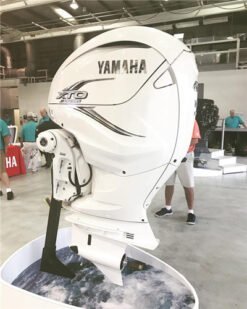
Yamaha LXF425XSA2 for Sale: Overview
- New Yamaha LXF425XSA2 XTO Offshore outboard
- 425 hp, 5.6 litre direct injection V8
- Counter-rotation (left-hand prop)
- 25 inch shaft (X)
- A2 production version
- Digital controls and integrated electric steering
If those details match your boat, the Yamaha LXF425XSA2 for sale is ready to ship.
Specifications
| Model | Yamaha LXF425XSA2 XTO Offshore |
| Horsepower | 425 hp |
| Engine | 4 stroke V8, DOHC, 32 valves |
| Displacement | 5,559 cc (5.6 L) |
| Fuel system | Direct injection |
| Full throttle range | 5,000 to 6,000 rpm |
| Fuel | Unleaded, octane per owner’s manual (89 recommended), max 10% ethanol |
| Shaft | 25 in (X) |
| Rotation | Counter (left hand) |
| Controls | Digital electronic |
| Steering | Integrated electric steering |
| Approx. weight | Around 950 lb |
| Condition | New, crated |
Reading the Model Code
The Yamaha LXF425XSA2 for sale has a long model code, but it is easy to read once you know the pattern. L means counter-rotation. XF is the XTO Offshore four stroke series. 425 is the horsepower. X means a 25 inch shaft. SA2 is the model series and the A2 production version. Remove the L and you have the standard rotation partner, the XF425XSA2. Swap X for U and you get a 30 inch shaft, or E for 35 inches.
The A2 at the end matters when you are matching engines. XTO engines on the same boat share a control network and coordinated steering. Keeping every engine on the same version keeps software, displays, joystick systems and service parts consistent. That is why we always ask which version your other engines are before you order.
Matching Your Engines
Before buying the Yamaha LXF425XSA2 for sale, check four things. The shaft length should match your transom and the other engines, here 25 inches. The rotation should be right for the position, with counter-rotating engines usually on the port side. The version should match, so A2 goes with A2. And the props should match across the set in size and pitch, with left-hand props on counter-rotating engines.
If your other engines are the original A version, look at the LXF425XSA. For A7 versions, see the LXF425XSA7. For standard rotation engines on other shaft lengths, see our 425 HP range.
Why Counter-Rotation?
Every prop pushes the stern slightly sideways as it spins. On a boat with two or more 425 hp engines, those sideways forces are large. If all the props turned the same way, the boat would pull hard to one side and steering would feel heavy. Pairing standard and counter-rotating engines cancels the forces out, so the boat runs straight, turns evenly both ways and backs up predictably. That is the role of the Yamaha LXF425XSA2 for sale on a multi-engine boat.
What Makes the XTO Different
The XTO Offshore was designed around heavy boats from the start. Direct injection puts fuel straight into the cylinders, improving combustion efficiency for better power and economy. The 5.6 litre V8 delivers huge torque, which helps heavy hulls plane and hold speed in rough water. The gearcase swings large props with lots of blade area, giving strong thrust forward and in reverse. Integrated electric steering clears hydraulic plumbing off the transom. And a strong charging system supports the big electrical loads on modern offshore boats.
Boats That Use It
- Large center consoles with 25 inch transoms
- Big power catamarans
- Express and walkaround boats
- Patrol, rescue and commercial boats
Performance and Props
XTO boats accelerate hard, cruise fast and carry heavy loads offshore without the engines working at their limit. Exact numbers depend on the hull, weight and number of engines. XTO engines use dedicated large-diameter props. The Yamaha LXF425XSA2 for sale needs left-hand props, matched in size and pitch to the rest of the set. Your rigger will test props in sea trials so every engine reaches its rated rpm range at full throttle with a normal load. See Yamaha’s propeller pages for options.
Rigging
Installing the Yamaha LXF425XSA2 for sale is work for an experienced XTO rigger. A typical install includes a Yamaha digital control binnacle for the number of engines, digital harnesses and network parts, start/stop panels, Yamaha or compatible displays, steering controls for the integrated electric steering, independent fuel feeds with water separating filters, battery banks sized for the engines and boat systems, and matched XTO props.
Transom Strength
At around 950 pounds each, XTOs put a big load on the transom. Make sure your transom is rated for the total weight and power of all engines. Inspect it carefully, especially on repowers, use the specified hardware and backing plates, seal every hole and re-check mounting bolts after the first few trips.
Fuel and Maintenance
Use the octane in the owner’s manual, usually 89, with fresh fuel and no more than 10 percent ethanol. Fit a good water separating filter to every engine. Follow the owner’s manual for service intervals. A typical service includes oil and filter, gear oil, fuel filters and separator elements, plugs as needed, anodes, grease points and water pump impellers. Service every engine together and flush after salt water.
Ordering
Condition
New in the factory crate. Photos on request.
Shipping
Worldwide with FedEx, UPS and USPS, crated and tracked. Tell us about your delivery site and unloading options. Ask for a delivered price.
Payment
Order through our shop or ask for an invoice.
Delivery
Inspect the crate before signing. See our refund and return policy and terms.
Warranty
Depends on the country of registration and use. Ask before ordering the Yamaha LXF425XSA2 for sale and we will confirm in writing.
Read our reviews or learn more about us.
Handling a Twin XTO Boat
With digital controls and integrated steering, a pair of XTOs makes a big boat easy to manage at low speed. Pivot by shifting the port engine one way and the starboard engine the other. Walk the stern sideways with opposite shifts and a little helm. Hold position against wind or current with short bursts on each engine. Many XTO boats also use Yamaha’s joystick docking, which coordinates the engines and steering automatically. At cruise, synchronisation keeps the engines matched. Practise in open water before tackling tight marinas.
A Day on a Twin XTO Catamaran
Picture a 40 foot power catamaran with a Yamaha LXF425XSA2 for sale on the port hull and its standard rotation partner on starboard. At dawn you slide out of the berth on the joystick. Clear of the harbour, both V8s come up together and the cat lifts onto plane smoothly, even with full tanks and a crew of six. At cruise the ride is stable and dry, and the boat tracks perfectly straight thanks to counter-rotation.
You troll the offshore grounds for hours while the engines idle quietly. In the afternoon you run home into a building sea, the torque of the XTOs holding a steady speed. Back at the marina the joystick slides the cat into its berth. A quick flush, the hours logged, and the boat is ready for the next trip.
More From Yamaha
See Yamaha Motor Canada’s XTO Offshore page and the Yamaha Outboards website.
Why Thrust Matters
On very heavy boats, thrust is what you feel at the helm. Horsepower is the work an engine can do. Thrust is how hard the prop pushes the boat. The Yamaha LXF425XSA2 for sale and the rest of the XTO range were built to swing larger props with more blade area than most outboards. That bigger blade area grips more water, so heavy hulls plane quicker and hold speed in rough water. Strong reverse thrust also helps big boats stop, back into slips and hold position, which makes docking far more confident.
Electrical and Fuel Planning
Big XTO boats carry heavy electrical loads, so the boat’s system needs good design. Give the engines dedicated cranking batteries, put accessories on a separate house bank and use switches or relays to protect the cranking batteries. Size cables properly, keep connections clean and tight and use dielectric grease on digital plugs. Keep accessories off the engine harnesses.
Every engine should have its own fuel feed and water separating filter, so one clogged filter affects only one engine. Make sure fuel lines and tank vents can supply several big V8s at cruise, and carry spare filters on long trips.
XTO or F350?
Owners sometimes compare the XF425 with the F350. The F350 is lighter and suits many 30 to 40 foot boats. The XF425 adds displacement, direct injection, integrated steering and much more thrust, so it suits the heaviest boats and hulls designed around XTO power. If your boat already runs A2 XTOs on a 25 inch transom, the Yamaha LXF425XSA2 for sale is the natural counter-rotating engine to add or replace.
Choosing the Number of Engines
Most XTO boats run twins, triples or quads, chosen by the builder to suit the hull. Twins suit many boats from 36 to 40 feet, triples suit boats around 40 to 45 feet and quads appear on the largest. More engines bring more power, redundancy and control, along with more cost. Follow your builder’s specification and never exceed the rated horsepower and weight. On most layouts, counter-rotating engines like the Yamaha LXF425XSA2 for sale go on the port side.
Engine Height, Trim and Data
Start at the builder’s recommended height and fine-tune during sea trials. The props should grip in hard turns and rough water, and the engines should reach their rated rpm range at full throttle. At cruise, trim up until speed stops rising, keeping the bow lower in head seas. Yamaha’s digital displays show rpm, trim, fuel flow, hours, voltage, temperature and alarms for every engine. A clear engine page on your main display helps you spot problems early and plan fuel accurately.
Looking After Your Engines
Flush every engine with fresh water after salt use. Rinse cowlings, brackets and trim rams. Check anodes often and spray powerheads with corrosion protectant every few weeks. Wax the cowlings twice a year. Keep batteries healthy and connections clean. Log hours and services for every engine. If the boat stays in the water, run the engines regularly and protect the lower units from growth as your dealer advises. Looked after like this, a pair built around the Yamaha LXF425XSA2 for sale should give years of dependable service.
Questions to Ask Before Ordering
Is your transom about 25 inches? Does this position need counter-rotation? Are your other engines A2 versions? Is the boat rated for the total horsepower and weight? What is the delivered price, and which warranty applies in your country? If any of those are unclear, send us photos of your transom and engine labels before ordering the Yamaha LXF425XSA2 for sale.
Repowering and Commercial Use
Repowering an older big boat with XTOs can transform it, but it is a major project. Check transom strength, ratings, fuel system capacity, electrical capacity and helm space. If the boat was not designed for XTO weight, talk to the builder or a naval architect first. Then plan the whole job with an experienced XTO rigger before ordering the Yamaha LXF425XSA2 for sale and its partner.
Commercial and government operators like XTOs for their power, thrust and reliability. Standardising a fleet on one version, such as A2, keeps parts and training simple. Plan services on hours, keep common parts in stock and log every engine in detail.
Getting Home on One Engine
If one engine has a problem offshore, tilt it up to cut drag and run home on the other at a sensible speed. Practise on a calm day near home, and plan fuel with extra margin.
Why Buy From Us
We help you confirm shaft length, rotation and version before you pay for the Yamaha LXF425XSA2 for sale. You get a written delivered price, a clear answer on warranty for your country and photos of the crate and label on request. We stay in touch after delivery too.
Common Mistakes
- Wrong shaft length
- Wrong rotation for the position
- Mixing versions without checking
- Undersized fuel lines or batteries
- Using non-XTO props
- Not flushing after salt
Integrated Electric Steering, Explained Simply
For decades, big outboard boats used hydraulic steering. A helm pump pushed fluid through hoses to cylinders on each engine, and a tie bar linked the engines together. It worked, but the transom ended up crowded with hoses and cylinders, and the system needed bleeding, checking and the occasional repair.
XTO engines take a different approach. The steering actuator is built into each engine, and the helm sends electronic commands instead of pushing fluid. The result is a much cleaner transom, less maintenance and a steering feel that is light and precise even on very large boats. On multi-engine setups, the system can coordinate the engines, which helps with low speed handling and works hand in hand with joystick docking.
For owners, the benefit is simple: the boat is easier to drive and there is less to go wrong at the back. For riggers, installation is tidier. And for anyone replacing an engine, it is one more reason to match versions carefully, so the steering system behaves the same across every engine, including the Yamaha LXF425XSA2 for sale.
A Busy Charter Season
Many twin XTO boats work for a living. Picture a sportfishing charter running a 38 foot center console with a Yamaha LXF425XSA2 for sale on the port side. Six days a week through the season, the boat leaves before dawn with paying anglers aboard. The engines start without fuss, the joystick slides the boat off the dock and the twin V8s carry a full load offshore at a fast cruise.
Out at the grounds, the captain uses the throttles to keep the boat lined up on the fish and holds position over structure with small bursts on each engine. In the afternoon the boat runs home, often into a building sea, and the torque of the XTOs keeps the ride steady and the schedule on time. Every evening the crew flushes the engines and logs the hours. By the end of the season, the engines have done hundreds of hours, and a routine service gets them ready for the next year.
That is the kind of reliability that makes charter captains choose XTO power, and why the Yamaha LXF425XSA2 for sale is a popular replacement engine for working boats.
Running Efficiently Offshore
Fuel is the biggest running cost on any big XTO boat, and a few habits make a real difference over a season. Use the fuel flow readings on your display to compare miles per gallon at different speeds, because most big hulls have a clear sweet spot where they run most efficiently. Trim the engines up until speed stops rising, since a big hull trimmed too low pushes a lot of water. Keep the bottom clean, because growth on a large hull costs speed and fuel quickly. Keep props matched and undamaged. Keep the engines synchronised at cruise. And carry only what you need, since extra water, gear and spare fuel all add weight.
These habits also extend your range, which adds a margin of safety when you are fishing far offshore.
Living With XTO Power
People sometimes expect the biggest outboards to be complicated to own. Owners usually find the opposite. The engines start easily, idle quietly and run long days without drama. Day-to-day care is simple: flush after use, keep an eye on oil, keep anodes fresh and service on schedule. The integrated steering removes much of the hydraulic plumbing that once needed attention, and the displays warn you early if anything needs a look. Most problems on big outboard boats come from bad fuel, weak batteries or corroded connections rather than the engines themselves. Look after those basics and the Yamaha LXF425XSA2 for sale will reward you with years of strong running.
Frequently Asked Questions
Will it work with joystick docking?
XTO engines are designed to work with Yamaha’s joystick systems. Your rigger will confirm the right components for your boat and engine versions before installation begins.
Can you supply the standard rotation partner?
Yes. Contact us and we will quote a matched A2 pair, shipped together where possible.
Does it come with props?
No. XTO props are chosen to suit each boat. We can help you select the right set for your hull and load.
How heavy is it?
Around 950 pounds. Check your transom rating for the total engine weight.
What fuel does it use?
Unleaded at the octane in the owner’s manual, usually 89, with no more than 10 percent ethanol.
Does it need a left-hand prop?
Yes, a left-hand XTO prop matched to the rest of the set.
Is the Yamaha LXF425XSA2 for sale new?
Yes, new in the factory crate.
Is it counter-rotation?
Yes. The leading L means counter-rotation.
What shaft length?
25 inches.
Do you ship the Yamaha LXF425XSA2 for sale worldwide?
Yes. Ask us for a quote.
Order Yours
If the Yamaha LXF425XSA2 for sale is right for your boat, add it to your cart or contact us for a delivered price. Browse all our Yamaha outboards, see the 350 HP range, or read our blog.


Reviews
There are no reviews yet.