
 Cart is empty
Description
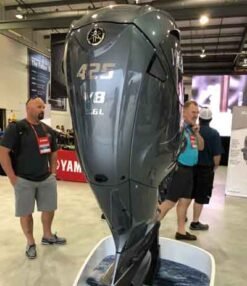
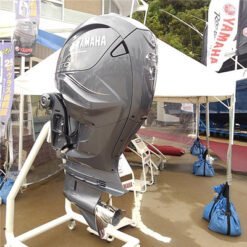
This page is for a new Yamaha XF425ESA7 for sale, a 425 horsepower XTO Offshore V8 with a 35 inch shaft, standard rotation and the A7 production version. It ships new in its factory crate, and we deliver to customers all over the world. If you run a big offshore boat with tall transoms or brackets and your other engines are A7 versions, this is the matching standard rotation engine.
Yamaha built the XTO Offshore range for the biggest outboard-powered boats on the water. They are heavy, fast boats that carry large crews, big fuel loads and a lot of equipment, often a long way from shore. Those boats need more than raw horsepower. They need thrust to push a heavy hull, reliable power in rough seas and systems that make a 40 or 50 foot boat easy to handle. That is what the XTO delivers.
Below you will find specifications, an explanation of the model code, advice on matching engines, rigging, running costs, maintenance and ordering details. If you have questions about your boat, send us a message.

Yamaha XF425ESA7 for Sale: Quick Facts
- New Yamaha XF425ESA7 XTO Offshore outboard
- 425 hp, 5.6 litre V8 with direct injection
- 35 inch shaft (E)
- Standard rotation
- A7 production version
- Digital electronic controls and integrated electric steering
For boats with 35 inch transoms or brackets that run A7 version XTOs, the Yamaha XF425ESA7 for sale fills any standard rotation position.
Specifications
| Model | Yamaha XF425ESA7 XTO Offshore |
| Horsepower | 425 hp |
| Engine | 4 stroke V8, DOHC, 32 valves |
| Displacement | 5,559 cc (5.6 L) |
| Fuel system | Direct injection |
| Full throttle range | 5,000 to 6,000 rpm |
| Fuel | Unleaded, octane per owner’s manual (89 recommended), max 10% ethanol |
| Shaft | 35 in (E) |
| Rotation | Standard |
| Controls | Digital electronic |
| Steering | Integrated electric steering |
| Trim and tilt | Power trim and tilt |
| Approx. weight | Close to 980 lb |
| Condition | New, crated |
The Model Code Explained
Yamaha XTO codes look complicated, but each part has a job. In the Yamaha XF425ESA7 for sale, XF is the XTO Offshore four stroke series. 425 is the horsepower. E is the 35 inch shaft. SA7 is the model series and the A7 production version. There is no L at the front, which means standard rotation. The counter-rotating version of the same engine would be the LXF425ESA7.
Why does the production version matter? On a boat with several XTOs, the engines share a control system and coordinated steering. Keeping every engine on the same version helps software, displays, joystick systems and service parts line up neatly. When you add or replace an engine, matching the version of your existing engines is the safest choice.
Matching Your Set
Before ordering the Yamaha XF425ESA7 for sale, check four things against the engines already on your boat or in your plans. First, shaft length: every engine on the transom should be 35 inches if this is the right length for you. Second, rotation: standard rotation engines normally go on the starboard side and in the centre on triples. Third, version: A7 should match A7. Fourth, props: all props should match in size and pitch, with the right rotation for each engine.
If your other engines are the original A version, the Yamaha XF425ESA is a better match. If they are A2 versions, look at the XF425ESA2. For the counter-rotating partner on a 35 inch setup, see the LXF425ESA and LXF425ESA2.
Why the XTO Is Different
The XTO Offshore is not simply a stretched version of an older outboard. Yamaha designed it around a few key ideas.
Direct injection puts fuel straight into each cylinder at high pressure. That allows more efficient combustion, which helps power and economy at the same time. The 5.6 litre V8 gives huge torque, which is what heavy boats need to get on plane and stay there in rough water. The gearcase and props are built for thrust, swinging large blades that grip a lot of water, which helps both forward and in reverse. Steering is built into the engine, which removes the hydraulic hoses and cylinders that clutter traditional big outboard transoms. And a strong charging system keeps up with the electrical loads of big modern boats.
Put together, that makes the XTO the engine of choice for many of the largest outboard boats being built today.
Why a 35 Inch Shaft?
The 35 inch E shaft is for the tallest transoms and brackets. Large center consoles often mount their engines high on brackets so the cockpit stays dry and the ride is smooth. To get the props deep enough to grip in big seas, they need very long shafts. Measure from the mounting surface straight down to the bottom of the hull. If you get close to 35 inches, the Yamaha XF425ESA7 for sale is the right length. For 30 inches, look at a U shaft model. For 25 inches, look at an X shaft model.
Boats That Use It
- Center consoles from about 40 to 50 feet
- Large sportfishing boats
- Express boats and yachts with outboard power
- Big catamarans with tall brackets
- Patrol, rescue and government boats
Performance
XTO-powered boats are known for strong acceleration, high cruising speeds and the ability to carry heavy loads without the engines straining. Exact numbers depend on the hull, weight and number of engines. Your builder and rigger will help choose props that let the engines reach their rated rpm range at full throttle with a normal load.
The XTO uses dedicated large-diameter props. Every prop on a multi-engine boat should match in size and pitch, with the correct rotation for each engine. See Yamaha’s propeller pages for more.
Rigging
Installing a Yamaha XF425ESA7 for sale is a job for an experienced XTO rigger. A typical installation includes a Yamaha digital control binnacle for the number of engines, digital harnesses and network components, start/stop panels, Yamaha or compatible displays, steering controls for the integrated electric steering, independent fuel feeds with water separating filters for each engine, battery banks sized for the engines and boat systems, and matched XTO props.
Transom and Bracket Strength
Each XTO weighs close to 1,000 pounds. A triple or quad setup puts thousands of pounds on the stern. The transom or bracket must be rated for the total weight and power. Inspect it carefully, especially on repowers, use the specified hardware and backing plates, seal every hole and re-check bolts after the first few trips and at every service.
Running Costs
Use the octane recommended in the owner’s manual, usually 89, with fresh fuel and no more than 10 percent ethanol. Fit good water separating filters to every engine. Direct injection helps economy, but big boats still use a lot of fuel, so plan long trips carefully.
Maintenance
Follow the owner’s manual for service intervals. A typical service includes engine oil and filter, gear oil, fuel filters and separator elements, spark plugs as needed, anodes, grease fittings and water pump impellers on schedule. Service all engines on the boat together so they stay in step, and flush every engine after salt water.
Ordering
Condition
New in the factory crate. Photos on request.
Shipping
Worldwide with FedEx, UPS and USPS, crated and tracked. XTO crates are large, so tell us about your delivery location and unloading options. Ask for a delivered price.
Payment
Order through our shop or ask for an invoice.
Delivery
Inspect the crate before signing. See our refund and return policy and terms.
Warranty
Depends on the country of registration and use. Ask before ordering the Yamaha XF425ESA7 for sale and we will confirm in writing.
Read our reviews or learn more about us.
Handling a Big XTO Boat
With digital controls and integrated electric steering, multiple XTOs make even very large boats manageable at low speed. You can pivot by shifting port and starboard engines in opposite directions, walk the stern sideways toward a dock, and hold position against wind or current with small bursts of throttle. Many XTO boats also use Yamaha’s joystick docking systems, which coordinate the engines and steering so the boat moves in whatever direction you push the stick. At cruise, synchronisation keeps the engines matched. Practise in open water before tackling busy marinas.
A Long Day Offshore
Picture a 45 foot center console with quad XTOs, including a Yamaha XF425ESA7 for sale in a starboard position. You leave before dawn, using the joystick to slide out of the slip. Once clear of the harbour, the four V8s come up together and the heavy boat climbs smoothly onto plane. The run offshore is long, but the boat holds a fast cruise through building seas, the 35 inch shafts keeping every prop deep in the water.
At the fishing grounds you troll for hours. The engines idle smoothly and the electronics run nonstop. In the afternoon, you head home into a head sea, trimmed down for a softer ride. The torque of four big V8s keeps the speed steady. Back at the marina, the joystick slides the boat into its berth. The engines are flushed and the hours logged. That is the kind of day the XTO was built for.
More From Yamaha
See Yamaha Motor Canada’s XTO Offshore page and the Yamaha Outboards website.
Electrical Planning
Large XTO boats carry very large electrical loads. Think multiple big displays, radar, autopilot, stabilisers, air conditioning, fridges, lighting and pumps. The XTO’s strong charging helps keep up, but the boat’s own electrical system must be designed well. Give the engines dedicated cranking batteries, put all accessories on a separate house bank and use switches or relays so the cranking batteries are always protected. Size cables properly and keep every connection clean and tight. Use dielectric grease on digital plugs and keep accessories off the engine harnesses. Most electrical problems on big boats come from batteries and connections, not from the engines themselves.
Fuel Layout
Every engine should have its own fuel line and water separating filter. Large boats often have big tanks with multiple pickups or several tanks with crossovers. Independent filtration means one clogged filter only affects one engine. Make sure fuel lines and vents are sized for several big V8s at cruise, and carry spare filter elements for every engine on long trips.
XTO or F350?
Some owners compare the XF425 with Yamaha’s F350. The F350 is lighter and suits many 30 to 40 foot boats. The XF425 adds displacement, direct injection, integrated electric steering and much higher thrust, making it the better fit for the heaviest boats and for hulls designed around XTO power. If your boat already runs XTOs, the Yamaha XF425ESA7 for sale is the natural choice for a matching standard rotation engine.
Why Thrust Beats Horsepower on Big Boats
Horsepower is the number everyone talks about, but on very heavy boats, thrust is what you feel. Horsepower describes how much work an engine can do. Thrust is how hard the prop actually pushes the boat through the water. Yamaha designed the XTO, including the Yamaha XF425ESA7 for sale, to turn large props with lots of blade area. More blade area grips more water, which pushes a heavy hull onto plane faster and holds it there when the sea tries to slow it down.
Reverse thrust matters too. Big boats need to stop, back into slips and hold position in current. The XTO is known for strong reverse performance, which makes docking and close-quarters handling far more confident. For owners of 40 to 50 foot boats, that is one of the most noticeable differences compared with older big outboards.
Choosing the Number of Engines
Most XTO boats run twins, triples or quads, and the builder usually decides based on hull size and weight. As a general guide, twins suit many 36 to 40 foot boats, triples suit boats around 40 to 45 feet, and quads appear on the very largest. More engines mean more power, more redundancy and more control. They also mean more cost to buy, rig, fuel and maintain. Always follow your builder’s specification and never exceed the boat’s rated horsepower and weight.
On triples, the centre engine is often standard rotation, with counter-rotation on port and standard on starboard, though layouts vary. On quads, the two port engines are usually counter-rotating and the two starboard engines standard. The Yamaha XF425ESA7 for sale suits the standard rotation positions on a 35 inch A7 setup.
Commercial and Government Fleets
Patrol, rescue and government agencies often choose XTO engines for their power, thrust and dependability. If you are buying for a fleet, standardising on one production version, such as A7, keeps spare parts and technician training simple. Plan services on engine hours rather than the calendar, keep a stock of common parts, maintain detailed logs for every engine and schedule maintenance in quieter periods so boats are ready when they are needed most.
Repowering an Older Boat With XTO
Some large boats built for older big outboards, or even for inboard power, are repowered with XTO engines. The jump in thrust and technology can transform an older hull, but it is a serious project. You need to confirm that the transom or bracket is strong enough, that the boat’s rating allows the weight and power, that the fuel system can supply several big V8s and that the electrical system can handle the load. If the boat was not designed for XTO weight, talk to the builder or a naval architect first. Then plan the whole job with an experienced XTO rigger before ordering the Yamaha XF425ESA7 for sale and its partners.
Engine Height, Trim and Data
Start with the engines at the builder’s recommended height and fine-tune during sea trials. The props should grip in hard turns and rough water, and the engines should reach their rated rpm range at full throttle with a normal load. At cruise, trim up until speed stops increasing, keeping the bow lower in head seas and a little higher in following seas. Yamaha’s digital displays show rpm, trim, fuel flow, hours, voltage, temperature and alarms for every engine. A clear engine page on your main display helps you catch problems early and plan fuel accurately on long runs.
Looking After Your Investment
XTO engines represent a major investment, and a few simple habits protect it. Flush every engine with fresh water after salt use. Rinse the cowlings, brackets and trim rams. Check anodes often, especially in warm water. Spray the powerheads with corrosion protectant every few weeks and wax the cowlings twice a year. Keep batteries healthy and connections clean. Log hours and services for every engine. If the boat stays in the water year-round, run the engines regularly and follow your dealer’s advice on protecting the lower units from marine growth. Treat a set built around the Yamaha XF425ESA7 for sale this way and it will reward you with years of strong, reliable running.
Questions to Ask Before You Order
Before ordering the Yamaha XF425ESA7 for sale, it helps to answer a few questions. Is your transom or bracket about 35 inches? Does the position you are filling need standard rotation? Are your other engines A7 versions? Is the boat rated for the total horsepower and weight of all the engines? What will the motor cost delivered to your location? Which warranty applies in your country? If you can answer all of those, you are ready to order. If any of them are uncertain, send us photos of your engine labels and transom, and we will help you work it out.
Why Buy From Us
Buying a large outboard is a big decision. When you order the Yamaha XF425ESA7 for sale on this page, we help you confirm shaft length, rotation and version before you pay. You get a written delivered price and a clear answer on warranty for your country. We send photos of the crate and label on request, and we stay in touch after delivery in case you need anything.
Common Mistakes to Avoid
- Ordering the wrong shaft length
- Choosing the wrong rotation for the position
- Mixing production versions without checking
- Undersized fuel lines or battery systems
- Using props not designed for XTO engines
- Skipping fresh water flushing after salt
Is the Yamaha XF425ESA7 for Sale Right for Your Boat?
The Yamaha XF425ESA7 for sale is the right engine if your boat is built for XTO power, uses a 35 inch transom or bracket, needs a standard rotation engine in this position and already runs A7 version engines. It is also a good choice if you are fitting a brand new set and want the A7 version throughout.
It is not the right engine if your transom is 25 or 30 inches, if the position needs counter-rotation, or if your other engines are a different version. In those cases another model from our 425 HP range will fit better. If you are unsure, send us photos of your transom and the labels on your current engines. We will tell you plainly whether the Yamaha XF425ESA7 for sale is the one to order, or which model you need instead.
Getting Home on Fewer Engines
Multiple XTOs give real redundancy offshore. If one engine has a problem, tilt it up to cut drag and bring the boat home on the others at a sensible speed. Practise this on a calm day so you know how your boat behaves, and plan fuel with extra margin, because running slower can raise consumption per mile. With a set built around the Yamaha XF425ESA7 for sale, you have the comfort of knowing one problem will not leave you stranded.
Frequently Asked Questions
Does it come with props?
No. XTO props are chosen for each boat. We can help you select the right set.
Is the Yamaha XF425ESA7 for sale new?
Yes, new in the factory crate.
Standard or counter-rotation?
Standard rotation. The counter-rotating version starts with an L.
What shaft length?
35 inches.
Do you ship the Yamaha XF425ESA7 for sale worldwide?
Yes. Ask us for a quote.
Order Yours
If the Yamaha XF425ESA7 for sale is right for your boat, add it to your cart or contact us for a delivered price. Browse all our Yamaha outboards, see the 425 HP range, or read our blog.


Reviews
There are no reviews yet.