
 Cart is empty

Picking an outboard motor for aluminum boat use is not the same as picking one for a fiberglass boat. Aluminum hulls are light, they sit high in the water, and they react to motor weight much more than a heavy glass hull does. They also bring a corrosion issue that a lot of owners never hear about until it is too late.
We sell motors for aluminum boats every week, from 9.9 HP tillers for jon boats to 115 HP motors for big deep V fishing boats. Everything ships from Fresno, California to buyers worldwide with delivery included. This guide covers the right size for your hull, our top picks with specs and prices, tiller or remote, shaft length, jets, and how to stop corrosion.
Not sure what fits? Send us your boat length, hull type and the numbers on the capacity plate. Call or WhatsApp +1 209 690 5983, or use our contact page.
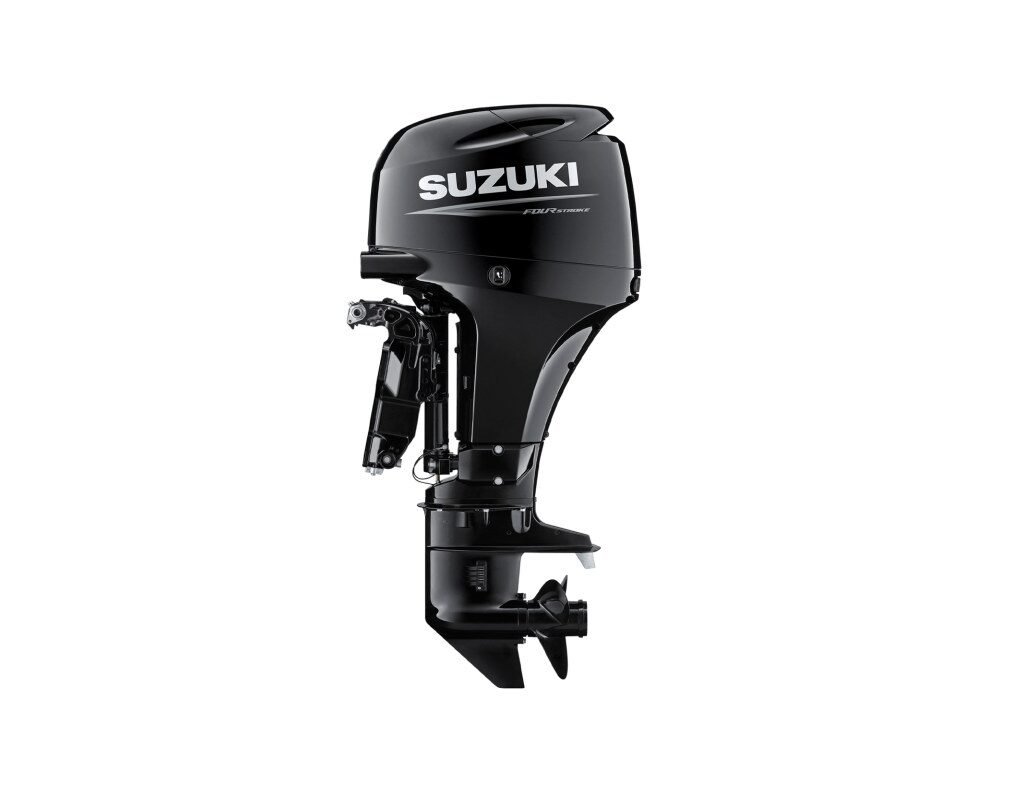
Table of Contents
Outboard Motor for Aluminum Boat: Our Quick Picks
| Boat | Our pick | Our price |
|---|---|---|
| 10 to 12 ft jon boat | Mercury 9.9MH | $1,272 |
| 12 to 14 ft utility boat | Mercury 15MLH EFI | $1,743 |
| 14 ft jon or V hull | Mercury 25MLH EFI | $2,301 |
| 14 to 15 ft V hull, heavier load | Suzuki DF20AS2 or Mercury 30MLHGA | $2,141 / $2,728 |
| 16 ft tiller boat | Mercury 40ELHPT | $3,786 |
| 16 to 17 ft console boat | Suzuki DF60ATL2 | $4,840 |
| Heavy 16 to 18 ft boat | Mercury 50ELPT Command Thrust | $4,147 |
| 17 to 18 ft deep V | Yamaha F90LB | $5,835 |
| 18 to 19 ft deep V | Mercury 115ELPT | $6,390 |
Every one of these is a four stroke, and every price includes delivery. Read on for why we picked each one.
Why Aluminum Boats Need a Different Approach
An aluminum hull is often half the weight of a fiberglass hull of the same length. That is great for fuel use and easy towing, but it changes how the boat responds to an outboard.
- Motor weight matters more. A heavy motor pushes the stern down, slows the hole shot and can let water in over a low transom.
- Less power is needed. A light hull planes with less horsepower, so you can often save money and fuel.
- Transoms are lower. Many small aluminum boats need a 15 inch short shaft, not 20 inch.
- Corrosion is a real risk. Aluminum and other metals in salt water can react and eat away at the hull.
Keep those four points in mind and choosing an outboard motor for aluminum boat use gets much simpler.
What Size Outboard Motor for Aluminum Boat Hulls?
Always start with the capacity plate. It shows the maximum horsepower and the maximum motor weight for your boat. Never go over either. The US Coast Guard boating safety site explains how these ratings work. Then use this rough guide:
| Boat length and type | Typical power |
|---|---|
| 10 to 12 ft jon boat | 2.5 to 9.9 HP |
| 12 to 14 ft jon or utility | 9.9 to 25 HP |
| 14 ft V hull | 15 to 30 HP |
| 15 to 16 ft V hull | 25 to 60 HP |
| 16 to 17 ft deep V | 40 to 90 HP |
| 17 to 18 ft deep V | 75 to 115 HP |
| 18 to 20 ft deep V | 115 to 150 HP |
For most owners, a motor between 75 and 100 percent of the boat’s maximum rating gives the best mix of speed, fuel use and resale. Our what size outboard for my boat chart has more detail.
Specs of the Best Motors for Aluminum Boats
Here are the key numbers. Weights are approximate dry weights for the lightest version and can vary by shaft length and starting type.
| Motor | Engine | Displacement | Weight (approx.) | Shaft options | Our price |
|---|---|---|---|---|---|
| Mercury 9.9 FourStroke | 2 cylinder | 208 cc | 84 lb | 15, 20, 25 in | $1,272 |
| Yamaha F9.9 | 2 cylinder | 212 cc | 90 lb | 15, 20 in | $1,600 |
| Mercury 15 EFI | 2 cylinder | 333 cc | 99 lb | 15, 20 in | $1,683 |
| Suzuki DF20A | 2 cylinder | 327 cc | 97 lb | 15, 20 in | $2,141 |
| Mercury 25 EFI | 3 cylinder | 526 cc | 157 lb | 15, 20 in | $2,290 |
| Suzuki DF40A | 3 cylinder | 941 cc | 229 lb | 20, 25 in | $4,246 |
| Mercury 60 EFI | 4 cylinder | 995 cc | 247 lb | 20 in | Ask us |
| Suzuki DF60A | 3 cylinder | 941 cc | 229 lb | 20 in | $4,840 |
| Yamaha F90 | 4 cylinder | 1,832 cc | about 354 lb | 20, 25 in | $5,835 |
| Mercury 115 FourStroke | 4 cylinder | 2.1 L | 359 lb | 20, 25 in | $6,390 |
Best Small Outboard Motor for Aluminum Boat Use: 9.9 to 20 HP
For jon boats, duck boats and small utility boats, a 9.9 to 20 HP motor is the sweet spot. These are light enough to lift on and off by hand, and most come as tillers with pull start.
Mercury 9.9 FourStroke
Light, simple and cheap to run. It is the motor we sell most for 12 to 14 foot jon boats. The 9.9MH starts at $1,272. If you have a heavier boat, the 9.9MLH Command Thrust at $1,567 swings a bigger prop for more push.
Yamaha F9.9 and T9.9
The Yamaha F9.9LMHB at $1,600 is smooth and very reliable. The Yamaha T9.9 high thrust from $1,960 is great for heavy loads and as a kicker.
Mercury 15 and Suzuki DF20
A 15 or 20 gets a loaded 14 foot boat on plane much better than a 9.9. The Mercury 15MLH EFI at $1,743 and the Suzuki DF20AS2 at $2,141 are both fuel injected for easy starts.
See more in our best 9.9 HP outboard list and jon boat outboard motor page.
Best Mid Size Outboard Motor for Aluminum Boat Use: 25 to 60 HP
This is the range most aluminum fishing boats run. A 25 or 30 suits a 14 to 15 foot boat. A 40 to 60 suits 16 to 17 feet.
Mercury 25 EFI
Three cylinder, fuel injected and only about 157 pounds. It starts easily and runs smoothly. The 25MLH is $2,301, or get power trim with the 25ELHPT at $2,865.
Mercury 40 and 50
The Mercury 40ELHPT tiller at $3,786 is a favorite on 16 foot tiller boats. For heavy boats, the 50ELHPT Command Thrust tiller at $4,418 or the 50ELPT Command Thrust remote at $4,147 push weight really well. Mercury explains the Command Thrust gearcase on its Mercury Marine site.
Suzuki DF40A and DF60A
Very fuel efficient thanks to lean burn, and light for their power. The DF40ATL2 is $4,246 and the DF60ATL2 is $4,840. See the full Suzuki 60 HP range.
Yamaha F60 and T60
The Yamaha F60LB at $4,780 is a proven, simple motor. The T60LB high thrust at $4,900 is great for heavy aluminum boats and pontoons.
Honda BF40 to BF60
Quiet and smooth. The Honda BF40D4LHA starts at $4,021. See the Honda 60 HP range too.
Best Bigger Outboard Motor for Aluminum Boat Use: 75 to 115 HP
Big aluminum deep V boats from 17 to 19 feet need real power, especially with three anglers and gear on board. This is where a 90 or 115 shines.
- Yamaha F90LB, $5,835. Smooth, light for a 90, very popular on deep V boats.
- Suzuki DF90ATL2, $6,013. Great fuel economy on long runs.
- Mercury 115ELPT, $6,390. One of the lightest 115s, ideal for aluminum hulls.
- Yamaha F115LB, $7,250. Proven and easy to service anywhere.
- Suzuki DF115B, from $4,679. Best value 115 we stock.
Our best 115 HP outboard article compares these in depth. For the biggest aluminum boats rated for 150, see our best 150 HP outboard picks.
Outboard Motor for Aluminum Boat Prices
Here is a quick look at what you will pay with us, delivery included, for the sizes aluminum boat owners buy most.
| Power | Starting price | Example |
|---|---|---|
| 9.9 HP | $1,272 | Mercury 9.9MH |
| 15 HP | $1,683 | Mercury 15ELH EFI |
| 20 HP | $2,013 | Mercury 20MH EFI |
| 25 HP | $2,290 | Mercury 25MH EFI |
| 30 HP | $2,719 | Mercury 30MHGA |
| 40 HP | $3,093 | Mercury 40MHGA |
| 50 HP | $4,048 | Mercury 50ELPT |
| 60 HP | $4,780 | Yamaha F60LB |
| 90 HP | $5,130 | Yamaha F90XB |
| 115 HP | $4,679 | Suzuki DF115B |
A dealer will often charge noticeably more for the same motor before rigging. Prices change with stock, so confirm with us before you pay.
Is a Two Stroke Still a Good Idea?
Old two strokes were very popular on aluminum boats because they were so light. Some people still look for them. The problem is that new ones are hard to find in most sizes, they use more fuel and oil, and parts are getting scarce. A modern light four stroke like the Mercury 25 EFI or the Mercury 115 comes close on weight while being quieter and much cheaper to run. For most owners, a four stroke is now the better outboard motor for aluminum boat use. Our 2 stroke vs 4 stroke outboard guide goes deeper.
Fuel Economy on Aluminum Hulls
Light hulls are cheap to run. A 14 foot boat with a 25 HP four stroke often uses under 2 gallons per hour at cruise. A 16 foot boat with a 60 can cruise at around 3 to 4 gallons per hour. An 18 foot deep V with a 115 will usually sit around 5 to 6 gallons per hour at a steady cruise. Weight on board, the prop and how you trim make the biggest difference, so keep the boat balanced and trim the bow up just enough to free the hull.
New or Used Outboard Motor for Aluminum Boat?
Used small motors sell fast, but many have been run hard on rivers and in shallow water. Look for chewed props, a scraped skeg and signs of overheating. If you go used, take our used outboard checklist with you. With new motors from $1,272 here, a new outboard motor for aluminum boat use is often the smarter buy, with a warranty and no history to worry about.
Tiller or Remote Steering?
A lot of aluminum boats are tiller boats, and for good reason. A tiller motor is cheaper, needs no steering system or controls, and gives you very fine control when fishing. You sit at the back, steer with one hand and fish with the other.
Remote steering suits boats with a side console or center console. It is more comfortable on long runs and in rough water, and it keeps the weight of the driver further forward, which helps a light hull plane. The trade off is extra cost for steering, cables and controls.
Rule of thumb: up to about 25 HP, tiller makes sense on almost any aluminum boat. From 40 to 60 HP, both are common. Above 75 HP, most boats are remote, though some big tiller boats run 90 to 115 HP tillers. Browse our tiller outboards if that is your style.
Getting the Shaft Length Right
This is the mistake we see most on aluminum boats. Many small jon boats and utility boats have a 15 inch transom and need a short shaft motor. Bigger V hulls usually have a 20 inch transom. A few have 25 inch.
Measure from the top of the transom, straight down to the bottom of the hull. If the motor is too long, it drags, adds spray and slows you down. If it is too short, the prop sucks air and the motor can overheat. Our outboard shaft length guide shows you exactly how to measure, and our long shaft outboards page lists the 20 and 25 inch options.
Shallow Water and Jet Outboards
Lots of aluminum boats run rivers and shallow flats where a prop would hit rocks. For that, a jet outboard is a popular choice. A jet uses a pump instead of a prop, so nothing sticks out below the hull.
The catch is power. A jet loses roughly a third of its power compared with a prop motor, so a 60 HP jet performs more like a 40 HP prop motor. That is why many river boats run a jet one size up. We stock jet models from Mercury, Yamaha and Tohatsu, such as the Mercury 40ELPT Jet at $3,093 and the Yamaha F60 jet tiller. Learn more in jet outboard vs prop and see Yamaha jet outboards.
Command Thrust and High Thrust Motors
If your aluminum boat is heavy, carries a lot of people, or is a small pontoon, a high thrust gearcase can make a big difference. These motors use a lower gear ratio and a bigger prop, so they push weight better at low and mid speeds. Mercury calls it Command Thrust. Yamaha calls its versions High Thrust, with a T in the model name.
Good options include the Mercury 9.9 and 50 HP Command Thrust motors and the Yamaha T9.9, T50 and T60. See our high thrust outboard page for the full list.
How to Stop Corrosion on an Aluminum Boat
This part matters more than any brand choice. When two different metals sit in water and touch through the hull or wiring, the weaker metal slowly gets eaten away. This is called galvanic corrosion, and aluminum is often the metal that loses. Salt water makes it worse, but it can happen in fresh and brackish water too.
How to protect your hull when you fit an outboard motor for aluminum boat use:
- Use the right anodes. Aluminum anodes work well in salt and brackish water. Magnesium suits fresh water. Zinc is for salt water only. Check them every season and replace at half worn.
- Never use copper based antifouling paint on an aluminum hull or motor.
- Isolate the mounting bolts. Use stainless bolts with marine sealant and the correct washers.
- Check your wiring. A stray current from a bad wire can eat a hull fast.
- Rinse after salt water and flush the motor every time.
- Do not leave the boat in salt water for long periods without a proper protection plan.
Every motor we sell has its own anodes from the factory. Keep them in good shape and they will protect both the motor and the hull. More tips are in our saltwater outboard motor guide.
Mounting Tips for Aluminum Transoms
- Check the transom first. Older aluminum boats can have soft wood inside the transom. Fix that before you hang a new motor.
- Use a transom plate on thinner transoms to spread the load.
- Bolt bigger motors through. Clamp only mounts are fine for small portables, but anything over about 25 HP should be bolted.
- Set the motor height right. The anti ventilation plate should sit level with or slightly above the bottom of the hull.
- Use a safety cable or chain on clamp on motors.
Aluminum or Stainless Prop?
Most motors for aluminum boats ship with an aluminum prop, and that is often the best choice. It is cheap, light and, if you hit a rock, the prop takes the damage instead of the gearcase. Stainless props are stronger and can add speed, but they cost more and pass more shock to the lower unit if you hit something. On rocky rivers, stick with aluminum and carry a spare. Read our outboard propeller guide to pick the right pitch.
Riveted vs Welded Hulls
Riveted hulls are lighter and usually cheaper, but they can flex and start to leak at the rivets if you overpower them or run them hard in chop. Welded hulls are stiffer and stronger, and many can handle a motor at the top of their rating. If your boat is riveted, stay a little under the maximum horsepower and choose a lighter motor. It will thank you with fewer leaks.
Real Setups Our Customers Run
- 12 foot jon boat on a farm pond: Mercury 9.9MH. Light enough for one person to carry.
- 14 foot riveted V hull, lake fishing: Mercury 25 EFI tiller. Planes with two adults and a cooler.
- 16 foot welded tiller boat, river: Mercury 40ELHPT. Great control and plenty of push.
- 16 foot side console: Suzuki DF60ATL2. Owner reports very low fuel use on long runs.
- 18 foot deep V walleye boat: Mercury 115 plus a Yamaha T9.9 kicker for trolling.
Need a trolling motor too? See our best kicker motor for trolling picks.
Mistakes to Avoid When Buying an Outboard Motor for Aluminum Boat Use
- Going over the horsepower or weight on the capacity plate.
- Buying a 20 inch shaft for a 15 inch transom.
- Ignoring anodes and getting corrosion on the hull.
- Choosing a heavy motor for a light riveted hull.
- Running a prop motor in water that really needs a jet.
Looking After Your Motor
Change the oil and gear oil every year or 100 hours. Replace the impeller every two or three years. Use fresh fuel and a stabilizer. Flush after salt. At the end of the season, follow our winterizing steps. These simple jobs will keep any outboard motor for aluminum boat use running for many years.
Why Buy Your Outboard Motor for Aluminum Boat From Us
- Every size from 2.5 to 115 HP and beyond, in Mercury, Yamaha, Suzuki, Honda and Tohatsu.
- Tiller, remote, jet and high thrust models.
- Clear prices with delivery included.
- Worldwide shipping from Fresno, California.
- Honest advice on size and shaft length.
Browse all our 4 stroke outboards for sale, compare brands in our Mercury vs Suzuki outboard guide, or check our cheap outboard motors.
How to Order
- Pick your motor in the shop, or send us your boat details.
- We confirm stock, shaft length and delivery time.
- You get a written invoice.
- We pack and ship with tracking.
Outboard Motor for Aluminum Boat FAQ
What is the best outboard motor for aluminum boat use?
It depends on size. For 12 to 14 foot boats, a Mercury 9.9 to 25. For 16 foot boats, a Mercury 40 or Suzuki DF60. For 18 foot deep V boats, a Yamaha F90 or Mercury 115.
What size outboard does a 14 foot aluminum boat need?
Usually 15 to 30 HP, depending on the capacity plate.
Will a four stroke be too heavy for my aluminum boat?
Not if you stay within the weight rating. Choose a light model like the Mercury 25 EFI or Mercury 115 if weight is tight.
How do I stop my aluminum boat from corroding?
Keep good anodes on the motor, never use copper antifouling, and rinse after salt water.
Do you ship outboards worldwide?
Yes. Delivery is included in our prices.
Choosing an outboard motor for aluminum boat use does not have to be hard. Get the size, shaft and corrosion protection right, and the outboard motor for aluminum boat you pick will give you years of easy fishing.
Final Word
The right outboard motor for aluminum boat use is light, matches your transom, sits inside the capacity rating and comes from a brand your local mechanic knows. Send us your boat details and we will give you a straight recommendation.
Call or WhatsApp +1 209 690 5983, use our contact page, or browse the shop.