
 Cart is empty
Description
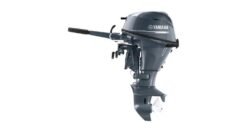
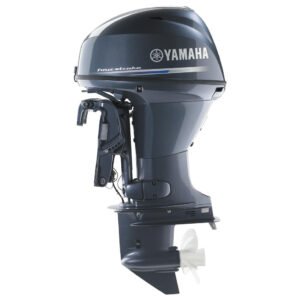
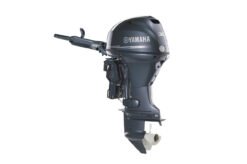
This page is for the Yamaha F6LMHA 6 HP outboard, new in its box and available to ship worldwide. It is Yamaha’s 6 horsepower four-stroke on a 20 inch long shaft: a 139 cc single cylinder engine with a pull start, a proper reverse gear, a fuel tank on the motor and a connection for an external tank. It weighs about 61 pounds.
We already have a page written mainly for sailors, so this one looks at the other people who buy a long shaft 6: owners of small work boats, fishing boats and utility dinghies with 20 inch transoms, and people who need a dependable little motor for a job rather than for weekend fun. If you need a light, simple, long shaft motor that starts every time and costs almost nothing to run, the Yamaha F6LMHA 6 HP outboard deserves a close look.

Specifications
| Model | Yamaha F6LMHA |
|---|---|
| Horsepower | 6 HP at 5,000 rpm |
| Engine | Single cylinder four-stroke, OHV |
| Displacement | 139 cc (8.5 cu in) |
| Bore x stroke | 62 x 46 mm |
| Compression ratio | 8.9:1 |
| Full throttle range | 4,500 to 5,500 rpm |
| Fuel system | Carburettor |
| Fuel supply | Built-in tank, external tank connection |
| Ignition | CDI |
| Lubrication | Wet sump |
| Starting | Manual, decompression assisted |
| Gears | Forward, neutral, reverse |
| Gear ratio | 2.08:1 |
| Shaft | 20 inch (L) |
| Weight | About 61 lb (28 kg) |
| Propeller | Included |
| Condition | New |
These figures come from Yamaha’s F6 spec sheet, published on its portable outboards page. Every Yamaha F6LMHA 6 HP outboard we ship matches them.
A Motor for Working Boats
A lot of small outboards live hard lives. They push fishermen out to their nets before dawn, ferry workers across rivers and lakes, carry supplies to island homes, help with aquaculture farms, run survey crews along shorelines and serve as backup on bigger boats. In that kind of work, the qualities that matter are not speed or fancy features. They are reliability, simplicity, low running costs and the ability to get parts anywhere.
The Yamaha F6LMHA 6 HP outboard ticks all of those boxes. The 139 cc single cylinder engine has very few parts to go wrong. It runs on ordinary unleaded fuel without oil mixing. It starts with a pull, so there is no battery to go flat. The carburettor and ignition are simple enough that a local mechanic with basic tools can keep it running. And because Yamaha is sold almost everywhere, parts are not a problem.
For a working boat with a 20 inch transom, the long shaft is not a luxury. It keeps the prop in solid water when the boat is loaded heavily at the stern or running in a swell. A short shaft motor on a tall transom ventilates, overheats more easily and wastes fuel. The Yamaha F6LMHA 6 HP outboard puts the prop where it needs to be.
Who Uses It and How
Small fishing boats
Many small fibreglass and aluminium fishing boats have 20 inch transoms. On a lightly loaded 12 to 14 foot boat, a 6 HP gives a steady working speed, trolls smoothly and sips fuel. With an external tank, it can run all day. Reverse is useful for backing up to nets, traps and moorings.
Utility dinghies
Marinas, boatyards, harbour authorities and yacht clubs often keep a utility dinghy for moving people and gear around. A long shaft 6 on a sturdy rigid dinghy is a common setup. It starts easily for whoever needs it and keeps running with minimal attention.
Lake and river transport
On lakes and rivers where people use small boats as everyday transport, the Yamaha F6LMHA 6 HP outboard is a sensible, economical engine. It does not need special fuel, it does not need a battery and it can be serviced locally.
Backup and get-home power
Some owners of larger boats carry a long shaft 6 as an emergency motor. If the main engine fails, a 6 HP on a bracket will get a small or medium boat moving in calm water. It is a cheap insurance policy.
Sailboats
And yes, plenty go on sailboats too. We cover that use in detail on our Yamaha F6LMHA listing.
What the Model Code Means
F is four-stroke, 6 is the horsepower, L is the long 20 inch shaft, M is manual start, H is the tiller handle and A is the generation. If you need the 15 inch version, look at the Yamaha F6SMHA.
Checking That 20 Inches Is Right
Measure from the top of the transom where the clamps sit down to the bottom of the hull at the centre line. If that is about 20 inches, the Yamaha F6LMHA 6 HP outboard is the correct length. If it is about 15 inches, a long shaft will sit too deep, adding drag and spray, so choose the short shaft instead. For bracket mounts, lower the bracket and check that the prop sits well under the waterline with some margin for the stern lifting.
Running It Every Day
Starting the Yamaha F6LMHA 6 HP outboard is easy. The decompression system means even a tired crew member at the end of a long day can pull it over without effort. Cold, use a little choke and expect one to three pulls. Warm, one pull is normal. Shift only at idle, using the lever on the side of the motor. Reverse makes holding position, backing to a net or a mooring, and docking much easier than on smaller motors without it.
At working speed, the Yamaha F6LMHA 6 HP outboard is quiet and smooth. The labyrinth exhaust keeps noise down, which crews appreciate on long days. There is no smoke and no smell of two-stroke oil, which also means cleaner hands, cleaner catch and cleaner water.
For long working days, an external tank is the way to go. A 12 litre or larger portable tank on the floor of the boat, connected with a primer bulb line, gives hours of running between refills. Keep a spare can of fresh fuel ashore and you are set.
Fuel Quality Matters
In many places where small working boats like those running the Yamaha F6LMHA 6 HP outboard operate, fuel quality can be inconsistent. Water, dirt and old fuel are the main causes of trouble in small carburetted motors. A few habits protect the Yamaha F6LMHA 6 HP outboard. Buy fuel from a busy supplier where it turns over quickly. Use a funnel with a fine filter. Keep fuel cans sealed and out of the sun. If you suspect water in the fuel, drain the tank and the carburettor and start fresh. Consider adding a water-separating fuel filter in the external tank line if your fuel supply is unreliable.
Fitting the Motor
Check your boat’s rating for horsepower and engine weight before fitting the Yamaha F6LMHA 6 HP outboard. Clamp the motor in the centre of the transom and tighten the screws firmly. On heavily used work boats, check the clamps every day, because vibration and constant use can loosen them. Fit a safety line. Make sure the anti-cavitation plate sits around the bottom of the hull, and set the tilt pin so the leg is vertical when the boat is loaded the way you normally run it. Check the oil, add fuel, open the vent, start in neutral and confirm the cooling water stream.
Break-In
Even for a work motor like the Yamaha F6LMHA 6 HP outboard, the break-in pays off. Run the Yamaha F6LMHA 6 HP outboard at varied low and medium throttle for the first hours, avoid long full-throttle runs and check the oil before each use. Change the oil at the end of the break-in. Yamaha’s manual has the exact procedure, and copies are available from the Yamaha owner’s manual library.
A Maintenance Plan for Heavy Use
Commercial and heavy users put many more hours on a motor than weekend boaters, so the maintenance schedule needs to follow hours, not calendar months. Here is a practical approach.
Daily: check engine oil, look for the cooling stream, check clamps, rinse the motor after salt water use.
Weekly in salt water: a proper freshwater flush, a look at the anode and a quick check of the propeller.
At the hours set in the manual: engine oil change, gear oil change, spark plug check, grease points, fuel filter check.
Regularly: replace the water pump impeller. On a working motor, do it more often than the minimum, especially in sandy or silty water. It is a cheap part and overheating is an expensive problem.
Keep a simple logbook of hours and services. It helps you stay on schedule and it adds value if you ever sell the boat. With this kind of routine, the Yamaha F6LMHA 6 HP outboard will keep working through season after season.
Reading the Signs Before Something Fails
Motors usually give warnings before they stop. Learning to notice them saves a lot of trouble on a working boat. A cooling stream that is weaker than usual points to a blocked intake or a tired impeller. A motor that is harder to start than it used to be often has a dirty plug, stale fuel or a partly blocked carburettor jet. Vibration that was not there before usually means a damaged prop or something wrapped around it. Milky gear oil means water is getting into the gearcase, usually through a damaged seal. Oil on the engine or under the cowling means a leak that needs attention.
None of these are emergencies on their own, but each one gets worse if ignored. Catching them early is what separates a motor that runs for a decade from one that dies in two seasons. Make a habit of looking and listening every time you start up, and keep a note of anything unusual. The simple design of the Yamaha F6LMHA 6 HP outboard makes most of these checks quick and easy, and the fixes are usually cheap when caught in time.
If you are ever unsure, a short message to us or a visit to a local Yamaha dealer is far cheaper than a breakdown out on the water.
Spare Parts Worth Keeping
If your boat earns money, downtime on the Yamaha F6LMHA 6 HP outboard costs money. A small kit of spares turns most problems into a short stop rather than a lost day:
- Spark plugs and a plug spanner.
- A water pump impeller and gasket.
- Engine oil and gear oil for a change.
- A spare propeller and the parts that hold it on.
- Fuel filter and a short length of fuel hose.
- A spare kill cord clip if fitted.
- Basic tools: screwdrivers, pliers, the spanners that fit your motor.
All of these are standard Yamaha parts, and any dealer can supply them for the Yamaha F6LMHA 6 HP outboard.
Storage Between Seasons
If the boat is laid up for part of the year, run the carburettor on the Yamaha F6LMHA 6 HP outboard dry, change the oil, flush with fresh water, change the gear oil and store the motor upright or on its marked side somewhere dry. In cold regions, make sure all the water has drained before frost. In hot regions, keep it out of direct sun.
Training New Crew on the Motor
On a working boat, several people often share one outboard. That makes simple operating habits important, because the motor is only as reliable as the least careful person who uses it. The Yamaha F6LMHA 6 HP outboard is easy to teach, but it is worth setting a few house rules and sticking to them.
Every user should check the oil before the first start of the day. Every user should start in neutral and look for the cooling water stream before moving off. Everyone should idle down before shifting between forward and reverse. Nobody should run the motor in mud or sand, and everyone should tilt it up before reaching the shallows. The fuel vent should be closed whenever the motor is carried or laid down. And whoever uses it last at the end of the day should rinse it if it has been in salt water.
Write those rules on a laminated card and keep it in the boat. It sounds fussy, but it is the difference between a motor that lasts many years and one that is in the workshop every few months. Because the Yamaha F6LMHA 6 HP outboard is so simple, a little discipline goes a very long way.
Getting More Life From the Propeller
On working boats, propellers take a beating. They hit rocks, logs, ropes and the bottom. A damaged prop wastes fuel, causes vibration and can strain the gearbox. Check the prop regularly for chips, bends and fishing line wrapped around the shaft behind it. Line is a hidden killer: it can wind in behind the prop and cut the gearcase seal, letting water in and oil out. If you see milky gear oil at a change, a damaged seal is the likely cause and it should be fixed promptly.
Carrying a spare prop and the small parts that fit it means a damaged prop is a ten-minute job on the water rather than a lost day. Yamaha props for the Yamaha F6LMHA 6 HP outboard are common and easy to find.
Salt Water and Corrosion
Yamaha builds its portables to handle salt water, with corrosion resistant alloys, protective paint and a sacrificial anode that corrodes instead of the important parts. But the anode can only do its job if it is in good condition and in contact with the water. Check it regularly and replace it when it has worn significantly. Never paint over an anode.
Flushing is the other half of corrosion control. Salt water left in the cooling passages dries into crystals that slowly restrict flow and encourage corrosion inside the motor. A freshwater flush after salt water use, or at least at the end of every working day, keeps the passages clear. Combined with a good anode, regular flushing gives the Yamaha F6LMHA 6 HP outboard a long life even in harsh coastal work.
Warranty Notes
Yamaha’s factory warranty terms depend on the country and on whether the motor is used privately, by a government body or commercially. Commercial use often has a shorter warranty period. Before you buy, ask your local Yamaha marine dealer what applies to your situation and keep your invoice and serial number safe. We are happy to help with any paperwork for the Yamaha F6LMHA 6 HP outboard.
Running Costs
For anyone running a small boat for work, running costs matter. The Yamaha F6LMHA 6 HP outboard uses very little fuel at a working pace, needs only a small amount of oil per change and has inexpensive, widely available wear parts. No battery, no electronics, no expensive diagnostic equipment. Many small operators find a well maintained Yamaha portable costs them less per year than almost any other piece of equipment they own.
Why Yamaha Works for Working Boats
In many countries, Yamaha outboards have become the default choice for small working boats, and there are good reasons for it. Dealers and parts are widely available. Local mechanics know the engines. The motors are simple and tough. They tolerate the occasional bit of rough treatment. And they hold their value, so when the time comes to upgrade, the old motor still sells. For a long shaft 6 HP, the Yamaha F6LMHA 6 HP outboard is the obvious pick.
Other Long Shaft Options
- Yamaha F4LMHA: same weight, 4 HP, for boats rated lower.
- Yamaha F8LMHB: twin cylinder, more power for heavier loads.
- Yamaha F9.9LMHB: the 9.9 HP long shaft for bigger boats.
You can also see our 6 HP Yamaha section and the full Yamaha outboards range.
Ordering From Us
We are an online dealer of new outboard motors, shipping worldwide. Add the Yamaha F6LMHA 6 HP outboard to your cart and check out, or contact us if you need a quote for several motors or have questions about delivery. We confirm stock, pack the motor in its factory box with extra protection and send tracking once it ships.
For international orders, import duty and local taxes are paid by the buyer. We provide the commercial invoice and documents that customs needs. Fleet and business buyers are welcome to ask about multiple units. Our refund and return policy, terms and conditions, customer reviews and about us page are on the site.
FAQ
Is the Yamaha F6LMHA 6 HP outboard new?
Yes, new in its factory box.
Is it suitable for commercial use?
Yes, many are used on working boats. Note that warranty terms for commercial use are usually different from private use, so check with your local Yamaha dealer.
Does the Yamaha F6LMHA 6 HP outboard have reverse?
Yes, forward, neutral and reverse.
Can the Yamaha F6LMHA 6 HP outboard run all day?
With an external tank, yes.
Does the Yamaha F6LMHA 6 HP outboard need a battery?
No. It is pull start.
Can you ship several units?
Yes. Contact us for a quote.
Is a propeller included?
Yes.
Is the Yamaha F6LMHA 6 HP outboard good in salt water?
Yes, with regular freshwater flushing and anode checks.
Last Word
Before you order, it is worth thinking about how many hours a year the motor will really run and who will be using it. If it is one careful owner and a few weekends, almost any small outboard will do. If it is several crew members, salt water and long working days, the choice matters a lot more. That is exactly the situation where a proven, widely supported engine like this one earns its keep, because when something does wear out, the part is on a shelf nearby and someone local knows how to fit it.
A working boat needs a motor that just keeps going. The Yamaha F6LMHA 6 HP outboard is simple, tough, economical and supported by Yamaha dealers around the world. Its 20 inch shaft keeps the prop where it belongs on taller transoms, and its reverse gear and external tank option make it practical for long, busy days. Add it to your cart, or get in touch and tell us about your boat. You can also browse the full shop.

Reviews
There are no reviews yet.