
 Cart is empty
Description
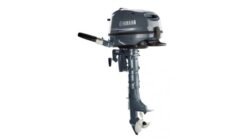
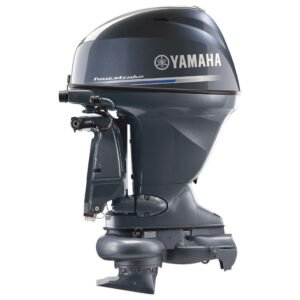
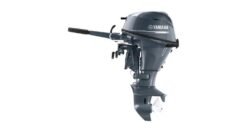
If you are comparing small motors and the Yamaha F40LA 40 HP outboard is on your list, this page will help you decide. We sell it new, in the factory crate, with remote controls and a 20 inch shaft, and we ship it worldwide. It is Yamaha’s 747 cc three-cylinder four-stroke, built in the same family as the F30, and it is one of the most popular small outboards for aluminium fishing boats, skiffs, small pontoons and RIBs.
I will start with the specs, then answer the questions buyers ask us most. If you want a delivered price now, message us.

Specifications
- Model: Yamaha F40LA
- Power: 40 HP at 5,500 rpm
- Engine: 3-cylinder inline four-stroke, single overhead cam
- Displacement: 747 cc
- Bore x stroke: 65 x 75 mm
- Fuel: Electronic fuel injection with engine control module
- Intake: Long-track manifold, single throttle valve
- Shaft: 20 inch
- Weight: 214 lb
- Controls: Remote mechanical
- Starter: Electric
- Alternator: 17 amp
- Full throttle range: 5,000 to 6,000 rpm
- Corrosion protection: YDC-30 alloy, five-layer paint
- Condition: New
Question One: Is 40 HP Enough for My Boat?
Start with your capacity plate. It shows the maximum horsepower your boat can safely carry. If it says 40, a 40 is the most you should run. If it says 50 or 60, a 40 will still work but you may want more power for heavy loads.
Then think about how you use the boat. A Yamaha F40LA 40 HP outboard comfortably planes a 15 to 17 foot aluminium boat with two or three people and gear. It pushes a small two-tube pontoon at a relaxed cruise. It runs a 12 to 14 foot RIB with real pace. If you regularly carry five or more people or run long distances in rough water, consider a 50 or 60 if your boat is rated for it.
Question Two: Which Shaft Length?
Measure your transom from the top, where the motor clamps, straight down to the bottom of the hull at the centre. About 15 inches is a short shaft. About 20 inches is a long shaft like this F40LA. About 25 inches is an extra long shaft. Get this right. A shaft that is too short lets the prop ventilate. One that is too long drags and throws spray.
Question Three: Remote or Tiller?
Remote steering, like the F40LA, means a console, a wheel and a throttle lever. It is more comfortable on long runs and keeps weight forward. Tiller steering is simpler, cheaper to rig and leaves the boat open. If you prefer a tiller, look at the F40LEHA.
Question Four: Why Three Cylinders?
Some small outboards use two cylinders. Yamaha uses three in the F40. Three cylinders fire more often per revolution, so the engine runs smoother with less vibration. You feel it through the boat and the steering. It also helps the motor idle cleanly and troll smoothly. For most buyers, the smoothness of the Yamaha F40LA 40 HP outboard is one of the first things they notice.
Question Five: What Does Fuel Injection Give Me?
Fuel injection means no choke, no flooding, and easy starts hot or cold. The engine control module measures conditions and meters exactly the right amount of fuel. That gives a steady idle, sharp throttle response and good economy. It also means the motor can talk to Yamaha digital gauges, showing rpm, hours and warnings.
Question Six: Why Yamaha and Not Another Brand?
There are several good small outboards on the market. Here is why many buyers pick the Yamaha F40LA 40 HP outboard.
Parts are everywhere. Yamaha dealers and parts suppliers exist in most countries. Filters, impellers, plugs and props are easy to find, which matters when you need something quickly.
Mechanics know it. Most marine mechanics have worked on Yamaha midrange motors. You are not stuck waiting for a specialist.
Proven design. The 747 cc three-cylinder has been in Yamaha’s lineup for years and has a strong record for reliability.
Corrosion protection. YDC-30 alloy and a five-layer paint system resist salt.
Resale. Boats with Yamaha motors are easier to sell and tend to hold their value.
Question Seven: What Will It Cost to Run?
Less than most people expect. A fuel-injected 40 sips fuel at cruise, especially compared with an old carbureted two-stroke. There is no oil to mix. Servicing needs oil, a filter, gear lube, plugs, an impeller and anodes at regular intervals, all inexpensive parts. With routine care, the Yamaha F40LA 40 HP outboard rarely needs anything else.
Question Eight: What Do I Need to Rig It?
- A Yamaha mechanical control box.
- Throttle and shift cables.
- A wiring harness and key switch.
- Steering, cable or hydraulic.
- A gauge, analogue or digital.
- A fuel line with primer bulb and water-separating filter.
- A marine starting battery.
- A prop.
If you are replacing an older Yamaha with mechanical controls, some parts may carry over. We can quote whatever you need with the motor so it all arrives together.
Question Nine: How Do I Pick a Prop?
The right prop lets the motor reach its full throttle range of 5,000 to 6,000 rpm with your normal load. If the motor falls short, drop pitch. If it over-revs, go up. Aluminium props are standard and cheap to replace. Stainless props hold their shape and grip better. Four-blade props help heavier boats and pontoons. Yamaha’s propeller guide helps narrow it down. Or tell us your boat and we will suggest one for your Yamaha F40LA 40 HP outboard.
Question Ten: Who Should Install It?
A Yamaha dealer or qualified marine mechanic. They will set the mounting height, adjust the cables, set up the steering and test the motor on the water. That gets the motor off to a good start and keeps your warranty options open with your local dealer. Warranty terms depend on your country.
Question Eleven: How Do I Break It In?
Ten hours of careful running. Start slow, gradually use more throttle while varying the rpm, and avoid long full-throttle runs until it is done. The manual explains each stage. After the break-in, change the oil and filter and the gear lube.
Question Twelve: How Do I Look After It?
- Flush after every trip with the freshwater flush device.
- Check the tell-tale every time you start.
- Change oil and filter on schedule.
- Change gear lube every season and check for water.
- Replace the water pump impeller on schedule.
- Check and replace anodes.
- Use fresh fuel and keep the filter clean.
- Grease the steering and fittings.
Do that and the Yamaha F40LA 40 HP outboard will run for many years.
Question Thirteen: Will It Handle Salt Water?
Yes, with care. Yamaha builds its midrange motors with YDC-30 aluminium alloy and a five-layer anti-corrosion paint system, plus sacrificial anodes. Your part: flush after every saltwater trip, rinse the outside, check anodes monthly and replace them when half worn, and tilt the motor up when moored. Spray electrical connections with a corrosion inhibitor every few months. Many Yamaha F40LA 40 HP outboard motors spend their whole lives in salt water on tenders, skiffs and RIBs, and they do fine with that routine.
Question Fourteen: Can I Troll With It?
Yes. The three-cylinder idles smoothly, and Yamaha’s variable trolling rpm feature lets you adjust idle speed in 50 rpm steps through a compatible digital gauge or a helm switch. It is a useful feature for anglers who troll for walleye, trout or salmon, or who slow-troll baits on the coast.
Question Fifteen: New or Used?
Used 40s are tempting, but small motors often have hard histories: missed flushes, old fuel, rocks and long periods of neglect. Problems like a tired water pump, corroded cooling passages or a worn gearcase do not always show on the outside. A new Yamaha F40LA 40 HP outboard from us has zero hours, full paperwork and a known history. When you add up what a used motor might need in its first season, new often turns out to be better value.
Question Sixteen: How Does It Compare to the F30?
The F30 and F40 share the same 747 cc block and weigh the same. The F40 makes more power. If your boat is rated for 40 and you carry more people or gear, the 40 is worth it. If your boat is rated for 30, the F30LA is the right motor.
Question Seventeen: What About the F50?
The F50 moves up to a four-cylinder 996 cc engine. It has more torque and suits heavier boats and bigger pontoons. It is also heavier. If your boat is rated for 50 or more and you run heavy, look at the F50LB. Otherwise, the 40 is lighter and simpler.
Question Eighteen: What Is It Like on the Water?
Turn the key and the Yamaha F40LA 40 HP outboard starts straight away. It idles quietly with very little vibration. Push the throttle and a light boat comes up on plane quickly and cleanly, without a long stern-down wallow. The three-cylinder pulls smoothly through the rev range and settles into a relaxed cruise. You can talk normally. There is no smoke and no fumes drifting back into the boat.
At the end of the day, you connect a hose to the freshwater flush port while you load the boat, rinse the outside and tilt it up. That is it. It is the kind of motor you stop thinking about, which is exactly what most owners want.
Question Nineteen: How Do I Get the Best Fuel Economy?
Trim the motor out a little once you are on plane so the bow lifts and drag drops. Find a cruise rpm where the boat runs flat and smooth, usually in the middle of the range, and stay there. Running flat out all day burns far more fuel for a small gain in speed. Keep the hull clean and leave unneeded gear at home. Choose a prop that lets the motor reach its rpm range with your usual load. With those habits, the Yamaha F40LA 40 HP outboard is very cheap to run.
Question Twenty: How Do I Store It for Winter?
- Add fuel stabiliser and run the motor so treated fuel reaches the injectors.
- Change the oil and filter.
- Change the gear lube and check it for water.
- Flush and let the motor drain in the down position.
- Fog the engine as the manual describes.
- Grease all the fittings.
- Put the battery on a maintainer and cover the motor.
In spring, check everything, reconnect the battery and start it on water before your first trip.
Question Twenty-One: What Spares Should I Keep?
Engine oil and a filter, gear lube with new drain plug washers, a water pump impeller kit, spark plugs, a fuel filter, a spare prop and a couple of anodes. That covers the first season or two. If you live far from a dealer, we can add these to your Yamaha F40LA 40 HP outboard order so they ship together.
Question Twenty-Two: Can I Buy Several?
Yes. Rental fleets, fishing camps, marinas and dealers often buy several at once. Keeping every boat on the same model means one set of spares and one service procedure. Tell us how many Yamaha F40LA 40 HP outboard units you need and we will quote them together. Shipping them in one order usually lowers the cost per motor.
Question Twenty-Three: Is It Good for an Inflatable?
Many 12 to 15 foot RIBs and inflatables are rated for around 40 HP. On those boats, weight is a big deal. At 214 pounds, the F40 is light for a four-stroke of its power, so the boat stays balanced and planes easily. Remote steering lets you stand at a console instead of sitting on a tube. Flush after saltwater use, keep anodes in good shape, and the Yamaha F40LA 40 HP outboard makes a fine RIB motor.
Question Twenty-Four: Is It Good for a Yacht Tender?
Yes. A tender needs to start every time, because it is often your only way ashore. Fuel injection makes the F40 very dependable. It is quiet in a calm anchorage at night, light enough for davits and swim platforms, and simple to service. Many yacht crews pick a Yamaha for exactly those reasons.
Question Twenty-Five: How Do I Upgrade From a Two-Stroke?
If you are replacing an old two-stroke 40, expect big improvements. The Yamaha F40LA 40 HP outboard starts more easily, idles smoothly without loading up, uses much less fuel, makes no smoke and runs far quieter. It is a little heavier than an old two-stroke, so look at how the boat sits and move the battery and fuel tank forward if the stern sits low.
Check your controls. Old controls from another brand will not work with the Yamaha, so plan for a Yamaha control box and cables. Old gauges will not talk to the engine control module, so a Yamaha gauge is worth adding. Replace old fuel hoses and fit a new water-separating filter, because old fuel systems can hold dirt and water that fuel injection does not like. Do those things and the switch is easy.
Question Twenty-Six: What If I Am Still Not Sure?
Send us your boat’s make, model, length and year, plus a photo of the transom and the capacity plate if you can. Tell us how you use the boat: fishing, cruising, towing, work. We will tell you honestly whether the Yamaha F40LA 40 HP outboard fits, or whether a 30, a 50, a tiller model or a jet would suit you better. We would much rather you buy the right motor once.
Question Twenty-Seven: How Long Will It Last?
That depends mostly on how it is looked after. A Yamaha midrange four-stroke that is flushed after every trip, serviced on time, run on clean fuel and stored properly can give many years of reliable service. Owners who skip flushing in salt water, ignore the impeller or leave old fuel in over winter shorten that life a lot. Treat the Yamaha F40LA 40 HP outboard well and it will treat you well.
Question Twenty-Eight: Where Should I Mount the Battery and Fuel Tank?
On small boats, weight placement changes how the boat runs. With a remote motor, the driver already sits forward at the console, which helps. Put the starting battery in a secure, ventilated box near the console rather than right at the transom, and run proper marine cables back to the motor. Place the fuel tank where it is secure and easy to reach, ideally a little forward of the stern. A balanced boat gets on plane faster, runs flatter and uses less fuel.
Keep the fuel line run clean and short, without sharp kinks, and fit the water-separating filter where you can see and service it. Make sure the primer bulb points the right way, with the arrow toward the motor.
Question Twenty-Nine: What Should I Check on the First Few Trips?
Watch the tell-tale stream every time you start. Check that the steering moves smoothly lock to lock and the shift goes cleanly into gear. Look at the fuel filter bowl for water. After the first few hours, check the motor mounting bolts are still tight, since vibration can settle things. If you have a digital gauge, get used to what normal rpm and temperature look like for your boat, so you notice if anything changes. These simple checks help you catch small issues early and keep your new motor running perfectly.
Keep the owner’s manual on the boat in a dry bag. It has the exact service intervals, capacities and troubleshooting steps for the Yamaha F40LA 40 HP outboard, and it is the first thing a mechanic will ask for if you ever need help away from home. A copy of your service log alongside it makes any repair faster and easier.
How to Order
- Send us a message through the contact page.
- Tell us the model, how many and where you are.
- Add a prop, controls or spares.
- We send a delivered price.
- You confirm and pay.
- We ship with FedEx, UPS or USPS and send tracking.
Read our refund and return policy and terms and conditions any time.
Shipping Worldwide
We ship to buyers across the Americas, the Caribbean, Europe, Africa, the Middle East, Asia, Australia and the Pacific. The motor travels in its factory crate with tracking. Import duties depend on your country, so check with your customs office before the Yamaha F40LA 40 HP outboard arrives. Inspect the crate on delivery and photograph any damage before signing. Keep the paperwork for your local Yamaha dealer.
Related Motors
- Yamaha F40LA, our main listing for this model
- Yamaha F40LEHA, the tiller version
- Yamaha F40JEA, the remote jet
- Yamaha F30LA, the 30 HP version
Browse the 40 HP Yamaha range, all Yamaha outboards, the shop, reviews, about us and the blog. Yamaha’s official site has more about the midrange range.
Frequently Asked Questions
Is this Yamaha F40LA 40 HP outboard new?
Yes, new and in the factory crate.
How much does it weigh?
The Yamaha F40LA 40 HP outboard here weighs 214 lb, or 97 kg.
What shaft length is it?
The Yamaha F40LA 40 HP outboard here has a 20 inch shaft.
Is it remote or tiller?
Remote. The F40LEHA is the tiller version.
Do you ship worldwide?
Yes, with FedEx, UPS and USPS.
Get Your Price
If your boat is rated for 40 HP and you want a smooth, light, reliable motor, the Yamaha F40LA 40 HP outboard is a smart choice. Send us your country and how many you need, and we will reply with a delivered price.
Ready to order the Yamaha F40LA 40 HP outboard? Add it to your cart above, or send us your location for a delivered quote. We ship worldwide with FedEx, UPS and USPS, crated and tracked, and we are always happy to help with rigging questions before and after the motor arrives at your door.
Still deciding? Message us with your boat details and we will tell you honestly whether the Yamaha F40LA 40 HP outboard is the right motor, what rigging you will need and what it will cost delivered to your door. We answer every message personally, and there is never any pressure to buy. If it is not the right fit, we will point you to the model that is.

Reviews
There are no reviews yet.