
 Cart is empty

Shopping for a center console outboard motor for sale? We stock the big four strokes that offshore boats run on: Yamaha 425 XTO and F350, Mercury Verado 250, 300 and 350, Suzuki DF250, DF300 and DF350, and Honda BF225 and BF250. Prices start at $8,750 for a Mercury 200XL Verado. Every motor is tested before it ships, and we deliver worldwide.
We’re an outboard dealer in Fresno, California. Center console owners usually come to us for one of three reasons. They’re repowering an older boat with tired engines, they’re adding a second motor for twin power, or they want to save real money compared to new dealer prices. This page lists every center console outboard motor for sale we have, the specs, how to choose single or twin power, and how buying and shipping work.
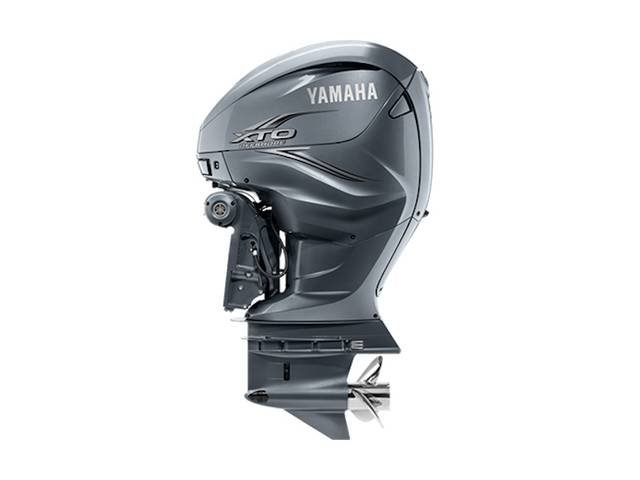
Center Console Outboard Motor for Sale: What’s in Stock
Here’s a selection of current stock by horsepower. Prices change as motors come in and go out, so check the product page for the live price.
| Motor | HP | Shaft | Price from |
|---|---|---|---|
| Mercury 200XL Verado | 200 | 25 in | $8,750 |
| Honda BF225DXRA | 225 | 25 in | $13,234 |
| Honda BF225DLRA | 225 | 20 in | $13,181 |
| Mercury Verado 250 L | 250 | 20 in | $12,254 |
| Suzuki DF250TX2 | 250 | 25 in | $12,448 |
| Suzuki DF250APX2 | 250 | 25 in | $13,330 |
| Honda BF250DXRA | 250 | 25 in | $13,851 |
| Mercury 300 L FourStroke | 300 | 20 in | $13,184 |
| Suzuki DF300APX2 | 300 | 25 in | $13,669 |
| Mercury Verado 300 XL | 300 | 25 in | $14,511 |
| Mercury Verado 350 XL | 350 | 25 in | $15,832 |
| Suzuki DF350ATX2 | 350 | 25 in | $16,492 |
| Yamaha F350XCC | 350 | 25 in | $17,354 |
| Yamaha LF350XCC (counter rotation) | 350 | 25 in | $17,803 |
| Yamaha XTO LXF425XSA7 | 425 | 25 in | $23,000 |
| Yamaha XTO XF425ESA7 | 425 | 35 in | $23,000 |
| Mercury 300XXL SeaPro (pair) | 2 x 300 | 30 in | $17,500 |
We have many more variations, including white models, counter rotation and 30 or 35 inch shafts. Browse them under Mercury, Yamaha, Suzuki and Honda.
What a Center Console Needs From Its Motor
A center console is a different animal from a lake boat. It runs offshore, often far from help, in rough water, with a heavy load of fuel, ice and people. When you pick a center console outboard motor for sale, these things matter most:
- Reliability. Everything else comes second. Modern four strokes from all four brands here are very dependable when looked after.
- Corrosion protection. Salt eats cheap metal. These motors have heavy anodes, sealed electrics and saltwater paint systems.
- Charging output. Big electronics, pumps, lights and windlasses draw a lot of current. Bigger motors give more amps.
- Fuel economy at cruise. Offshore trips are long. A motor that sips fuel at 4,000 rpm saves serious money.
- Correct shaft and rotation. Most center consoles take 25 inch shafts. Twins and triples need counter rotation on one side.
Single or Twin Power?
This is the first big decision. A single center console outboard motor for sale is cheaper to buy, cheaper to run and simpler to maintain. Many 20 to 24 foot boats run a single 200 to 300 HP motor very happily.
Twins give you a get home engine if one quits, better handling at low speed, and more total power for bigger boats. Most boats over 26 feet run twins, and many 30 footers and up run triples or quads. If you run twins, you need one standard rotation motor and one counter rotation motor, so the props turn in opposite directions and the boat tracks straight. Yamaha marks counter rotation with an “L” at the start of the code, like the LF350XCC. Mercury often uses a “C” in the code, like the Verado 300 CXL. Suzuki uses “Z”.
Center Console Outboard Motor for Sale: Specifications
Standard figures for each family in this list. Weights vary by shaft length and options, and we confirm details from the actual motor’s plate before you pay.
| Model | Engine | Displacement | Approx. weight |
|---|---|---|---|
| Mercury Verado 200 (older model) | Inline 4 or 6, supercharged, by year | 1.7 to 2.6 L | about 500 to 640 lb |
| Honda BF225 / BF250 | V6, 4 stroke, SOHC | 3.6 L | about 600 lb |
| Mercury 250 / 300 FourStroke and Verado (V8) | V8, 4 stroke | 4.6 L | about 525 to 650 lb |
| Suzuki DF250 / DF300AP | V6, 4 stroke, DOHC | 4.0 L | about 580 to 600 lb |
| Mercury Verado 350 | V8 (newer) or supercharged inline 6 (older) | 4.6 L or 2.6 L, by year | about 640 to 670 lb |
| Suzuki DF350A | V6, 4 stroke, dual prop | 4.4 L | about 730 lb |
| Yamaha F350 | V8, 4 stroke | 5.3 L | about 800 lb |
| Yamaha XTO 425 | V8, 4 stroke, direct injection | 5.6 L | about 950 lb |
All of these have power trim and tilt, electronic fuel injection, and are designed for salt water. The Yamaha XTO also has integrated electric steering, and the Verado V8 and V10 range uses Mercury’s electro hydraulic steering on many models.
Yamaha 425 XTO and F350
The Yamaha XTO Offshore 425 is a 5.6 litre direct injected V8, and it’s one of the strongest center console outboard motor for sale options anywhere. It’s built for big offshore boats in the 30 to 45 foot range running twins, triples or quads. It turns a huge prop, has a strong alternator for heavy electronics, and has integrated electric steering, so there are no hydraulic hoses on the transom.
We stock it in 25, 30 and 35 inch shafts, in standard and counter rotation. The F350 is the older 5.3 litre V8, still a very capable motor and a good way to save money on a twin repower. Our Yamaha 425 HP buying guide goes into detail.
Mercury Verado and FourStroke V8
Mercury’s V8 lineup covers 250, 300 and 350 HP, in both the regular FourStroke and the premium Verado. The Verado is smoother and quieter, with Mercury’s Advanced MidSection that soaks up vibration. The regular FourStroke is simpler and lighter on the wallet. The current models use a 4.6 litre V8 block, while a few older Verado units in our stock use Mercury’s earlier supercharged inline six. We’ll tell you which one you’re looking at.
Shaft codes are easy: L is 20 inch, XL is 25 inch, XXL is 30 inch, and a C in front means counter rotation. WH means white paint. DTS means digital throttle and shift. A twin set of Verado 300 XL and 300 CXL is a very common setup on 26 to 30 foot center consoles. Read more on our Mercury Verado for sale page and our Mercury 250 HP guide.
Suzuki DF250, DF300 and DF350
Suzuki’s big motors give excellent value. The DF250 and DF300AP use a 4.0 litre V6 with Suzuki’s offset driveshaft and Precision Control. The DF350A is the one people notice on the dock. It has dual counter rotating props on one gearcase, which gives great grip in the water, strong acceleration and very good straight line tracking even on a single engine.
If you run a 22 to 26 foot center console on a single motor, a Suzuki DF300 or DF350 is a strong pick. Codes use TX for 25 inch shafts, TXX for 30 inch, Z for counter rotation and W for white. See every Suzuki center console outboard motor for sale under our Suzuki 250 HP and Suzuki 350 HP pages.
Honda BF225 and BF250
Honda’s 3.6 litre V6 is known for being smooth, quiet and very easy on fuel. It’s a great motor for 20 to 24 foot center consoles on a single, or 25 to 28 footers on twins. The BF250 comes in a wide range of versions, with mechanical (R) or digital (D) controls, 20, 25 or 30 inch shafts, standard or counter rotation, and white (WT) or the standard grey. That makes it easy to match an existing rig.
Choosing the Right Center Console Outboard Motor for Sale
Start with the boat’s capacity plate and never go over its max HP. The US Coast Guard boating site explains capacity plates. Most offshore boats run at or near their rating, because they carry a lot of weight.
| Boat length | Typical setup | Good picks |
|---|---|---|
| 18 to 21 ft | Single 150 to 225 HP | Mercury 200 Verado, Honda BF225 |
| 22 to 24 ft | Single 250 to 350 HP | Suzuki DF300 or DF350, Verado 300 |
| 25 to 28 ft | Twin 200 to 300 HP | Twin Verado 300, twin Honda BF250 |
| 29 to 34 ft | Twin 300 to 350 HP | Twin Verado 350, twin Yamaha F350 |
| 35 ft and up | Triple or twin 350 to 425 HP | Yamaha XTO 425 |
Then check shaft length. Most center consoles take a 25 inch shaft. Many bigger boats with brackets need 30 inch, and some very large boats need 35 inch. Measure from the top of the transom or bracket to the bottom of the hull, or send us the boat make and year. Our shaft length guide explains it.
Repowering an Older Center Console
Most of our center console buyers are repowering. If you stay with the same brand, your controls, gauges and steering may carry over, which saves a lot. If you switch brands, budget for new controls, harnesses, gauges and possibly new steering. Digital (DTS or drive by wire) motors need matching digital controls.
Check the transom too. Old wooden cores can rot, and new motors are often heavier than the old two strokes they replace. A good surveyor or rigger can tell you if the transom needs work. Our outboard repower for sale page covers the full repower process.
Props for Offshore Boats
Center consoles almost always run stainless props. Three blade props usually give the best top speed. Four blade props give better hole shot, better grip in rough water and better handling with heavy loads. At wide open throttle with a normal load, the engine should reach the top of its recommended rev range. If not, change the pitch. We’ll help you choose one when you buy your center console outboard motor for sale.
Salt Water Care
These motors are built for salt, but they still need attention. Flush every engine with fresh water after every trip. Tilt them up when the boat sits in the water. Check anodes every few months and replace them when half gone. Keep the fuel fresh and use good water separating filters, because bad fuel causes more offshore breakdowns than anything else. BoatUS has good articles on corrosion and engine care, and our saltwater outboard motor page has more tips.
What We Check Before We List a Center Console Outboard Motor for Sale
- Compression on every cylinder.
- Diagnostic scan for stored faults and engine hours.
- Lower unit oil check for water or metal.
- Water pump, thermostat and tell-tale check.
- Power trim and tilt through the full range.
- Test tank run through the rev range in forward and reverse.
- Charging output check.
- Look over the midsection, bracket, anodes and cowl for corrosion.
We’ll send photos of the actual unit and its plate on request. Buyers’ comments are on our reviews page.
Why Buy Your Center Console Outboard Motor for Sale From Us
- Every motor is tested before it’s listed.
- We confirm HP, shaft, rotation and control type before you pay.
- We’ll help you match twins correctly, with standard and counter rotation.
- Free shipping is included, and we deliver worldwide.
- Each motor is crated on a pallet for safe transport.
We’ve been in this business more than 20 years. Read more about us.
Worldwide Shipping on Every Center Console Outboard Motor for Sale
We ship every center console outboard motor for sale to buyers worldwide. Within North America it goes by freight truck. Overseas it goes by sea freight in most cases, or air freight if you need it fast. Tell us your country and nearest port or city and we’ll confirm the details before you pay. Import duties and local taxes depend on your country and are paid on arrival. Our guide on how to ship an outboard motor overseas explains each step.
How to Order
- Pick a motor from the table or from the shop.
- Send us your boat make, year, length, current engines and max HP if you’d like help.
- We confirm the motor, rotation and delivery details.
- You place the order and we prepare the motor.
- We send tracking and stay in touch until it arrives.
Please read our refund and return policy and terms before you order.
Real Center Console Setups From Our Buyers
A few real examples of how a center console outboard motor for sale fits different boats.
An owner of a 23 foot center console had a single tired two stroke 225. He went with a Suzuki DF300APX2 on a 25 inch shaft. He told us the boat cruises more quietly, uses noticeably less fuel on long runs to the reef, and the electronics stay powered without trouble.
A charter captain with a 30 foot boat bought a matched pair of Mercury Verado 300s, one standard rotation XL and one counter rotation CXL. He wanted redundancy for clients far offshore. With twin motors from us, he has a get home engine and better control at the dock.
A sport fisherman with a 36 foot boat bought a pair of Yamaha XTO 425s with 30 inch shafts, one standard and one counter rotation. That’s a big investment, and buying a tested center console outboard motor for sale from our stock saved him a lot compared to new prices.
Fuel Economy at Cruise
For offshore boaters, cruise economy often matters more than top speed. Most big four strokes are most efficient somewhere between 3,500 and 4,500 rpm, depending on the boat and prop. Run your center console outboard motor for sale at different speeds on your first trips and note the fuel flow on your gauge. You’ll find a sweet spot where the boat runs smoothly and the fuel burn per mile is lowest.
Keep the hull clean, trim the motors properly, and don’t carry more weight than you need. A clean bottom and good trim can easily save 10 to 15 percent on fuel over a season.
Controls and Steering
Modern center console outboards come with either mechanical or digital controls. Mechanical controls use cables and are simple and cheap. Digital controls, like Mercury DTS, Yamaha drive by wire and Suzuki Precision Control, use electronic signals. They feel smoother and allow features like joystick docking on some rigs, but they need matching control heads and harnesses.
Steering on big outboards is usually hydraulic. The Yamaha XTO uses integrated electric steering, and many Verado models use electro hydraulic power steering. When you order a center console outboard motor for sale from us, tell us what controls and steering are on your boat now, and we’ll tell you what carries over and what you’ll need.
New, Used or Fairly Used?
We sell new old stock and tested used motors, and each listing says which. Used motors are a smart way to repower a center console without new dealer pricing. If you’d like to inspect one yourself, our guide on how to check a used outboard before buying explains what to look for. Whichever center console outboard motor for sale you choose, we’ll tell you its exact condition before you pay.
Matching Twins and Triples
If you’re replacing one motor of a pair, try to match the model, year and hours of the remaining motor as closely as you can. Mismatched motors can be hard to synchronize and may need different props. Often it’s better to replace both at once. We can source matched pairs and ship them together, which lowers the shipping cost per motor. Ask us about a matched twin center console outboard motor for sale when you contact us.
Help After the Sale
Buying the motor is only the start. Once your center console outboard motor for sale arrives, you may have questions about rigging, props, break-in or parts. Call or message us. We answer the same people who bought from us, and we don’t disappear once the crate leaves the yard. If something doesn’t feel right on your first trip, tell us before you start replacing parts. Most first-run issues turn out to be simple things like a pinched fuel line, air in the fuel system, a loose battery cable or a prop that’s the wrong pitch.
We can also help you find service parts later, like water pump kits, filters, anodes, spark plugs and gear oil. Keeping a small kit of these on board, along with a spare prop and the right tools, can save a trip. Write down your motor’s model and serial number and keep them somewhere safe. You’ll need them when ordering parts, and they’re handy if you ever need to prove ownership. A center console outboard motor for sale that’s looked after this way will keep running season after season.
Weight and Balance on the Transom
Modern big four strokes can be heavier than the motors they replace, especially the V8s. Before you choose a center console outboard motor for sale, check the boat’s weight and balance. Too much weight on the transom can make the boat sit stern heavy at rest, take on water through scuppers, and change how the hull rides. Builders often list a maximum engine weight along with the max horsepower. If your boat is close to the limit, a lighter V6 like the Suzuki DF300 or the Honda BF250 may suit it better than a heavier V8.
If you’re not sure, send us your boat make, model and year. We’ll check what it was originally rigged with and suggest the right center console outboard motor for sale for the hull.
Common Questions About Buying a Center Console Outboard Motor for Sale
Do I need counter rotation?
Only if you run twins or more. One motor should be standard rotation and the other counter rotation.
Can I mix brands on twins?
It’s possible, but we don’t recommend it. Matching motors share controls, gauges and props, and they’re far easier to keep in sync.
Is a single big motor better than twins?
For boats up to about 24 feet, a single is usually fine and cheaper. For bigger boats and long offshore trips, twins give redundancy.
Are props included?
Big offshore motors are usually sold without props, because owners choose stainless props for their boat. We’ll help you pick.
Do you ship to my country?
We ship worldwide. Tell us where you are and we’ll confirm it.
More Guides You Might Like
- Suzuki 200 HP buying guide
- Mercury Pro XS outboards for sale
- Bass boat outboard motors for sale
- Buy an outboard motor online
- How to check a used outboard before buying
Final Word
Out past the horizon, your motors are everything. Pick enough power for your boat and your load, match the shaft and rotation, choose single or twin power honestly, and look after them in salt. Every center console outboard motor for sale on this page links to its product page with the live price. For help choosing, call or WhatsApp +1 209 690 5983, or reach us through the contact page. If you’re curious how outboards developed, the outboard motor page on Wikipedia covers the history, and Discover Boating has good general advice.

