
 Cart is empty

If you’re researching the Mercury 150 FourStroke price, here’s the quick answer. A new standard Mercury 150 FourStroke typically sells for somewhere around $14,000 to $16,500 for the motor alone in the US, depending on shaft length, model year and dealer. The performance version, the 150 Pro XS, carries a list price of about $16,500, though online dealers often sell it for closer to $14,000. Prices outside the US are usually higher once local taxes and import costs are added.
We’re an outboard dealer based in Fresno, California, shipping motors worldwide with delivery included in our prices. Mercury 150s move fast, so send us a message for current availability and a delivered quote. In the meantime, this guide covers the full Mercury 150 FourStroke price picture, the specs, what else you’ll spend, and the in-stock 150s we can ship to you today.
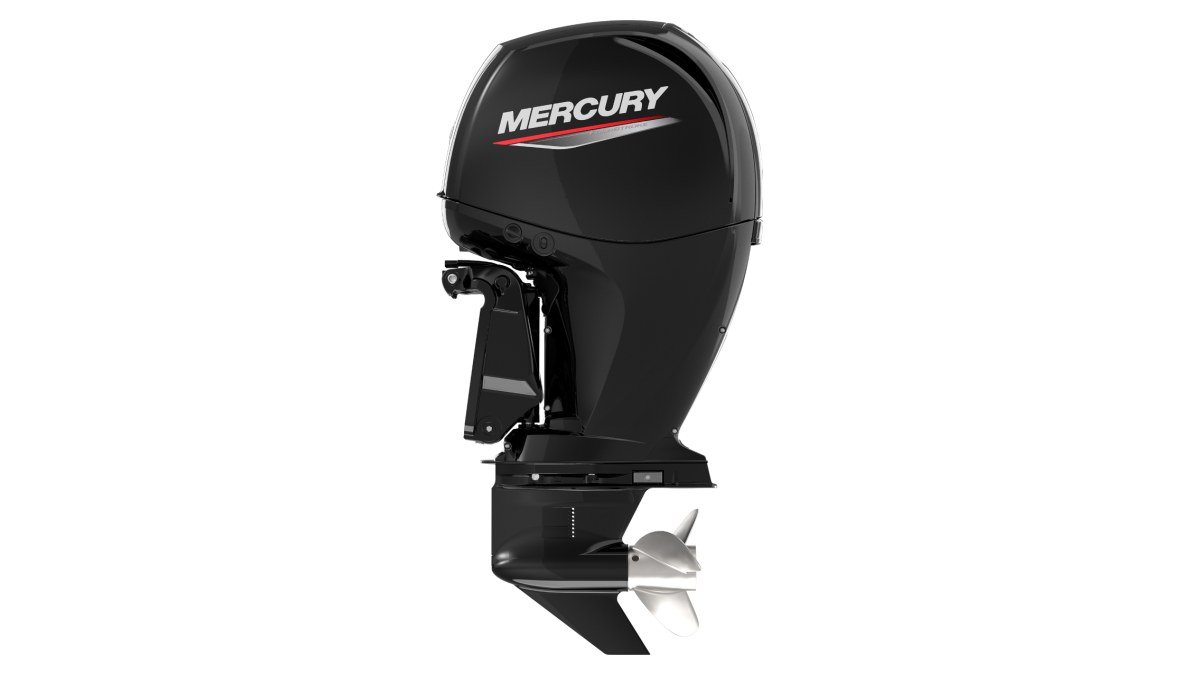
Mercury 150 FourStroke Price at a Glance
| What you’re buying | Typical price |
|---|---|
| New standard 150 FourStroke, US dealers, motor only | around $14,000 to $16,500 |
| New 150 Pro XS, US list price | about $16,500 |
| New 150 Pro XS, typical online dealer price | around $14,000 |
| New 150 FourStroke in Canada | often well over C$20,000 |
| Used, 3 to 5 years old with good records | roughly 50% to 65% of new |
| Delivered price from us | message us for a quote |
For context, when Mercury launched this motor it was priced well under the Yamaha F150 on purpose, at about $13,000 suggested retail. Prices have risen across the whole industry since then, but the Mercury 150 FourStroke price still tends to sit below the Yamaha F150 at list.
How the Mercury 150 FourStroke Price Has Changed Over the Years
When this motor came out, Mercury pitched it squarely at the Yamaha F150, at a suggested retail price of about $13,000. The idea was simple: more displacement, less weight, less maintenance and a lower price than the market leader. It worked, and the 150 FourStroke became one of Mercury’s most popular motors.
Since then, outboard prices across every brand have climbed, driven by materials, shipping and stricter emissions rules. The Mercury 150 FourStroke price followed the market up, and Mercury added the Pro XS and SeaPro versions at higher prices. What hasn’t changed much is the gap. A standard Mercury 150 still usually lists below a comparable Yamaha F150, and the core motor is still the same simple, big-block design that made it popular in the first place.
That stability is good news if you’re buying used or an earlier model year. You’re not missing out on a fundamentally different engine by choosing an older one.
What Usually Comes With the Motor
It’s worth asking any seller exactly what’s included, because it changes the real cost. A typical remote-steer 150 ships with the motor itself, power trim and tilt, and the basic mounting hardware. Depending on the seller and model, a propeller, control box, harness, gauges and steering may or may not be included. When we quote you, we’ll list exactly what’s in the crate so you can compare prices fairly and budget for the rest.
Do We Sell the Mercury 150 FourStroke?
Yes, we sell Mercury, and the 150 is one of the motors we get asked for most. We don’t have a Mercury 150 listed in the store at this exact moment, because they sell quickly. Message us with the shaft length you need and your country, and we’ll come back with what we can get and a delivered price. We won’t promise a motor we can’t supply.
If you’d rather buy a 150 HP that’s ready to ship today, these are in stock now with delivery included:
- Suzuki DF150ATL2, 20 inch shaft: $8,538
- Suzuki DF150ATX2, 25 inch shaft: $8,580
- Honda BF150A2XA, 25 inch shaft: $9,303
- Honda BF150A2LA, 20 inch shaft: $9,356
- Yamaha F150LB, 20 inch shaft: $13,799
And if your boat is rated for more, our Mercury 200L Pro XS TorqueMaster at $8,095 is cheaper than most new Mercury 150s. Check the listing for its details.
Mercury 150 FourStroke Specifications
Before you compare any Mercury 150 FourStroke price, check that the motor suits your boat. Here are the numbers that matter. The weight is for the lightest version.
| Spec | Mercury 150 FourStroke |
|---|---|
| Engine type | Inline 4, SOHC, 8 valve |
| Displacement | 3.0 litre (183 cu in / 3,000 cc) |
| Bore x stroke | 102 x 92 mm |
| Power | 150 HP / 110 kW |
| Full throttle range | 5,000 to 5,800 rpm |
| Fuel induction | Electronic fuel injection |
| Alternator | 60 amp (756 watt), belt driven |
| Gear ratio | 1.92:1 |
| Dry weight | 455 lb (206 kg) |
| Engine oil capacity | about 6 litres |
| Shaft lengths | 20 inch (L) and 25 inch (XL) |
| Engine protection | SmartCraft Engine Guardian |
| Starting | Electric |
| Trim | Power trim and tilt |
That combination of 3.0 litres and 455 lb is the headline. Mercury bills it as the biggest displacement and the lightest weight in the 150 HP four stroke class. In plain terms, you get more torque and carry less weight on the transom than with most rivals.
What Makes the Mercury 150 FourStroke Price Good Value
Specs only tell part of the story. Here’s what owners and mechanics actually like about this motor, and why the Mercury 150 FourStroke price is good value.
Big displacement, simple design
Most 150s use double overhead cams and 16 valves. Mercury went the other way, with a single overhead cam and 8 valves on a bigger 3.0 litre block. Fewer moving parts, lots of low down torque, and less stress on the motor at cruise. It feels a bit like an old two stroke off the line.
No valve adjustments
Mercury designed the valvetrain on this motor to need no adjustment for the life of the engine. That’s one less service job, and over the years that saves real money in labour.
Light weight
At 455 lb, it’s light enough to repower older boats that were built for two strokes and can’t take the weight of a heavier four stroke. That alone makes it a favourite for outboard repowers.
Strong charging
The 60 amp alternator keeps batteries topped up when you’re running fish finders, livewells, lights and a trolling motor charger. Many rivals charge less.
DIY friendly
Mercury put the oil filter, dipstick and fill points where you can easily reach them, and puts maintenance info right on the motor. If you like doing your own oil changes, you’ll appreciate it.
Mercury 150 FourStroke Price by Version
There are a few Mercury 150s, and each has its own price.
- 150 FourStroke L: 20 inch shaft. The standard version for most single-engine boats under about 21 feet and many pontoons. Usually the lowest Mercury 150 FourStroke price.
- 150 FourStroke XL: 25 inch shaft for taller transoms, common on bigger center consoles and bay boats. Usually a little more.
- 150 Pro XS: the performance version, around 456 lb, tuned for hole shot and speed on bass, flats and multi-species boats. Higher price.
- 150 SeaPro: the commercial version, built for heavy daily use with extra durability features.
Always get the full model code with any quote. The Mercury 150 FourStroke price for an XL Pro XS isn’t comparable with the price for a standard L. Not sure which shaft you need? Our outboard shaft length guide shows you how to measure. For the high-output versions, see our Mercury Pro XS outboard page.
The Full Cost Beyond the Mercury 150 FourStroke Price
The motor is the biggest single cost, but it isn’t the only one. Here’s a rough repower budget so the Mercury 150 FourStroke price doesn’t catch you out. Costs vary by country and by what you can reuse.
| Item | Rough cost |
|---|---|
| Mercury 150 FourStroke, motor only | about $14,000 to $16,500 new in the US |
| Control box, cables and harness | $800 to $2,000 if needed |
| SmartCraft or digital gauges | $300 to $1,000 if needed |
| Stainless propeller | $400 to $800 if needed |
| Hydraulic steering | $800 to $1,500 if upgrading |
| Rigging labour | depends on local rates |
If you’re replacing an older Mercury, you may be able to keep the controls and some wiring. Switching from another brand usually means new controls and gauges, because Mercury SmartCraft and Yamaha or Suzuki systems don’t talk to each other.
New vs Used Mercury 150 FourStroke Price
The Mercury 150 FourStroke has been around long enough that there’s a healthy used market, and the used Mercury 150 FourStroke price can be very attractive. A three to five year old motor with good service records usually sells for about 50% to 65% of new. Older, high hour motors go for less.
When you look at a used one, check:
- Hours and fault history. A Mercury dealer can read both from the ECU.
- Service records. Oil changes, gear oil, impeller and fuel filters.
- Cooling. A strong telltale stream and no signs of overheating.
- Compression. Even across all four cylinders.
- Gearcase oil. Clean, not milky, no metal.
- Corrosion. Especially on saltwater motors, around the bracket, trim rams and anodes.
Our full checklist is in how to check a used outboard before buying.
Mercury 150 FourStroke Price vs Other 150s
How does Mercury stack up against the other big brands in the 150 HP class? Here’s a side by side, using our current delivered prices where we have stock.
| Motor | Displacement | Approx. dry weight | Our price |
|---|---|---|---|
| Mercury 150 FourStroke | 3,000 cc | 455 lb | message us |
| Yamaha F150LB | 2,670 cc | about 480 lb | $13,799 |
| Suzuki DF150ATL2 | 2,867 cc | about 474 lb | $8,538 |
| Honda BF150A2LA | 2,354 cc | about 478 lb | $9,356 |
On paper the Mercury is the lightest with the biggest displacement. The Yamaha has the strongest resale value. Our Suzuki and Honda 150s are the cheapest way into a quality 150 right now. For more depth, read our Yamaha vs Mercury outboard comparison, our Yamaha F150 price guide, and the full answer to how much a 150 HP outboard costs.
Which Boats Justify the Mercury 150 FourStroke Price?
Mercury describes this motor as a good match for bass boats, aluminum consoles, runabouts, offshore fishing boats and pontoons, and that matches what we see. In practice:
- Aluminum fishing boats and multi-species boats rated for 150 HP
- Center consoles from about 18 to 21 feet
- Bay boats in the 18 to 21 foot range
- Pontoons and tritoons up to around 25 feet
- Runabouts and deck boats
- Older boats being repowered from a two stroke, thanks to the low weight
Check your capacity plate first. The US Coast Guard boating safety site explains how to read it, and our what size outboard for my boat chart helps you match horsepower to hull length. For pontoon owners, the pontoon boat outboard motor page has more.
Running Costs Beyond the Mercury 150 FourStroke Price
The Mercury 150 FourStroke price is only part of the long term cost. The good news is this motor is cheap to run.
Service intervals. Mercury’s schedule calls for a service every 100 hours or once a year: engine oil and filter (around 6 litres of oil), gear oil, fuel filter, spark plugs and anodes as needed. The water pump impeller should be changed every few years.
No valve adjustments. As mentioned, the valvetrain is designed to need no adjustment, which saves labour over the life of the motor.
Fuel. At a typical cruise of around 3,500 to 4,000 rpm, a 150 four stroke on a mid-size boat usually burns roughly 5 to 7 US gallons an hour, and around double that wide open. Prop choice and load matter a lot.
Mercury publishes maintenance information and owner’s manuals on its own site at Mercury Marine, and BoatUS has good general advice on outboard care.
Mercury 150 FourStroke Price vs Stepping Up to a 200
Sometimes the smarter buy isn’t a 150 at all. If your boat is rated for 200 HP, look at the price of a 200 before you commit. Right now our Mercury 200L Pro XS TorqueMaster is $8,095 and the Mercury 200XL Pro XS is $8,199. Both are well below a typical new Mercury 150 FourStroke price, so check their listings to see if one suits you. A 200 run at part throttle can also be relaxed and economical at cruise.
Just don’t go over the max horsepower on your capacity plate. It’s unsafe and can void your insurance.
Is the Mercury 150 FourStroke Price Worth It? Pros and Cons
We like this motor a lot, but no motor is perfect. Here’s our honest list after selling and servicing plenty of 150s from every brand.
What’s good
- Lightest in class. 455 lb helps small and older boats carry 150 HP without sitting low at the stern.
- Big displacement. 3.0 litres gives strong low-down torque, which you feel when you push the throttle with a full load on board.
- Low maintenance. No valve adjustments, easy-to-reach service points.
- Strong charging. 60 amps is plenty for a boat full of electronics.
- Usually cheaper than a Yamaha F150 at list. The Mercury 150 FourStroke price has always been pitched below its biggest rival.
- Huge dealer network in North America. Service is easy to find across the US and Canada.
What’s not so good
- Resale value. Good, but generally a step behind Yamaha on the used market.
- Parts in remote places. In some island and coastal regions, Yamaha and Suzuki parts are easier to find.
- Top end feel. Some owners find the DOHC rivals rev a little more freely at the very top, though the Mercury usually wins out of the hole.
For most buyers in North America and Australia, the pros easily win. If you’re far from a Mercury dealer, think about service before price.
How the Mercury 150 Performs on the Water
Numbers on a spec sheet only go so far. On the water, the thing people notice first is the hole shot. That big 3.0 litre block pulls a loaded boat onto plane quickly, which matters on pontoons and heavy aluminum boats.
In magazine testing on an 18 foot aluminum fishing boat with three adults aboard, the motor got the boat up on plane smartly and still turned a 16 pitch prop to around 5,800 rpm at full throttle. Reviewers have generally praised its mid-range punch and how quiet it is at cruise, helped by Mercury’s engine mounting system that cuts vibration at the helm.
Your results depend on the hull, the load and above all the propeller. A good prop dealer or mechanic can help you choose the right pitch so the motor reaches its rated rpm range at full throttle. Get that wrong and you’ll lose speed and burn more fuel, no matter what you paid.
Mercury 150 vs Mercury 115: Do You Need the Bigger Motor?
If you’re looking at the Mercury 150 FourStroke price and wincing, ask whether your boat really needs 150. Mercury’s 115 FourStroke uses a 2.1 litre inline four and weighs around 359 lb in its lightest version. It costs noticeably less and is a superb motor in its own right.
A 115 is plenty for a lot of 16 to 18 foot boats and lighter pontoons. If you regularly carry a full load, pull skiers or run in rough water, the 150 is worth the extra. If you mostly cruise with two or three people, the 115 may be all you need. Our sizing chart helps you decide.
How to Get a Good Mercury 150 FourStroke Price
- Compare delivered prices, not motor prices. Freight and prep fees add up.
- Be flexible on model year. The motor has changed very little in its core design, so an earlier year is often a great deal.
- Buy in the off season. Winter is usually cheapest. See our outboard motor clearance sale for what’s priced to move now.
- Keep your old controls if you’re replacing a Mercury and they’re compatible.
- Look at other brands too. A Suzuki DF150 or Honda BF150 can save you thousands.
Our Mercury outboard prices page lists every Mercury we sell, and you can browse the full Mercury outboards range, including Mercury 200 HP and Mercury 250 HP models.
Why the Mercury 150 FourStroke Price Varies So Much by Country
We get messages from buyers all over the world asking why the price they’re quoted locally is so far above US prices. A few things push the local Mercury 150 FourStroke price up:
- Import duties on outboard motors, which differ a lot between countries.
- Sales taxes or VAT added at the till.
- Distributor and dealer margins in smaller markets.
- Currency exchange rates when prices are set in US dollars.
- Freight from the factory to your country.
When you buy from us, freight is included in our price and you pay your own duties and taxes on arrival. For many overseas buyers the total still comes out lower than the local price. Tell us your country and we’ll help you work out the real landed cost before you decide.
Shipping and Your Mercury 150 FourStroke Price
We crate every motor, drain the fuel, and ship by road in the US or by sea or air freight overseas, with tracking. Shipping is included in our prices. Import duties and local taxes are paid on your side and depend on your country. Our guide on how to ship an outboard motor overseas covers the paperwork, and the outboard motor with free shipping page explains what’s included.
Mercury 150 FourStroke Price FAQ
How much is a new Mercury 150 FourStroke?
Typically around $14,000 to $16,500 for the motor alone in the US, depending on version, shaft length and dealer. The 150 Pro XS lists at about $16,500.
How much does a Mercury 150 FourStroke weigh?
455 lb (206 kg) for the lightest version.
Is the Mercury 150 FourStroke cheaper than a Yamaha F150?
At list price, usually yes. Mercury priced it below the Yamaha F150 from the start.
What’s the displacement of the Mercury 150?
3.0 litres, or 183 cubic inches, from an inline four cylinder.
Do you have a Mercury 150 in stock?
Not listed right now. Message us for availability and a delivered quote, or see our in-stock Suzuki, Honda and Yamaha 150s above.
Does the price include shipping?
Our listed prices include worldwide shipping. Duties and local taxes are separate.
How long does a Mercury 150 FourStroke last?
With regular servicing, thousands of hours. Maintenance matters far more than age.
Final Word on the Mercury 150 FourStroke Price
The Mercury 150 FourStroke price buys you one of the lightest, strongest and simplest 150s on the market. It’s a smart choice for repowers, aluminum boats and anyone who likes a motor that’s easy to service. If you want one, message us and we’ll tell you honestly what we can get and what it will cost delivered to you. If you’d rather have a 150 on its way today, our Suzuki, Honda and Yamaha 150s are ready to ship.
One last tip. Whatever price you’re quoted, from us or anyone else, ask for the full model code, the model year, whether it’s new or used, what’s in the crate and what the delivered total will be. With those five answers you can compare any two offers on a level playing field, and you’ll know straight away whether a deal is genuinely good or just looks good. We’re always happy to answer all five for any motor we sell, and we’ll tell you if a different motor would suit your boat better.
Call or WhatsApp us on +1 209 690 5983, send a message through our contact page, or browse the shop. You can read more about us as well.