
 Cart is empty
Description
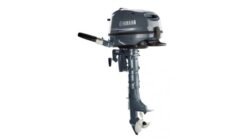
This listing is a new Yamaha F2.5SMHB outboard, the 2.5 horsepower four-stroke with a 15 inch shaft, and we sell it to buyers in every part of the world. If you only want the short version: it weighs around 37 pounds, it has its own fuel tank on top, it starts with a pull and it will push a dinghy, inflatable or canoe all day on very little fuel.
This page is written more like an owner’s guide than a sales sheet. I have tried to answer the things people actually ask us after they buy a small motor: how to start it when it is cold, why it might stall, what to carry in the boat, how to store it. If you are deciding whether to buy, the specs and the ordering details are here too.

Specifications at a Glance
| Model | Yamaha F2.5SMHB |
|---|---|
| Horsepower | 2.5 HP at 5,500 rpm |
| Engine type | 1 cylinder, four-stroke, OHV |
| Displacement | 72 cc |
| Bore x stroke | 54 x 31.5 mm |
| Full throttle | 5,250 to 5,750 rpm |
| Induction | Carburettor |
| Fuel tank | Integrated |
| Starting | Pull start |
| Shift | Forward, neutral |
| Steering | Tiller, 360 degrees |
| Shaft | 15 inch |
| Weight | About 37 lb (17 kg) |
| Ignition | TCI |
| Lubrication | Splash |
| Prop | Included |
| Condition | New |
Every Yamaha F2.5SMHB outboard we ship matches these numbers, which come from Yamaha’s own spec sheet for the F2.5. Yamaha also lists the F4 and F6 on the same portable outboards page if you want to compare sizes.
Is a 2.5 Enough for Your Boat?
Before anything else, make sure the Yamaha F2.5SMHB outboard is the right size for your boat. A 2.5 is perfect for some boats and a frustration on others.
Good matches: inflatable dinghies up to about 9 or 10 feet, rigid tenders, square stern canoes, kayaks with a motor mount, small sailing dinghies with a bracket, and very light car-top jon boats.
Poor matches: anything heavy, anything you want to plane, boats that carry three or four adults regularly, and boats that need a 20 inch shaft. For a taller transom the long shaft version is a different listing, and for more weight the 4 or 6 HP is better.
The Yamaha F2.5SMHB outboard is a displacement motor. It moves a light boat at a steady, comfortable speed. Think of it as replacing the oars, not as a speedboat engine. Used that way, it is brilliant.
Your First Day With the Motor
Unpack and check the oil
Before fuel goes anywhere near it, find the oil dipstick or sight window and check the crankcase. Some motors leave the factory with oil, some without, and the tag on the cowling tells you which. Running a new Yamaha F2.5SMHB outboard without oil for even a minute can ruin it, so make this the very first thing you do.
Clamp it on
Centre it on the transom. Tighten the two clamp screws firmly. Tie a safety line from the motor’s carry handle to a strong point on the boat.
Fuel up
Fresh unleaded, 87 octane or higher, no more than 10 percent ethanol. Fill the built-in tank. Do not overfill. Open the vent screw on the cap.
Start it
- Turn the fuel tap on.
- Make sure the shift lever is in neutral.
- Pull the choke out if the engine is cold.
- Set the throttle grip to the start position.
- Pull the starter rope smoothly and firmly.
- When it fires, push the choke back in bit by bit as it warms.
Check for a stream of water from the tell-tale outlet. That tells you the cooling pump is working. Let the Yamaha F2.5SMHB outboard idle for a minute, then shift into forward and go.
Why It Might Not Start, and What to Do
Small carburetted motors like the Yamaha F2.5SMHB outboard are simple, and when they misbehave the reason is usually simple too. Here are the usual suspects, in the order I would check them.
- Fuel tap off. Happens to everyone at least once.
- Tank vent closed. The engine starts, runs a minute, then stalls as a vacuum builds in the tank.
- Stale fuel. Petrol older than a couple of months can gum up the tiny jets in the carburettor. Drain and refill with fresh fuel.
- Flooded. Too much choke on a warm engine. Push the choke in, open the throttle a little and pull a few times.
- Fouled spark plug. Pull it, look at it, clean or replace it. Carry a spare.
- Kill cord. If your motor has the emergency stop lanyard clip fitted, make sure it is in place.
Nine times out of ten, one of those is the answer. If the Yamaha F2.5SMHB outboard still refuses to start after all of them, any Yamaha dealer can sort it out, and the fix is rarely expensive on a motor this simple.
How to Drive It Well
Use the swivel instead of reverse
There is no reverse gear on the F2.5. You rotate the motor around on its mount so the propeller faces the other way. Practise it a few times in open water before you try it next to a dock. Throttle down first, swing the motor, then gently add throttle.
Trim the boat, not just the motor
In a small inflatable, where people sit matters more than any motor adjustment. If the bow is up in the air, move weight forward. If the bow digs in, move it back. A well balanced boat goes faster on the same fuel, and the Yamaha F2.5SMHB outboard will feel noticeably livelier.
Slow down in chop
In waves, back off the throttle. A small boat slamming into chop at full throttle is uncomfortable, wet and hard on the transom. At a slightly lower speed, the ride is smoother and you barely lose any time.
Shallow water
Tilt the motor up a notch when you approach a beach or shallow sandbar. Hitting the bottom at speed can damage the prop and the lower unit. The tilt mechanism on the Yamaha F2.5SMHB outboard is quick to use, so get in the habit of lifting it early.
What to Keep in the Boat
The Yamaha F2.5SMHB outboard is reliable, but small boats get caught out by small problems. Here is a short list of things worth carrying.
- A pair of oars or a paddle. Always.
- A spare spark plug and a plug spanner.
- A small can of fresh fuel for longer trips.
- A spare kill cord clip if your motor uses one.
- A short length of rope for the motor safety line.
- A small screwdriver for the clamps and the tank vent.
None of that weighs much, and it means a minor problem with the Yamaha F2.5SMHB outboard never turns into a long row home.
Routine Care
After salt water
Flush the cooling system with fresh water every time. A bucket or tub of fresh water deep enough to cover the water intake works fine: stand the motor in it and run it at idle for a few minutes. Then rinse the outside.
Every season
- Engine oil change. The sump holds very little.
- Gear oil change in the lower unit.
- Spark plug check.
- Grease the swivel bracket and clamp screws.
- Inspect the propeller.
- Look at the fuel filter and fuel line inside the cowling.
Every few seasons
The water pump impeller is a rubber part that wears out. If the tell-tale stream gets weak, change it. In sandy or silty water, it wears faster. Owners who use the Yamaha F2.5SMHB outboard in salt water every weekend often change it every couple of seasons as cheap insurance.
All the intervals and capacities are in the owner’s manual. If you lose yours, Yamaha has a free download of owner’s manuals on its site.
Storage Done Right
How you store a small outboard like the Yamaha F2.5SMHB outboard decides how well it starts next season. This is the routine I would follow.
- Flush it with fresh water.
- Turn the fuel tap off and run the engine until it stops. That empties the carburettor.
- Drain or empty the tank, or fill it and add a fuel stabiliser.
- Change the engine oil so old, acidic oil is not sitting in the engine all winter.
- Change the gear oil.
- Wipe it down and give the outside a light coat of corrosion protection spray.
- Store it upright on a stand, or on its correct side, somewhere dry.
Do that and your Yamaha F2.5SMHB outboard will start on the first or second pull next spring.
A Season With a 2.5: What Real Use Looks Like
Specs only tell you so much. Here is what owning a Yamaha F2.5SMHB outboard tends to look like over a typical boating season, based on what customers tell us.
Early in the year, the motor comes out of storage. If it was put away properly, with the carburettor run dry and fresh oil in it, it starts in a couple of pulls. The owner checks the oil, adds fresh fuel and goes. If it was put away with old fuel sitting in it, there is usually some cursing and a trip to a dealer to clean the carburettor. That is the single biggest difference between happy and unhappy owners.
Through the summer, the Yamaha F2.5SMHB outboard gets used in short bursts. A run out to a mooring. A morning trip across the lake to a fishing spot. Ferrying people from a beach to an anchored boat. It does not get worked hard, and that suits it. Most owners say they barely notice the fuel use.
At the end of the season it gets an oil change, a gear oil change, a flush and a dry run, and goes back on its stand in the garage. That is genuinely all most people do, and their motors run for many years.
Tender Life on a Cruising Boat
A big share of our buyers use the Yamaha F2.5SMHB outboard on a tender that lives with a larger cruising boat. That life has its own habits.
Getting the motor on and off
Most cruisers keep the motor on a bracket on the stern rail while sailing and lower it into the tender at anchor. At around 37 pounds, this is one of the few motors that one person can safely pass down to the dinghy. Always clip on a line before you start the transfer. If it slips, you lose a line, not a motor.
Overnight at anchor
If you leave the dinghy in the water overnight, tilt the motor up out of the water so weed and barnacles do not grow on the lower unit. Lock it to the dinghy with a cable if you are in a busy harbour. Small outboards do walk off sometimes.
Shore landings
When you run up onto a beach, tilt the Yamaha F2.5SMHB outboard up before the water gets shallow. Sand gets sucked into the water intake and wears the pump if you run it in the surf line. Paddle or walk the last few metres in.
Fuel on board
Keep a small, sealed fuel can for the tender on the big boat, ideally in a ventilated locker or on deck. Fill the motor’s tank before you head ashore so you are never caught short coming back in the dark.
Canoe and Kayak Setups
Not everyone puts a small outboard on a dinghy. Plenty of people fit one to a canoe or a wide fishing kayak with a motor mount.
On a square stern canoe, clamp the Yamaha F2.5SMHB outboard straight to the transom. On a double-ended canoe, you need a side mount bracket that clamps across the gunwales near the stern. Position it so the prop sits deep enough and the motor does not tip the canoe over to one side. Sit slightly off centre on the opposite side to balance it out.
On kayaks, check the manufacturer’s maximum weight and power for the motor mount. Some are designed only for small electric motors. If yours is rated for a petrol portable, the 2.5 is about as light as it gets.
Either way, a canoe or kayak with a small motor opens up long trips on rivers and lakes that would be exhausting to paddle. Just remember that tiller steering on a narrow boat needs a gentle hand. Make small corrections, not big swings.
Planning Fuel for Longer Trips
The built-in tank keeps things simple, but it is small. For anything beyond short hops, plan your fuel.
- Run the Yamaha F2.5SMHB outboard for a set time on a full tank and note how much you used. That gives you a real-world burn rate for your boat and load.
- Carry a small sealed can with roughly double what you think you need for the outbound leg.
- Refuel with the engine off, ideally ashore or with the tender tied up in calm water.
- Use a small funnel with a filter. Spilled fuel in a dinghy is slippery and dirt in the tank causes problems later.
A 2.5 at a steady, moderate throttle goes a long way on a little fuel. Running it flat out burns noticeably more for only a little more speed. Back off a touch and you will cover more distance per tank.
Expectations on Speed and Load
People sometimes buy a 2.5 expecting more than it can give. Let me be straight about it. The Yamaha F2.5SMHB outboard will push a light dinghy with one or two people at a comfortable cruising pace. It will not plane the boat. Load up with three adults and a pile of shopping and it will still go, just more slowly.
If you regularly carry three or more people, or your dinghy is heavy, a 4 or 6 HP is a better match. If you want to get on the plane, look at 8 HP or more on a boat rated for it. For the classic job of getting from mooring to shore and back, though, a 2.5 is exactly right, and its light weight makes every day easier.
Why Yamaha for a Motor This Small
When the job is simple, it is tempting to buy the cheapest motor available. I understand. But a few things make the Yamaha worth the difference.
First, parts. Impellers, plugs, props, filters and gaskets for the Yamaha F2.5SMHB outboard are stocked by dealers in almost every country. That matters if you cruise or travel.
Second, it is light. Lifting a motor from a pitching dinghy onto a yacht’s stern rail is not the moment you want extra weight.
Third, it lasts. Yamaha portables are known for running a long time with basic care. Many of the old ones are still out there working.
Fourth, resale. If you ever move up to a bigger motor, a Yamaha portable is easy to sell.
Other Yamaha Portables We Sell
If you are still deciding, these are the nearest neighbours to the Yamaha F2.5SMHB outboard:
- Yamaha F2.5LMHB: the same 2.5, on a 20 inch shaft.
- Yamaha F4SMHA: 4 HP with a reverse gear.
- Yamaha F6SMHA: 6 HP, the most popular step up.
- Yamaha F8SMHB: twin-cylinder 8 HP for heavier boats.
Or see the 2.5 HP Yamaha category and our whole Yamaha range.
Buying the Yamaha F2.5SMHB Outboard From Us
We are an online outboard dealer and we ship worldwide. The process is straightforward.
- Put the Yamaha F2.5SMHB outboard in your cart and check out, or ask us a question first.
- We confirm the order, your address and the delivery method.
- The motor is packed in its factory box with extra protection.
- We send you tracking details when it leaves.
- It arrives at your door. It is small enough to ship as a normal parcel.
For orders outside our home country, import duty and local taxes are paid by the buyer when the parcel clears customs. We provide everything customs needs to process it. A local customs broker can give you an estimate before you buy.
Please read our refund and return policy and terms and conditions before ordering. You can also look at our customer reviews.
Frequently Asked Questions
Is the Yamaha F2.5SMHB outboard new?
Yes, it is new and boxed, never mounted on a boat or run.
Is it two-stroke or four-stroke?
Four-stroke. No oil mixing. Plain unleaded goes in the tank and the engine oil lives in the crankcase.
Does the Yamaha F2.5SMHB outboard have reverse?
No gear reverse. You turn the motor 360 degrees to go backwards.
How heavy is the Yamaha F2.5SMHB outboard?
About 37 pounds, or 17 kilograms. One of the lightest four-stroke outboards you can buy.
Is the Yamaha F2.5SMHB outboard good for salt water?
Yes, with a freshwater flush after each use.
What transom height does it fit?
Around 15 inches. For 20 inches, choose the long shaft F2.5LMHB.
Can I carry it in my car boot?
Yes. Close the fuel tap and vent, or drain the tank, and lay the motor down on the correct side as shown on the label.
Do you ship to my country?
We ship worldwide. Contact us with your address for a delivery estimate.
One Last Thing
A small outboard should make your boating easier, not give you something new to worry about, and that is how most owners describe the Yamaha F2.5SMHB outboard after a season. The Yamaha F2.5SMHB outboard does exactly that. It is light, it is easy to start, it costs very little to run and it is supported by Yamaha dealers around the world.
One more practical point. Because this motor is so common, you will find owners’ clubs, forum threads and dealer videos covering every small job on it, from changing the impeller to cleaning the carburettor. If you like doing your own maintenance, the Yamaha F2.5SMHB outboard is about the friendliest motor you could pick to learn on. If you would rather hand it to a professional, every Yamaha shop in the world has seen hundreds of them. Either way, you are never stuck on your own with it.
If it suits your boat, add it to your cart. If you are not sure, get in touch and we will help you pick the right motor, even if that turns out to be a different one in our shop.


Reviews
There are no reviews yet.