
 Cart is empty
Description
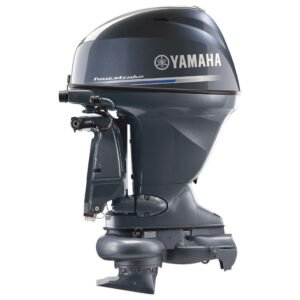
We have a new Yamaha F40JEHA for sale, in its factory crate and ready to ship worldwide. The F40JEHA is Yamaha’s 40 horsepower jet drive four-stroke with a tiller handle and electric start. It runs a jet pump instead of a gearcase and propeller, so it can take a light boat across shallow gravel, rocky riffles and weedy flats where a prop would not survive. The powerhead is rated at 40 HP and delivers about 30 HP at the pump.
Below are the full specifications, what each letter in the model code means, how a tiller jet handles, what boats suit it and how to order. If you already know you want one, send us a message for a delivered price.

Yamaha F40JEHA Specifications
| Model | Yamaha F40JEHA |
|---|---|
| Type | Jet drive four-stroke outboard |
| Powerhead rating | 40 HP |
| Power at the pump | About 30 HP |
| Cylinders | 3, inline, SOHC |
| Displacement | 747 cc |
| Bore x stroke | 65 x 75 mm |
| Fuel system | Electronic fuel injection |
| Shaft | 20 inch class (jet) |
| Steering | Tiller |
| Starting | Electric |
| Weight | 227 lb |
| Full throttle range | 5,000 to 6,000 rpm |
| Condition | New, factory crated |
Every Yamaha F40JEHA for sale on our site is new and matches this sheet.
What the Model Code Means
Yamaha model codes tell you a lot once you know how to read them. F means four-stroke. 40 is the powerhead horsepower. J means jet drive. E means electric start. H means tiller handle. A is the version. So the F40JEHA is a 40 HP four-stroke jet with electric start and a tiller.
If you want the same jet with remote steering, look at the Yamaha F40JEA. If you want a 40 with a normal propeller, look at the F40LEHA tiller or the F40LA remote.
40 at the Top, 30 at the Pump
Jet ratings catch people out, so here is the plain version. The engine on top makes 40 HP. A jet pump is less efficient than a propeller, so some of that power is lost moving water through the pump. Yamaha rates the result at about 30 HP at the pump. On the water, think of the F40JEHA as giving roughly the push of a 30 HP prop motor.
You give up some push. In return, you get a boat that can run over shallow water with nothing hanging below the hull to hit rocks or stumps. If you run shallow rivers or marshes, that is a trade worth making.
Why a Tiller Jet
Most small jet boats run tillers, and there are good reasons for it.
Feel. In shallow, fast water, you are reading the river and reacting every second. A hand on the tiller gives you instant, direct control. You feel the boat respond.
Space. No console means the boat is open for gear, dogs, decoys, coolers and people.
Weight. No console, wheel or steering cables. A lighter boat gets on plane more easily, and that matters a lot with 30 HP at the pump.
Simplicity. Fewer parts to rig, fewer parts to break, and less to fix far from home.
Cost. Rigging a tiller motor costs far less than a full remote setup.
For a light river boat or a marsh boat, the Yamaha F40JEHA for sale here is about as simple and practical as it gets.
Electric Start on a Jet
The E in the code is a big deal on a river boat. You will often start and stop the motor many times a day: shutting down to drift a run, starting again to move to the next one. Pull-starting a 40 in a moving boat gets old fast. With electric start, you press the button and it fires. Combined with fuel injection, it starts first time, hot or cold. You will need a marine battery on board, and the motor’s charging system keeps it topped up while you run.
Boats That Suit the F40JEHA
- Flat-bottom jon boats, 14 to 16 feet
- Welded aluminium river boats with a jet tunnel
- Mud boats and duck boats for marsh hunting
- Light shallow-V river sleds
- Small work punts for shallow water
Flat or nearly flat bottoms at the stern work best, because water flows cleanly into the intake. Deep-V hulls are a poor match. Check the capacity plate too. Jet ratings use the powerhead figure, so the boat should be rated for at least 40 HP.
The Powerhead
Up top, the F40JEHA uses Yamaha’s 747 cc three-cylinder, the same engine that powers the F30 and F40 midrange motors. It has a single overhead camshaft and electronic fuel injection. Yamaha’s jet version uses a long-track induction system and a single throttle valve, which help it make good low-end torque and respond quickly to the throttle.
Three cylinders run more smoothly than a twin. You feel less vibration through the tiller and the hull. Fuel injection means the motor starts easily in cold weather, idles steadily, and does not load up or foul plugs at low speed. That matters on a jet boat, which often spends a lot of time idling between runs.
Yamaha also builds its midrange motors with YDC-30 aluminium alloy and a five-layer anti-corrosion paint system, so the Yamaha F40JEHA for sale here holds up well even in brackish marshes and tidal rivers.
How the Jet Pump Works
At the bottom of the motor, a flat intake grate sits roughly level with the bottom of the hull. Inside the pump housing, an impeller spins and pulls water up through the grate. The water is pushed out through a nozzle at the back, and that stream drives the boat forward. To reverse, a gate swings down over the nozzle and sends the water forward instead. Steering is the same as any tiller motor: you turn the whole motor, and the jet stream points the boat.
Because nothing hangs far below the hull, a jet boat on plane can run in just a few inches of water. That is what makes a Yamaha F40JEHA for sale like this one so useful on shallow rivers.
Mounting Height
On a jet, mounting height decides whether the boat works properly. Too high and the pump sucks air. The engine revs, the boat slows, and you hear rattling from the pump. Too low and the intake drags and slows the boat.
Start with the leading edge of the intake grate level with the bottom of the hull, or just slightly below. On a tunnel hull, follow the builder’s guidance. Then test with a normal load and adjust a little at a time until the boat gets on plane cleanly and holds in turns.
A dealer or mechanic who has set up jets before can save you a lot of trial and error. Warranty terms depend on your country, so ask your local Yamaha dealer once the Yamaha F40JEHA for sale is registered.
Handling a Tiller Jet
If you have only ever run prop motors, a jet takes a little getting used to.
Steering needs throttle. A jet steers by pointing its water stream. At idle, the stream is weak, so the boat does not turn sharply. Give it a little throttle and it responds.
Reverse is gentle. The reverse gate works, but it does not stop the boat as hard as a prop in reverse. Plan your stops early.
Get on plane in deep water. A jet boat sits a little deeper at rest. Start your run in a pool.
Keep speed up over shallows. If you slow down on a shallow bar, the boat settles and the intake can suck gravel or touch bottom.
Turn smoothly. Hard turns in shallow water can lift the intake.
Most owners feel at home after a few trips. Practise in a calm pool first, and the Yamaha F40JEHA for sale will soon feel natural.
Jet Maintenance
A jet needs a few jobs that prop motors do not.
Grease the jet bearing after every trip, or as the manual says. It keeps water out of the bearing.
Check impeller clearance. Sand and gravel wear the impeller edges and the liner. As the gap grows, thrust falls. Yamaha’s design uses shims to move the impeller closer. Check it regularly and adjust when needed.
Look at the impeller edges for chips and rounding. Light wear can sometimes be dressed. Heavy damage means replacement.
Clear the intake grate of sticks, weed and leaves.
On top of that, do the normal engine service: flush after every trip, change the oil and filter on schedule, replace the cooling water pump impeller, check anodes, and keep fuel fresh. That is all a Yamaha F40JEHA for sale needs to stay reliable.
Break-in
Ten hours of gentle running. Start at low speed, vary the rpm, and avoid long periods at full throttle until the break-in is done. The manual in the crate gives the stages. After the break-in, change the oil and filter and grease the jet bearing.
Load and Performance
With about 30 HP at the pump, load matters. A jet boat needs to get on plane to run shallow. If it is overloaded, it ploughs through the water and the intake picks up mud and gravel. Keep the load sensible. Put heavy items like the battery and fuel tank near the middle of the boat, not right at the stern. For one or two people with normal gear on a light 14 to 16 foot boat, the F40JEHA works well. For heavier boats or bigger loads, look at the Yamaha Jet Drive 40HP or the F90 jet.
Who Buys the F40JEHA
We sell the Yamaha F40JEHA for sale to river anglers who fish shallow trout and bass rivers, duck hunters running marshes and flooded timber, landowners who need to reach islands and far banks, guides with small, light sleds, and survey and research crews working in wetlands. The common thread is shallow water and a need for something simple and reliable.
Outfitters often buy several at a time to keep their fleet on one model. If you need more than one Yamaha F40JEHA for sale, tell us the number and we will quote them together.
A Typical Day
You launch a 16 foot welded jon boat at a gravel bar. You press the start button and the Yamaha F40JEHA for sale you bought this spring fires up and idles quietly. You sit by the tiller, ease out into the current, and open the throttle in a deep pool. The boat lifts onto plane. Ahead, the river spreads across a wide riffle. You pick the darker line, keep your speed up and skim across. A few bends later, you shut down above a run nobody else can reach and start fishing.
At the end of the day, you run back down slowly through the rocky sections, pull the boat out, flush the motor, grease the jet bearing and leave it down to drain. That is the kind of day the Yamaha F40JEHA for sale is built for.
Cold Weather and Hunting Use
Hunters often run in freezing weather. Leave the motor down after each trip so water drains out of the cooling passages and the pump. Grease the jet bearing every time, because cold water and mud are hard on it. Keep the battery charged. Let the motor warm up for a minute before running hard. And avoid thin ice, which damages the intake grate and the hull.
In weedy marshes, check the intake grate often. If the boat suddenly slows and the engine revs, weed has probably wrapped the grate. Stop, tilt up and clear it.
Spares to Carry
Grease and a grease gun, an impeller shim kit, a spare fuel filter element, spark plugs, fuses and a small tool kit. A hooked stick for clearing the grate. At home, keep oil and a filter for the next service. We can add spares to your Yamaha F40JEHA for sale order so they ship together.
Choosing a Hull for a Tiller Jet
The right hull makes a jet shine. For the F40JEHA, look for a welded aluminium boat about 14 to 16 feet long with a flat or very shallow-V bottom at the stern. A jet tunnel is a big plus. It lets you mount the motor higher so the intake is tucked up and protected, and the boat can run even shallower.
Welded aluminium handles rocks, stumps and gravel bars far better than riveted aluminium or fibreglass. A wide beam gives stability when you stand to cast or load decoys. Keep the boat as light as practical, because with about 30 HP at the pump, a lighter boat gets on plane faster and rides higher.
If you are buying a new hull with the motor, ask the builder for their jet version. Pair it with the Yamaha F40JEHA for sale here and you will have a very capable shallow-water boat.
Fuel and Range
A jet burns more fuel than a prop motor for the same speed, and running upstream against current burns more again. Track your fuel use for the first few trips so you know your range, and always keep a good reserve for the run home. Use clean fuel and a water-separating filter with a clear bowl. Add stabiliser if the boat sits for weeks between trips, which is common in hunting season. Fresh fuel keeps the Yamaha F40JEHA for sale starting first time.
Off-Season Storage
At the end of your season, stabilise the fuel and run the motor so treated fuel reaches the injectors. Change the oil and filter. Grease the jet bearing well. Flush the motor and let it drain in the down position. Fog the engine as the manual explains. Check the impeller and liner and order any parts before spring. Grease the tiller pivot, swivel bracket and tilt points. Put the battery on a maintainer.
Before the next season, look everything over, set the impeller clearance and run the motor on water. Store it like that and the Yamaha F40JEHA for sale will be ready on day one.
New vs Used Jets
Used jets often lived hard lives: run through sand, scraped over rocks, stored wet in the cold. A worn pump, a dry bearing or cracked cooling passages are not always obvious from the outside. A new Yamaha F40JEHA for sale from us has zero hours, a fresh pump and full paperwork. For a motor you will rely on far from the ramp, that matters.
Safety on Shallow Water
Shallow rivers and marshes bring their own risks. Current is stronger than it looks, water is often cold, and logs and rocks move after every flood. A few habits keep you safe.
- Wear a life jacket every time you are on the water.
- Clip the kill switch lanyard to your life jacket or wrist. On a tiller boat, if you fall or are thrown off balance, the motor stops.
- Tell someone where you are going and when you expect to be back.
- Carry a paddle or push pole, a throw rope, a first aid kit and a way to call for help.
- Run slower in unfamiliar water and in low light.
- Anchor from the bow or stern, never the side, in current.
Good habits protect you and the boat. They also protect the motor. Most jet pump damage comes from running too slowly over shallow gravel or hitting something at speed in water the driver did not know. Learn your river in good conditions, mark the safe lines and build up from there.
A tiller jet puts you right at the back of the boat with full control. Combined with careful driving, the Yamaha F40JEHA for sale gives you a safe, capable way to explore water most boaters never see.
How to Order
- Send us a message through the contact page.
- Tell us you want the Yamaha F40JEHA for sale, how many and where you are.
- Add any spares.
- We send a delivered price.
- You confirm and pay.
- We ship with FedEx, UPS or USPS and send tracking.
Read our refund and return policy and terms and conditions before you order.
Shipping Worldwide
We ship to buyers in North and South America, Europe, Africa, the Middle East, Asia and Australia. The motor travels in its factory crate with tracking. At 227 pounds it is easy to ship. Import duties depend on your country, so check with your customs office before the Yamaha F40JEHA for sale arrives. Inspect the crate when it lands and photograph any damage before signing. Keep the paperwork for your local Yamaha dealer.
Related Motors
- Yamaha F40JEA, the remote version of this jet
- Yamaha 30 HP jet drive, the same powerhead listed by pump rating
- Yamaha Jet Drive 40HP, for heavier loads
- Yamaha F40LEHA, the prop tiller 40
Browse the 40 HP Yamaha range, all Yamaha outboards, the shop, reviews, about us and our blog. Yamaha’s official site has more on its jet range.
Frequently Asked Questions
Is the Yamaha F40JEHA new?
Yes. Every Yamaha F40JEHA for sale on our site is new and in the factory crate.
How much power does it give at the pump?
The Yamaha F40JEHA for sale here gives about 30 HP at the pump from a 40 HP powerhead.
Does it have electric start?
Yes. The E in the code means electric start.
How much does it weigh?
The Yamaha F40JEHA for sale here weighs 227 lb.
Does it have a propeller?
No. It uses a jet pump.
Do you ship worldwide?
Yes, with FedEx, UPS and USPS.
Get Your Price
If you need a light, simple tiller jet for shallow rivers or marshes, the Yamaha F40JEHA for sale here is a great choice. Send us your country and boat details, and we will reply with a delivered price.
Ready to order the Yamaha F40JEHA for sale? Add it to your cart above, or send us your location for a delivered quote. We ship worldwide with FedEx, UPS and USPS, crated and tracked, and we are always happy to help with rigging questions before and after the motor arrives at your door.
Still deciding? Message us with your boat details and we will tell you honestly whether the Yamaha F40JEHA for sale is the right motor, what rigging you will need and what it will cost delivered to your door. We answer every message personally, and there is never any pressure to buy. If it is not the right fit, we will point you to the model that is.


Reviews
There are no reviews yet.