
 Cart is empty
Description
This is a new Yamaha F4SMHA 4 HP outboard, the short shaft version of Yamaha’s 4 horsepower four-stroke, and we ship it to buyers all over the world. It is a 139 cc single cylinder engine with a pull start, a proper reverse gear, a built-in fuel tank and a fitting for an external tank. It weighs about 60 pounds and suits boats with a 15 inch transom.
A lot of people who look at this motor are replacing something old: a tired two-stroke that smokes, a borrowed motor that never quite ran right, or an electric motor that keeps running out of battery. If that is you, this page is written with you in mind. I will cover what changes when you move to a modern four-stroke, the full specs, which boats the Yamaha F4SMHA 4 HP outboard suits, and everything about looking after it and buying it from us.
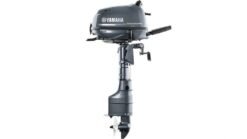
Full Specifications
| Model | Yamaha F4SMHA |
|---|---|
| Power | 4 HP at 4,500 rpm |
| Engine | 1 cylinder, four-stroke, overhead valve |
| Displacement | 139 cc |
| Bore x stroke | 62 x 46 mm |
| Compression | 8.9:1 |
| Full throttle | 4,000 to 5,000 rpm |
| Fuel system | Carburettor |
| Fuel supply | Internal tank, external tank compatible |
| Ignition | CDI |
| Starting | Pull start with decompression |
| Shift | Forward, neutral, reverse |
| Gear ratio | 2.08:1 |
| Tilt | Manual, with shallow water positions |
| Shaft | 15 inch |
| Weight | About 60 lb (27 kg) |
| Prop | Included |
| Condition | New |
These are Yamaha’s numbers for the F4, which it lists with the F6 and F2.5 on its portable outboards page. The Yamaha F4SMHA 4 HP outboard we sell matches them exactly.
Moving From an Old Two-Stroke
If you have been running an old two-stroke, the switch to the Yamaha F4SMHA 4 HP outboard feels like a different world. Here is what to expect.
No more oil mixing
Two-strokes need oil mixed into the fuel. Get the ratio wrong and you foul plugs or damage the engine. The Yamaha F4SMHA 4 HP outboard has its own oil in the crankcase, like a car. You put plain unleaded in the tank and check the oil level now and then. That is it.
No blue smoke
Gone is the cloud of smoke and the oily sheen on the water around the boat. Your clothes and your boat stay cleaner, and you are not breathing exhaust while you troll.
Much quieter
Old two-strokes scream. The Yamaha F4SMHA 4 HP outboard hums. You can talk at normal volume while it runs, and fish are less likely to be spooked.
Better fuel economy
Four-strokes burn noticeably less fuel for the same work. Over a season, that adds up.
A little heavier
Being honest, four-strokes are usually heavier than the two-strokes they replace. A 4 HP four-stroke at about 60 pounds is heavier than an old 4 HP two-stroke. Most people find the trade worth it, but check your boat’s weight rating and remember you will be lifting a bit more.
Oil changes
The one new job is an oil change once a season or at the hours stated in the manual. It takes a few minutes and costs very little.
Moving From an Electric Motor
Some buyers come the other way, from an electric trolling motor. The big gains are range and speed. A battery runs flat in hours, often less at full power, and takes ages to recharge. The Yamaha F4SMHA 4 HP outboard runs as long as there is fuel, and with an external tank that can be all day. It also pushes a boat noticeably faster than a typical small electric. You give up silence, but you gain freedom to go much further.
The Name, Letter by Letter
- F: four-stroke.
- 4: 4 HP.
- S: short shaft, 15 inches.
- M: manual start.
- H: tiller handle.
- A: generation.
For a 20 inch transom, see the Yamaha F4LMHA long shaft model.
Boats It Suits
- Inflatables rated for 4 HP. The classic match. Reverse makes landing and docking easy.
- Small rigid dinghies. Enough torque to push a heavier hard dinghy.
- Light jon boats around 10 to 12 feet with a 15 inch transom, especially for fishing.
- Car-top fishing boats. Light enough to carry to the water with the boat.
- Square stern canoes rated for the weight.
The Yamaha F4SMHA 4 HP outboard is not the right motor for anything heavy, anything you want to plane or boats that need a 20 inch leg. For planing, the twins from 8 HP up are the place to look.
How the Yamaha F4SMHA 4 HP Outboard Feels on the Water
Easy to start
Yamaha builds a decompression device into the starter. You feel it as a smooth, light pull rather than a hard jerk. A cold start takes a little choke and a pull or two. A warm one usually fires straight away.
Reverse when you need it
Coming alongside a jetty, backing off a sandbar, holding against a current while you net a fish: reverse gear makes all of that easy. It is the biggest everyday difference between the 4 and the smaller 2.5.
Smooth trolling
The single cylinder idles steadily, and with the throttle just off idle the Yamaha F4SMHA 4 HP outboard pulls a light boat at a nice trolling speed.
Quiet cruise
At a comfortable cruise it is quiet and smooth, and fuel use is low.
Fuel Setup
Short trips run fine off the tank on top of the Yamaha F4SMHA 4 HP outboard. For longer outings, use an external tank. You need a portable marine tank, a fuel line with a primer bulb and the correct connector. Switch the fuel tap to the external supply, squeeze the bulb until firm and start normally. With an external tank, a day of fishing or exploring is no problem.
Always use fresh unleaded with no more than 10 percent ethanol. If the boat will sit, add stabiliser or run the carburettor dry.
Fitting It Yourself
- Check the boat’s capacity plate for horsepower and weight limits.
- Clamp the motor in the centre of the transom.
- Check that the anti-cavitation plate sits at or just below the bottom of the hull.
- Tighten the clamps firmly. Recheck after the first run.
- Tie a safety line from motor to boat.
- Adjust the tilt pin so the leg is vertical with the boat loaded and underway.
No wiring, no cables. The Yamaha F4SMHA 4 HP outboard is ready once the oil is checked and fuel is in.
Breaking It In
Vary the throttle during the first hours, avoid long full-throttle runs, check the oil often and change it at the end of the break-in. Yamaha’s owner’s manual has the exact procedure, and the Yamaha owner’s manual library has a downloadable copy if you need one.
Keeping It Running
Every trip
- Freshwater flush after salt or brackish water.
- Quick rinse of the outside.
- Watch the cooling tell-tale stream while running.
Every season
- Engine oil and gear oil change.
- Spark plug check.
- Grease clamps, swivel and tilt.
- Check the prop, fuel line and fuel filter.
- Check the anode.
Every few seasons
Change the water pump impeller.
Storage
Run the carburettor dry, change the oil, flush, and store upright or on the marked side somewhere dry. Stale fuel in the carburettor is the most common cause of spring starting problems on any small motor, including the Yamaha F4SMHA 4 HP outboard.
Troubleshooting the Basics
When a small motor will not start or keeps stalling, the cause is usually simple:
- Fuel tap in the wrong position for the tank you are using.
- Tank vent closed, causing a vacuum and a stall after a few minutes.
- Primer bulb not squeezed on an external tank.
- Stale fuel. Drain and refill.
- Flooded. Choke in, throttle slightly open, pull a few times.
- Fouled plug. Clean or replace.
- Stop switch clip missing if fitted.
Go through that list and nearly every problem with the Yamaha F4SMHA 4 HP outboard solves itself.
Fishing From a Small Boat With a 4 HP
A good share of these motors end up on small fishing boats, and the Yamaha F4SMHA 4 HP outboard is well suited to it. Here is how anglers tend to set it up and use it.
Getting to the spot
On a light jon boat or a car-top boat, the motor gets you across a lake or along a river at a steady pace without tiring you out. It will not be fast, but it will be relaxed, and you arrive with energy left for fishing.
Trolling
Just off idle, the single cylinder pulls the boat along slowly and smoothly. Many anglers like to set the throttle friction so the grip holds a steady trolling speed while they handle the rod. Because it is a quiet four-stroke, the Yamaha F4SMHA 4 HP outboard is far less disruptive than an old two-stroke at trolling speed.
Holding position
In a current or a breeze, short bursts in reverse or forward hold the boat over a spot or near a snag. Reverse is the big help here.
All-day range
With an external tank on the floor of the boat, you can fish from first light to dusk without thinking about fuel.
What to Expect on Speed
On a 9 to 10 foot inflatable with one person, the Yamaha F4SMHA 4 HP outboard gives a good displacement speed with plenty of control. On a light 12 foot jon boat with one angler and gear, expect a steady, useful pace. Add more people and gear and it slows down, as you would expect. Planing is not what this motor is for. If you want a boat that jumps up and skims, you need more horsepower and a boat rated for it.
Running Costs Compared With an Old Two-Stroke
People switching from a two-stroke often ask whether a four-stroke is cheaper to run. In most cases, yes.
- Fuel. Four-strokes generally use noticeably less fuel for the same distance.
- No two-stroke oil. You stop buying bottles of mix oil.
- Engine oil. A small amount once a season.
- Spark plugs. Four-strokes run cleaner and foul fewer plugs.
- Repairs. A new Yamaha F4SMHA 4 HP outboard is far less likely to need expensive work than a worn-out old motor.
Add it up over a few seasons and a new four-stroke often pays back some of its price simply through lower running costs and fewer breakdowns.
Common Mistakes
- Mixing oil into the fuel out of habit. Do not. It is a four-stroke.
- Forgetting to check the engine oil. Look before every trip in the first season until it becomes a habit.
- Shifting at high throttle. Always idle down before changing gear.
- Laying it on the wrong side. Oil gets into places it should not.
- Leaving fuel in it over winter. Run the carburettor dry.
- Running in the mud. Tilt up in shallow water to protect the water pump and prop.
Using It in Hot or Cold Places
We ship the Yamaha F4SMHA 4 HP outboard to buyers in tropical, temperate and cold regions. In hot and humid places, keep fuel fresh, use stabiliser and keep the motor covered out of the sun. Marine growth builds fast, so tilt the motor out of the water when moored. In cold places, use a little more choke on cold mornings, and drain all water from the motor before frost at the end of the season.
Worthwhile Extras
- External fuel tank kit for longer trips.
- Motor cover to protect the cowling.
- Flushing attachment for salt water use.
- A spare prop if you run in rocky water.
- A small tool kit with a spark plug spanner and spare plug.
The Yamaha F4SMHA 4 HP outboard does not need any of these to work, but they make a long season easier.
Repowering an Old Dinghy, Step by Step
Swapping an old motor for a new Yamaha F4SMHA 4 HP outboard is a simple job, but it is worth doing in the right order.
- Check the transom. Old dinghies sometimes have soft or cracked transoms, especially wooden ones. Press on it, look for cracks around the clamp area and fix any rot before you hang a new motor on it.
- Check the rating. Make sure the boat is rated for 4 HP and around 60 pounds. If the old motor was a light two-stroke, the new one may be heavier.
- Remove the old motor and clean the transom where the clamps sit. Add a transom pad or plate if the surface is worn.
- Fit the new motor in the centre, tighten the clamps and add a safety line.
- Retire old fuel. Do not pour old two-stroke mix into the new motor. Use fresh plain unleaded only.
- Do a short test run close to shore, check for cooling water, try forward and reverse, then head out.
That is all. Most people have the Yamaha F4SMHA 4 HP outboard on and running within half an hour of opening the box.
Teaching the Family to Use It
Because it is light, easy to start and has a simple gear lever, the Yamaha F4SMHA 4 HP outboard is a good motor for teaching teenagers and new boaters. A few rules make it safer:
- Always start in neutral.
- Always wear the kill cord if fitted.
- Idle down before shifting.
- Look behind before reversing.
- Tilt up before reaching the shallows.
Once those habits stick, anyone in the family can take the dinghy ashore on their own.
Getting the Motor to the Water
At around 60 pounds, the Yamaha F4SMHA 4 HP outboard is light enough to move by hand but heavy enough that a little planning helps. Close the fuel tap and tank vent, or drain the tank, before you pick it up. Carry it by the built-in handle with the leg pointing down. In a car, lay it on the side marked on the motor, on something soft so it does not slide around. On longer trips, a small outboard stand or a padded box keeps it secure and saves your car’s interior from oil or fuel smells.
If you keep the motor on the boat while trailering, support the leg so it is not bouncing on the tilt mechanism over bumps. A simple transom saver bar or a block under the skeg does the job.
About Us
We are an online dealer of new outboard motors with customers in many countries. We keep popular Yamaha portables, including the Yamaha F4SMHA 4 HP outboard, as regular stock items so you are not left waiting. If you want to talk through whether a 4 HP is right for your boat, our contact page reaches a real person. More about us is on the about us page, and our blog covers buying and maintenance topics in more depth.
Why We Recommend Yamaha
Yamaha has dealers in almost every country, so parts for the Yamaha F4SMHA 4 HP outboard are easy to get. The 139 cc single is a proven, simple engine that a home mechanic can maintain. It starts easily, it runs quietly and it holds its resale value well. Those are practical reasons, not marketing ones, and they are why we stock the Yamaha F4SMHA 4 HP outboard year round.
Warranty and After-Sales Support
Yamaha backs its outboards with a factory warranty, but the exact terms depend on the country where the motor is registered and used, and on whether the use is private, government or commercial. Before you buy, it is worth contacting your nearest Yamaha marine dealer to ask what they honour locally and what registration they need. Keep your invoice and the serial number somewhere safe, because any warranty claim starts with those.
Beyond the warranty, the real support for a small motor is the dealer network. Yamaha is one of the few brands with service points on almost every coastline and large lake in the world. If something does go wrong far from home, you are much more likely to find someone who knows the engine, has the part on the shelf and can get you going again the same day. That is a big part of the value in choosing the Yamaha F4SMHA 4 HP outboard rather than an unfamiliar brand.
And of course you can always contact us. If you are not sure whether a noise is normal, what oil to buy or how to set up an external tank, send a message and we will help.
Related Motors
- Yamaha F4SMHA: our other listing of this same model.
- Yamaha F2.5SMHB: lighter, no reverse.
- Yamaha F6SMHA: same weight, 6 HP.
- Yamaha F9.9SMHB: twin cylinder for bigger boats.
Browse the 4 HP Yamaha section or the full Yamaha outboards range.
Buying From Us
- Add the Yamaha F4SMHA 4 HP outboard to your cart, or message us first.
- We confirm stock, your address and the delivery route.
- We pack it in its factory box with added protection.
- You get tracking once it ships.
- It arrives at your door.
International customers pay their own country’s import duty and taxes. We provide the documents customs needs. See our refund and return policy, terms and conditions and reviews for more.
FAQ
Is the Yamaha F4SMHA 4 HP outboard new?
Yes, brand new in the box.
Two-stroke or four-stroke?
Four-stroke. Plain unleaded, no oil mixing.
Does the Yamaha F4SMHA 4 HP outboard have reverse?
Yes, forward, neutral and reverse.
How heavy is the Yamaha F4SMHA 4 HP outboard?
About 60 pounds.
Can it run from a separate tank?
Yes, with the correct line and connector.
Will it plane my boat?
On most boats, no. It is a strong displacement motor.
Can the Yamaha F4SMHA 4 HP outboard be used in salt water?
Yes, with a freshwater flush after each use.
Is a propeller included?
Yes.
Final Word
If you are replacing an old smoky two-stroke, upgrading from an electric motor or buying your first small outboard, the Yamaha F4SMHA 4 HP outboard is a safe, sensible choice. It is quiet, clean, frugal and easy to start, with a real reverse gear and the option of an external tank. Yamaha’s worldwide dealer network means you will always find parts and service.
Add it to your cart when you are ready, or ask us anything first. The full shop is there if you want to compare.

Reviews
There are no reviews yet.