
 Cart is empty
Description
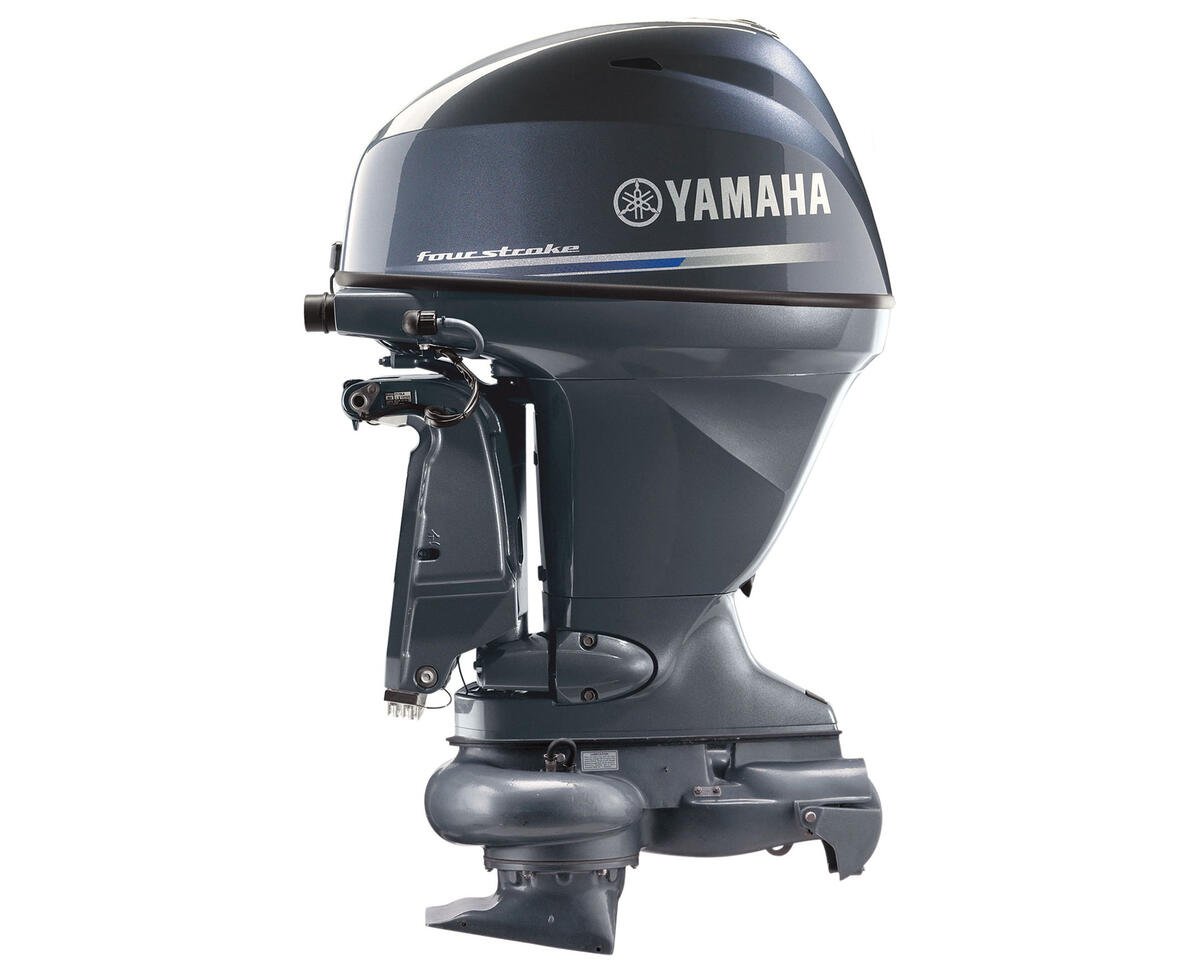
This listing is a new Yamaha F40JEA jet outboard, factory crated and ready to ship worldwide. The F40JEA is Yamaha’s 40 HP remote-steer jet drive with electric start. It runs the 747 cc three-cylinder four-stroke powerhead and a jet pump, giving about 30 HP at the pump. It suits light console sleds and utility boats that work in shallow rivers, wetlands and floodwater.
This page focuses on working use: survey crews, rescue teams, outfitters, land managers and anyone who needs a dependable shallow-water boat for a job, not just a hobby. For a delivered quote, get in touch.
Specifications
- Model: Yamaha F40JEA
- Drive: Jet pump, reverse gate, intake grate
- Powerhead: 40 HP
- Power at the pump: about 30 HP
- Engine: 3-cylinder inline four-stroke, SOHC, 747 cc
- Bore x stroke: 65 x 75 mm
- Fuel: Electronic fuel injection
- Controls: Remote mechanical throttle and shift
- Starting: Electric
- Weight: 219 lb
- Full throttle: 5,000 to 6,000 rpm
- Condition: New
Every Yamaha F40JEA jet outboard we sell is new. Tell us your transom height when you ask for a quote.
Built for Work in Shallow Water
A work boat in shallow water has a hard life. It gets launched off muddy banks, run over gravel bars, pushed through weed and debris, and used in all weather. A prop motor in that environment is a constant repair job. A jet removes the weakest link: there is no prop or gearcase hanging below the hull to break.
For crews that need to get somewhere shallow and get back reliably, a Yamaha F40JEA jet outboard on a light welded sled is a practical tool. It is small enough to transport and launch easily, simple enough to maintain in the field, and it starts at the turn of a key.
Survey and Research Crews
Fisheries biologists, water quality teams and wetland researchers often work in rivers and marshes too shallow for prop boats. They need to carry instruments, sampling gear and sometimes electrofishing equipment, and they need a stable platform. A console sled with a remote jet gives them a place to mount gauges and electronics, a dry spot for equipment, and a driver who can see ahead.
The 747 cc engine is smooth and quiet, which helps when sampling. Fuel injection keeps idle steady during slow work. And the Yamaha F40JEA jet outboard is light enough for a small crew to handle at rough launch sites.
Rescue and Flood Response
In floods, water is often shallow, fast and full of debris. Props tangle, break and pose a risk to people in the water. A jet has no exposed prop, and it runs shallow. Rescue teams use light jets to reach flooded streets, fields and riverbanks. A remote console helps keep radios, lights and a navigation screen within reach.
If you are buying for a rescue team, plan for spares, train every driver on jet handling and keep a maintenance log. Ask us about a quote for several Yamaha F40JEA jet outboard units if you are equipping more than one boat.
Land Managers and Ranchers
People who manage land along shallow rivers use small jets to check fences, reach islands, move small loads and monitor the river. A wheel and console make it easy for different staff to drive, and the electric start means nobody wrestles with a pull cord.
Outfitters
Fishing and sightseeing outfitters run guests up shallow rivers in light sleds. Remote steering lets guides stand, see the river ahead and talk to guests easily. A fleet of Yamaha F40JEA jet outboard units keeps spares and servicing simple.
How the Jet Gives You 30 HP
The engine on top is a 40 HP three-cylinder. A jet pump is less efficient than a propeller, because some energy goes into moving water through the pump housing. Yamaha rates the F40 jet at about 30 HP at the pump. In terms of push, think of it as similar to a 30 HP prop motor. The benefit is access: the boat can run in a few inches of water once it is on plane, with no prop to strike rocks or tangle in debris.
The Engine
The 747 cc three-cylinder is the same proven engine Yamaha uses in its F30 and F40 midrange motors. Single overhead cam, electronic fuel injection, a long-track intake and a single throttle valve. It starts reliably, idles smoothly and responds crisply. Its engine control module can connect to Yamaha digital gauges, which is useful on a work boat: the driver sees rpm, engine hours for the service log, and warning alerts if the engine overheats or oil pressure drops.
Yamaha’s YDC-30 alloy and five-layer paint system resist corrosion, so the Yamaha F40JEA jet outboard holds up in brackish water and tidal creeks with regular flushing.
Rigging a Work Sled
For a remote jet, you will need:
- A Yamaha mechanical control box for throttle and shift.
- Throttle and shift cables of the correct length, routed with gentle bends.
- Steering, cable or hydraulic.
- A main harness, key switch and kill switch at the console.
- A Yamaha digital gauge, strongly recommended on work boats.
- A marine starting battery, secured near the console.
- A fuel line, primer bulb and water-separating filter.
On work boats, consider a second battery for electronics such as sonar, radios and lights, with a battery switch so the starting battery is always protected.
The shift cable controls the reverse gate. If it is not adjusted correctly, the gate may not fully open in forward or fully close in reverse, which costs speed and stopping power. Have an experienced installer set it up. Warranty terms depend on your country, so ask your local Yamaha dealer once the motor is registered.
Mounting Height
Start with the leading edge of the intake grate level with the bottom of the hull, or slightly below. On tunnel hulls, follow the builder’s guidance. Test with the boat loaded the way it normally works. If the engine revs and the pump rattles without the boat accelerating, the intake is sucking air. Lower the motor slightly. If there is excessive spray and drag, try raising it.
Maintenance Schedule for Working Boats
Work boats run more hours than leisure boats. Go by hours, not by the calendar, and keep a log.
- Every trip: Flush, grease the jet bearing, clear the intake grate, check the tell-tale.
- Weekly in busy periods: Check impeller clearance and shim as needed. Check anodes, fuel filter bowl and steering.
- At the oil change interval: Oil and filter, fuel filter, plugs if due.
- At the impeller interval: Replace the cooling water pump impeller, sooner in sandy or muddy water.
- Yearly: Full inspection by a qualified mechanic, including the pump liner and bearing.
A log of hours and work also helps when you budget for parts and plan downtime. A Yamaha F40JEA jet outboard serviced on this schedule will give a crew many seasons of dependable work.
Pump Wear in the Field
Sand and grit wear the impeller edges and liner, opening up the gap between them. As the gap grows, thrust drops. You will notice slower acceleration and lower top speed. The fix is simple: move shims to bring the impeller closer to the liner, as described in the manual. Crews working in sandy rivers should check this often and carry a shim kit. When the impeller is too worn to adjust, replace it.
Break-in
Ten hours of moderate, varied running before heavy work. If the boat needs to go to work immediately, plan light duty for the first few days. After the break-in, change the oil and filter, grease the bearing and check the impeller clearance.
Driving Tips for Crews
Every driver on the crew should know how a jet behaves. Get on plane in deep water before crossing shallows. Keep speed up over riffles and bars, because slowing down lets the boat settle onto the bottom. Use a little throttle to steer, since a jet turns weakly at idle. Stop early, because the reverse gate is gentler than a prop in reverse. Turn smoothly in shallow water so the intake stays submerged. Clear the grate whenever the boat suddenly slows and the engine revs.
Run a short training session for new drivers in calm, deep water. It takes twenty minutes and prevents most of the problems crews run into with a Yamaha F40JEA jet outboard.
Spares Kit for Field Work
A work boat should carry: grease and a grease gun, an impeller shim kit, two fuel filter elements, spark plugs, fuses, a cooling water pump impeller kit, anodes, a basic tool kit and a hooked tool for clearing the intake grate. In the workshop, keep oil, filters and a spare jet impeller. We can add all of these to your Yamaha F40JEA jet outboard order.
Cold Weather and Storage
In freezing conditions, leave the motor down after each trip so water drains from the cooling passages and pump. Grease the bearing every time. Keep batteries charged. For seasonal storage, stabilise fuel, change the oil and filter, grease the bearing, flush and drain, fog the engine, inspect pump parts and keep the battery on a maintainer.
Choosing a Work Hull
For a Yamaha F40JEA jet outboard, the ideal work hull is welded aluminium, about 14 to 16 feet long, with a flat or very shallow-V bottom at the stern and a jet tunnel. Welded aluminium takes the knocks of gravel bars, rocks and debris far better than riveted aluminium or fibreglass. The tunnel lets you mount the motor higher, protecting the pump and reducing draft. A wide beam gives a stable platform for working over the side, sampling or pulling someone from the water.
Think about weight from the start. With about 30 HP at the pump, a light boat gets on plane easily and rides high over shallows. Heavy consoles, steel fittings and too much gear eat into performance. If your work demands heavy loads, three or more crew, or strong current, look at a bigger jet.
Field Troubleshooting
The boat suddenly slows and the engine revs. Almost always debris on the intake grate. Shut down, tilt up and clear it.
Performance has dropped slowly over weeks. The impeller clearance has probably opened up from wear. Shim it.
Weak tell-tale stream. Shut down. Clear the tell-tale outlet with a thin wire and check the cooling intake for mud or weed. If it stays weak, the cooling water pump impeller may be worn. Do not keep running.
Rattling from the pump. Could be gravel, air or a worn bearing. Inspect, clear debris, grease the bearing. If the noise continues, get it checked.
Will not crank. Check the kill switch lanyard, neutral position, battery charge and connections.
Cranks but will not start. Check fuel valve, tank vent and primer bulb. Look in the filter bowl for water.
Keep the owner’s manual on the boat. It has the exact specifications for the Yamaha F40JEA jet outboard.
Fuel Planning for Long Field Days
Field crews often run long days far from fuel. Jets burn more fuel than prop motors at the same speed, and upstream running burns more again. Log fuel use against hours and distance for the first few jobs so you know your range. Carry extra fuel in approved containers if needed, and keep a reserve for the trip back. Use a water-separating filter with a clear bowl and drain water when you see it. Clean fuel keeps a Yamaha F40JEA jet outboard reliable on long days.
Why New Instead of Used
Used work jets usually have hard lives: lots of hours, lots of sand and plenty of knocks. Worn impellers, dry bearings and scored liners are common and not always visible. For a crew that depends on the boat, a new Yamaha F40JEA jet outboard with zero hours and full paperwork is the safer choice. You start with a fresh pump and a clean service history, and you know exactly what you have.
If you are not sure whether this motor suits your crew’s boats and loads, send us the details. We will tell you honestly whether the Yamaha F40JEA jet outboard fits, or whether you should look at a larger jet.
Safety Procedures for Crews
Every organisation that runs boats should have a few written safety rules. Here are the ones I would put on the list for a jet crew.
- Life jackets worn by everyone on board, at all times.
- Kill switch lanyard attached to the driver before the engine starts.
- A trip plan left with someone on shore: route, crew, expected return time.
- Radio or phone in a waterproof case, plus a backup way to call for help.
- Throw rope, first aid kit, paddle or pole, and a basic tool kit on every trip.
- No running in unfamiliar water in poor light.
- Anchoring only from the bow or stern in current.
- A pre-trip check: fuel, oil, battery, grate, bearing grease, lanyard.
Rules like these protect people first, and they also protect the equipment. Most damage to jet pumps comes from running slowly over shallow gravel, hitting unseen obstacles at speed, or ignoring warning signs like a weak tell-tale. A crew that follows simple procedures gets far more life out of a Yamaha F40JEA jet outboard.
Keeping Records
For a work boat, a simple log book is worth its weight. Record the date, engine hours, who drove, where the boat went and any problems. Record every service: oil changes, impeller adjustments, parts replaced. It helps you plan maintenance, budget for parts, spot problems early and show inspectors or insurers that the boat is properly looked after. A Yamaha digital gauge makes logging hours easy. When the time comes to replace or sell the boat, a full record also adds value to a well-kept Yamaha F40JEA jet outboard.
Transporting and Launching
Work crews rarely launch at nice concrete ramps. More often it is a muddy bank, a gravel bar or the edge of a flooded road. A light sled with a 219 pound jet is much easier to handle in those places than a heavier boat. Use a trailer with good tie-downs and a transom saver, or tilt support, so the motor is not bouncing on the transom over rough tracks. Keep the motor tilted up and locked when trailering.
At the water, back in slowly and check the depth before you start the engine. A jet needs water flowing into the intake and the cooling system, so never start it on dry ground or in a few inches of mud. Float the boat off, push it out to water deep enough for the intake, then start up. After the job, pull out the same way, flush the engine with the flush port, grease the bearing and leave the motor down to drain if it is cold.
Teams that follow that routine get many seasons of service from a Yamaha F40JEA jet outboard, even with rough launch sites and hard use. It is a small amount of care for a motor that does a lot of hard work.
Budgeting for a Work Jet
If you are putting together a budget for a crew boat, plan for more than the motor. List the hull, the motor, controls and steering, a gauge, batteries and a battery switch, a fuel system with a good filter, safety gear, a trailer and a starter spares kit. Then add yearly running costs: fuel, oil and filters, impellers, anodes, bearing grease and the occasional jet impeller or liner. It is a modest total compared to the cost of replacing props and gearcases on a prop boat in rocky water, and it is predictable. Agencies and companies like that predictability. We can quote the Yamaha F40JEA jet outboard together with controls, gauges and spares in one delivered price, which makes the paperwork simpler too.
How to Order
- Send us a message through the contact page.
- Tell us the model, the number of units, your transom height and where you are.
- Add controls, gauges and spares as needed.
- We send a delivered price.
- You confirm and pay.
- We ship with FedEx, UPS or USPS and send tracking.
For agencies and companies that need formal paperwork, tell us what you need when you ask for a quote. Read our refund and return policy and terms and conditions.
Shipping Worldwide
We ship to buyers in the Americas, Europe, Africa, the Middle East, Asia and Australia. Each motor travels in its factory crate with tracking. Import duties depend on your country, so check with your customs office before the Yamaha F40JEA jet outboard arrives. Inspect the crate on delivery and photograph any damage before signing. Keep the paperwork for your local Yamaha dealer.
Related Motors
- Yamaha F40JEA, our main listing for this jet
- Yamaha F40JEHA, tiller version
- Yamaha Jet Drive 40HP, for heavier work boats
- Yamaha F90JB jet outboard, for larger sleds
Browse the 40 HP Yamaha range, all Yamaha outboards, the shop, reviews, about us and our blog. Yamaha’s official site has more on its jet range.
Frequently Asked Questions
Is this Yamaha F40JEA jet outboard new?
Yes, new and in the factory crate.
Is it suitable for commercial or agency use?
Many crews use the Yamaha F40JEA jet outboard for work. Ask your local dealer about warranty terms for commercial use in your country.
How much push does it have?
About 30 HP at the pump from a 40 HP powerhead.
Can I fit a digital gauge?
Yes. The engine control module works with Yamaha digital gauges.
Can you supply several units?
Yes. Tell us how many and we will quote them together.
Do you ship worldwide?
Yes, with FedEx, UPS and USPS.
Get a Quote
If your crew needs a light, reliable boat for shallow rivers and wetlands, the Yamaha F40JEA jet outboard is a solid choice. Send us your country, the number of units and your boat details, and we will reply with a delivered price.
Ready to order the Yamaha F40JEA jet outboard? Add it to your cart above, or send us your location for a delivered quote. We ship worldwide with FedEx, UPS and USPS, crated and tracked, and we are always happy to help with rigging questions before and after the motor arrives at your door.



Reviews
There are no reviews yet.